
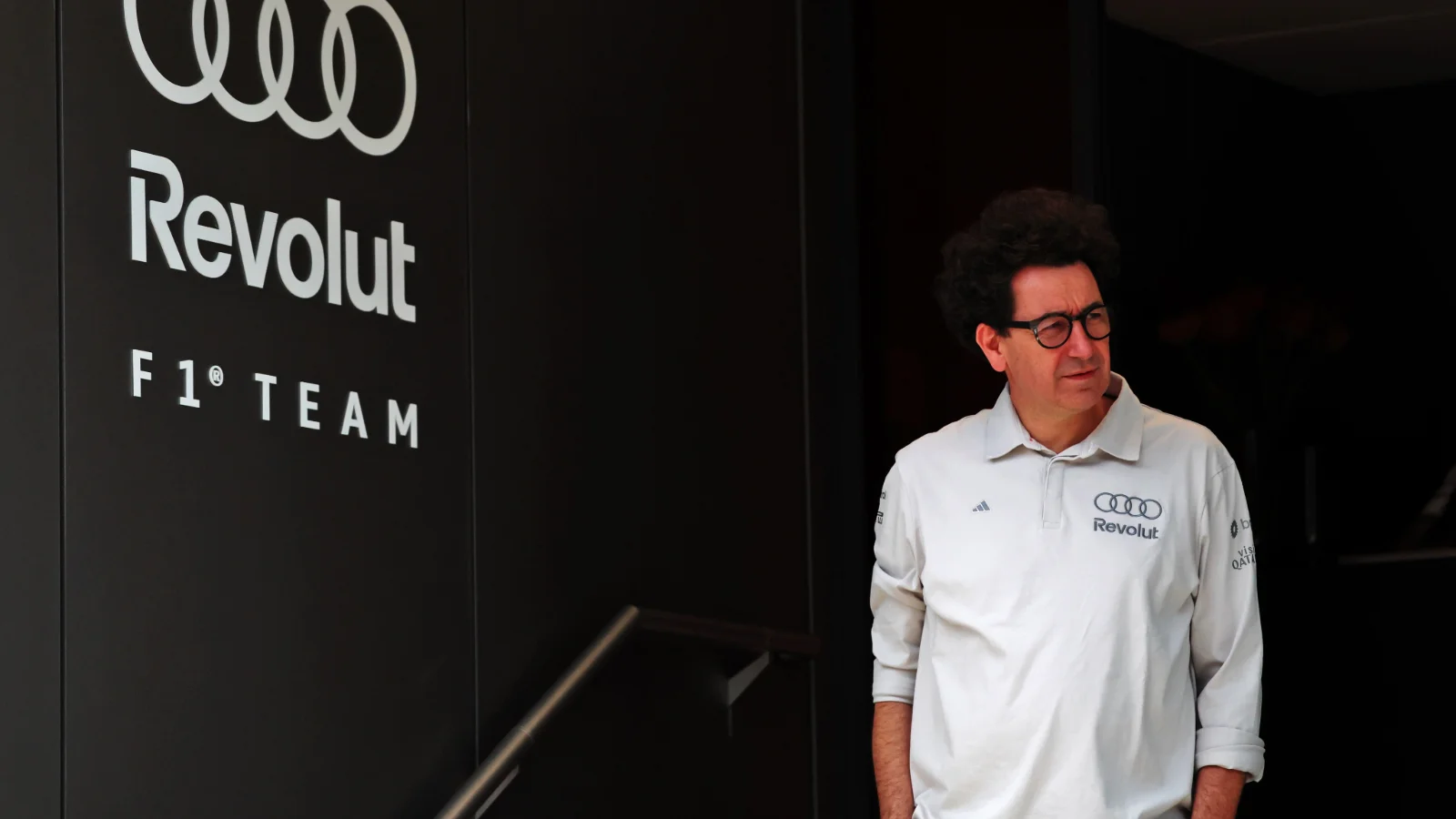
Mattia Binotto, chief of the Audi Formula 1 project, has called on the FIA to consider a change in process of the Additional Development and Upgrade Opportunities [ADUO] scheme.
The concept was created by the sport’s governing body to ensure a fairer playing field, amid the introduction of this year’s new radical technical regulations.
With hybrids now set at 50:50 in terms of combustion and electric power, the new regulations have been a minefield for manufacturers to tackle, with the additional frustration and unpopularity of them conveyed by a number of drivers.
Manufacturers who qualify for ADUO will be able to perform upgrades on their respective engines, but it is only measured by the V6 power, meaning that outcomes have led to surprising results.


Mercedes, which has had the most competitive engine this year, qualified, but Red Bull, which has been languishing at the lower end of the so-called ‘top four’, did not.
The Milton Keynes-based squad, which is in the first season of running on an in-house powertrain – built with Ford – contested this ruling, but was unsuccessful.
Audi, in its first season of competition altogether – having taken over the Sauber team – is able to perform upgrades to its maiden PU via qualification of ADUO, but in an interview with motorsport.com, Binotto believes the criteria laid out for ADUO is, therefore, perhaps unfair.
“In my opinion, the limit has been that it has exclusively measured performance on the track. A car with an overall advantage can afford not to fully exploit the potential of its power unit,” he said.
“It’s possible, for example, that Mercedes had an engine with superior potential, but had no need to push it to the limit because it already had an advantage thanks to the car. If that were the case, it could have also gained additional development margin.
“That’s why I think the regulation needs to be rethought in this regard. This wasn’t the original intent of the ADUO: the goal was to help those who were actually falling behind, not to create situations in which the true potential of a power unit might be difficult to assess.”

Audi chief urges importance to ‘remember objective’ of ADUO
Binotto was quick to acknowledge the hard work the sport’s governing body has done to ensure such an initiative has been put in place to aid manufacturers that need it.
But the Italian urged alterations to system, questioning if those manufacturers would still feel the disadvantage throughout the entirety of this regulations cycle.
“On the results, I’m not questioning the work done by the FIA. They have all the tools and data necessary to make their assessments, despite the limitations that any measurement system inevitably entails,” he continued.
“However, I believe it’s important to remember the original objective of the ADUO. When it was first discussed, the concept was that of a sort of safety net. If a manufacturer was far behind at the start of the regulatory cycle, with regulations virtually frozen and very little room for development, it would risk dragging that disadvantage for five years.
“This gave rise to the concept of performance convergence: allowing those who were further behind to have a greater chance of catching up. Ultimately, it’s the same principle that already exists for chassis and aerodynamics.
“Those further back in the standings have more hours in the wind tunnel. Likewise, those who are further behind in terms of power unit performance receive greater development opportunities to catch up with the others and make the championship increasingly balanced.”
READ MORE – FIA president drops major hint of Christian Horner F1 return










Discussion about this post