A sensor notices the bearing temperature creeping up before anyone on the floor hears a strange noise… The dashboard flags the pattern. The model gives the maintenance team a clean little warning: likely failure in 11 days.
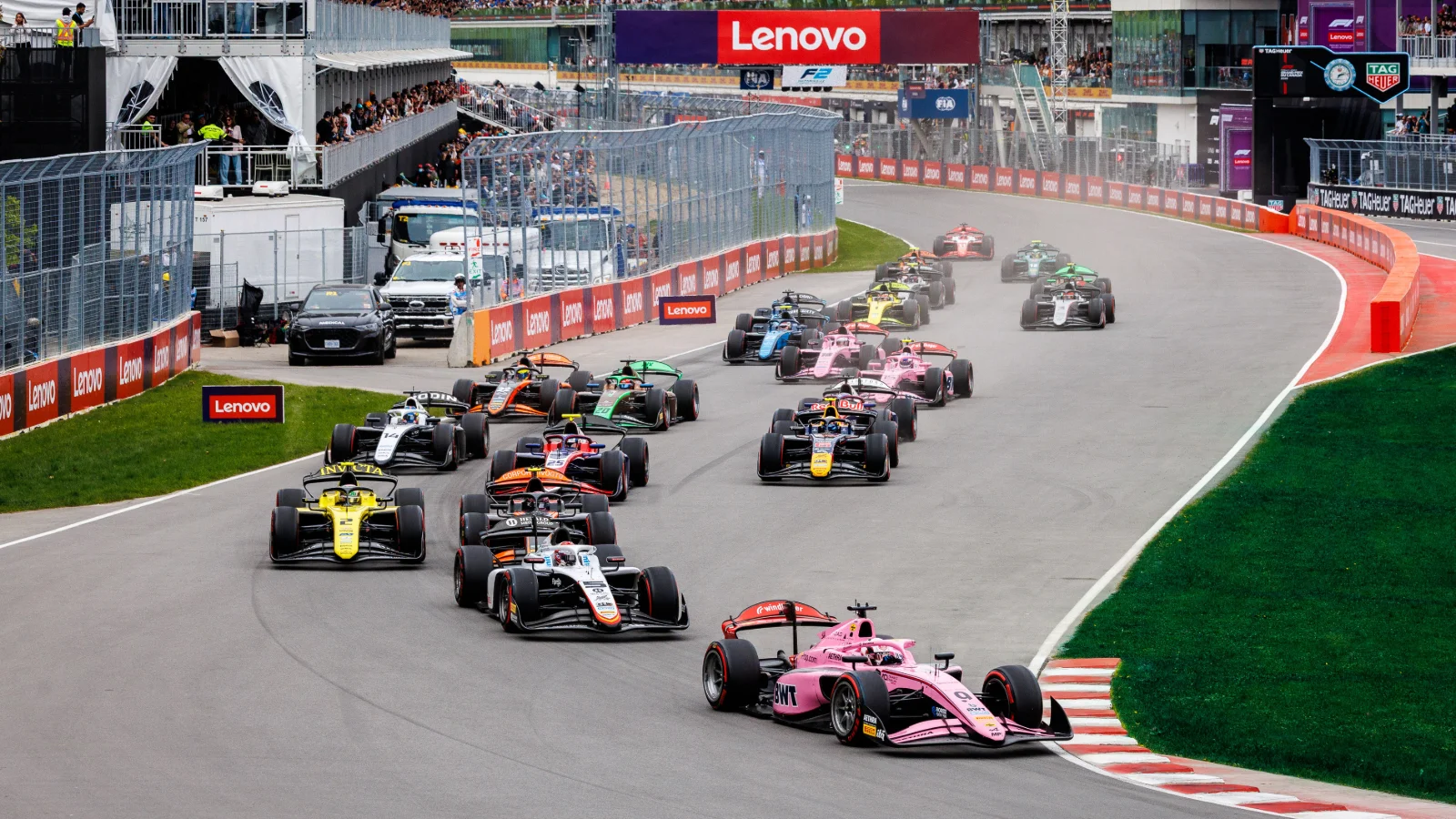
In a Formula 1 garage, that scenario plays out dozens of times across a race weekend. Over 300 sensors per car, 1,500 data points per second, and a pit wall full of engineers watching for exactly that kind of early signal. The difference between a championship-winning team and a midfield one is not always the alert — it is what happens in the seconds after it arrives.
Everyone is impressed for about five minutes. Then the real work starts.
Someone still has to decide whether to stop the car, inspect the engine, isolate energy sources, order parts, rewrite the schedule, and explain the delay to a team manager who was already behind. In a factory, that part does not run on a model. In a grand prix garage, it runs on years of drilled procedure. Either way, it runs on judgement.


The dashboard is not the jobsite
Predictive maintenance sounds clean when it lives in a demo. You feed the model vibration data, pressure readings, oil analysis, temperature changes, runtime history, and past failure records. The system learns what “normal” looks like, then starts catching the early signs of trouble.
In a real facility, the alert lands in the middle of everything else. A packaging line is short-staffed. A forklift is waiting at the dock. A supervisor is trying to cover a callout. Maintenance has three open work orders and one person who actually knows the older compressor. The question is not “Did the AI predict something?” It is “Can the crew act on the prediction without creating a new problem?”
That gap is where a lot of AI projects get oversold. A model can say “this pump is likely to fail.” It cannot see that the nearest spare is mislabelled, the lockout station is missing a tag, or the newest technician is copying what the senior person does without really understanding the hazard.
For supervisors, the baseline is less about reading alerts and more about hazard recognition, worker responsibilities, and jobsite decision-making — the kind of safety foundation covered through OSHA Education Center when training has to hold up beyond a quick toolbox talk.
That matters because predictive maintenance changes timing. In the old world, a machine failed and everyone reacted. In the better version, the team gets a warning early enough to plan. But planning is only safer if people know what the warning means, what the failure mode could affect, and who has authority to stop work.
A loose belt is not the same problem as a pressure vessel issue. A rising motor temperature is not the same problem in a clean, guarded machine as it is in a cramped area where someone has to reach around other moving parts to inspect it. The software might group both as “maintenance alerts.” The floor does not. Neither does a Formula 1 crew chief, who has to distinguish between a sensor anomaly that can complete a stint and one that ends a race in the barriers.
The alert is only useful if people know what to do next
The best predictive maintenance workflow does not treat the alert as the finish line. It treats the alert as the first useful sentence in a longer conversation — something any F1 data engineer would recognise immediately.
A good alert answers a few practical questions without making the worker dig through five systems: what asset is affected, what changed, how confident is the model, what failure mode is likely, what should be checked first, what safety precautions apply before inspection, and who owns the next decision.
That last question is easy to ignore. It is also where a lot of mess starts.
If the AI flags a conveyor motor, does the operator keep running until maintenance arrives? Does maintenance inspect while the line is idle but energised? Does production decide whether to pause? Does the supervisor have a clear threshold for stopping work? If the answer depends on whoever happens to be standing nearby, the system is not mature. It is just noisy. Any Formula 1 team that operated its pit stop procedure that way would be lapped before half distance.
OSHA’s guidance on hazard identification and assessment makes a simple point that tech teams often overlook: hazards need to be identified through an ongoing process, not only after something goes wrong. Predictive maintenance can support that process, but it cannot replace the part where workers inspect conditions, report near misses, and understand what changed in the work environment.
This is where developers building industrial AI tools should get more curious. A beautiful dashboard is less valuable than a boring workflow that closes the loop. If the alert creates a ticket, the ticket should carry the right context. If the ticket sends someone to inspect equipment, the inspection step should include the relevant precautions. If the model keeps flagging the same asset, someone should ask whether the issue is mechanical, procedural, environmental, or training-related.
Plain English has useful writing on AI systems, including pieces like Diving Deep into AWS Bedrock: A Developer’s Honest Take on the Future of LLMs, but industrial AI carries a different kind of pressure. The output does not just sit in a chat window. It may change what someone does around heavy equipment.
That does not mean teams should be scared of using AI in maintenance. It means the product specification should include the person on the floor, not just the data pipeline.
Predictive maintenance exposes old training gaps
AI does not create every training problem. Sometimes it just makes the existing ones easier to see — and motorsport learned that lesson long before factories did.
Take a plant that has always relied on one senior technician to understand a certain line. The person knows which vibration is harmless, which sound means shut it down now, and which part always fails after a humid week. Then a predictive system arrives and starts turning that person’s instincts into alerts. It is not entirely unlike the moment a Formula 1 team installs a driver-in-loop simulator and discovers that the institutional knowledge of a veteran race engineer does not automatically transfer to the younger analysts reading the data.
The model can capture patterns. It cannot automatically transfer judgement. It will not know which junior technician has never handled that inspection. It will not notice that the written procedure is outdated because the machine was modified six months ago. It will not challenge a supervisor who keeps delaying inspection because production is chasing the end-of-month target.
This is why training cannot be treated as a one-time onboarding item. Predictive maintenance changes what workers are asked to notice. They are no longer only reacting to smoke, noise, jams, leaks, or shutdowns. They are being asked to trust early signals, investigate subtle changes, and act before the problem looks obvious.
That can feel strange on the floor. People are usually rewarded for keeping things moving. Stopping a machine because a dashboard says the failure probability is rising can look cautious to one manager and excessive to another. Without shared rules, the worker carrying the risk is left guessing. It is the industrial equivalent of a driver being told to “manage the situation” with no agreed definition of what that means.
NIOSH has warned that AI in workplaces needs human oversight, risk management, and attention to how systems affect worker safety, not just productivity. Its guidance on managing AI hazards in the workplace is useful because it treats AI as part of the work system, not a magic layer floating above it. That is the correct frame. Predictive maintenance is not just a technical upgrade. It changes roles, timing, communication, and accountability.
The boring parts decide whether the AI works
The least glamorous pieces of an AI maintenance rollout are usually the ones that decide whether it survives past the pilot. Formula 1 teams understood this years ago — the championship is rarely won by the team with the most sophisticated simulation tools. It is won by the team whose data naming conventions, asset hierarchies, and handoff procedures are clean enough that the tools actually work under pressure.
Naming conventions matter in a factory for the same reason. If one system calls it “Line 4 mixer” and another calls it “MX-04,” someone will eventually inspect the wrong thing or ignore the ticket because it looks unfamiliar. Work order notes matter. So does the awkward habit of writing down what actually happened, not what should have happened.
The same applies to access and visibility. A maintenance manager may want every alert. An operator may only need the ones that affect their station. A safety lead may care about repeated near-failure conditions, even if maintenance keeps fixing them before downtime occurs. Executives probably need trend lines, not raw warnings.
Plain English’s piece on rethinking cloud security visibility in multi-cloud environments makes a similar point in a different context. Visibility is not the same as control. A maintenance team can drown in visibility. Too many alerts and people stop caring. Too few details and people stop trusting the model.
Good execution usually looks less exciting than the sales deck. It might be a weekly review where maintenance, operations, and safety look at the top recurring alerts. It might be a rule that any high-risk alert gets paired with a short job hazard review before inspection. It might be a habit of comparing model predictions with technician notes so the system improves from real work, not only historical data.
McKinsey has written about how generative AI could help maintenance teams with troubleshooting, knowledge retention, and reskilling in complex environments, especially where experienced workers carry a lot of undocumented know-how. That is exactly the kind of problem endurance racing teams face across a 24-hour event, where knowledge has to transfer between driver crews and engineering shifts at 2am without anything falling through the gaps. The right use case for AI, as McKinsey’s piece on rewiring maintenance with gen AI describes, is not replacing the crew’s judgement but making the useful parts easier to find, share, and repeat.
The trap is thinking the model is the transformation. Usually, the transformation is the uncomfortable work around it: cleaner asset data, clearer stop-work rules, better handoffs, better training, and fewer heroic workarounds.
Final thoughts
AI can give maintenance teams more time, and that is a significant advantage. A warning before failure is better than a surprise shutdown after the damage is done. But the extra time only helps if people know how to use it — who checks the machine, what risks matter, when production pauses, and how the decision gets documented.
The companies that get the most from predictive maintenance will not be the ones with the most sophisticated dashboard. They will be the ones that treat every alert as a small test of training, workflow, and trust — the same discipline that separates a championship-winning pit crew from one that drops a wheel nut at the wrong moment. Pick one recurring maintenance alert today and trace what actually happens after it appears. The gaps in that path will tell you more than any model score.