
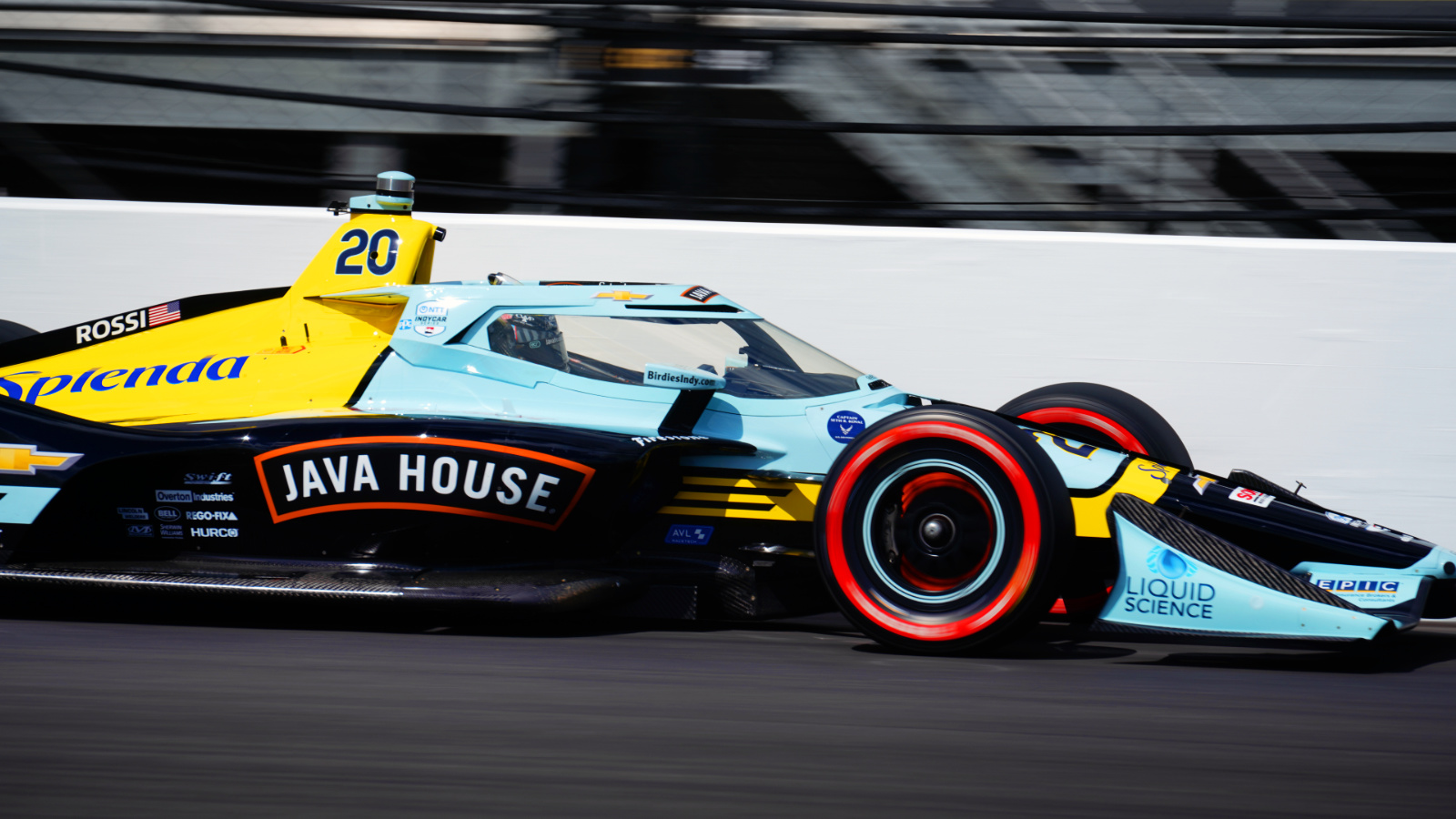
Saturday’s IndyCar race on the Indianapolis Motor Speedway road course was a largely entertaining and successful event, but it was nearly overshadowed by a dangerous delay in issuing a full course caution.
Race Control at times purposely delays placing the full track under yellow conditions on road and street courses, which allows for a pit stop cycle to complete and serves to remove an element of perceived unfairness that a suddenly closed pit lane would cause. But this weekend’s delay caused an overtly dangerous situation, and the parameters that are used to make that decision must be changed.
Breakdown of the details
On lap 20 of Saturday’s 85-lap race, Alexander Rossi’s Ed Carpenter Racing Chevy suffered an apparent hybrid unit failure in the final turns. Rossi lost all power to his car and he coasted onto the main straight. With walls on both sides of the track and nowhere to pull off, he chose the safest place he could and stopped along the right side of the track.
Corner marshals in the final turn displayed white flags as soon as Rossi was slowing, with the digital panels mirroring the signal that there is a slow car on track. The warning was upgraded to a local yellow the moment Rossi coasted to a stop, just as procedure dictates.
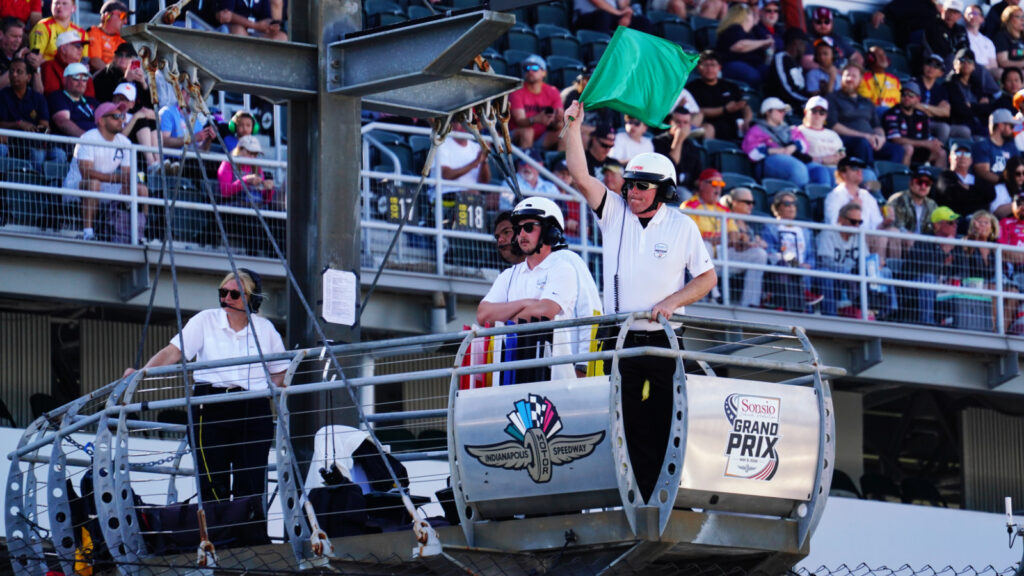
Because Rossi stopped directly under the starter’s stand, the flagman was waving a single yellow flag from his perch as well. He was not signaling a full course yellow, but rather acting as a well-placed marshal station to display the local yellow condition. Subsequent marshal stands further down the straight waved green flags to signal the end of the local yellow area.
Up to this point, the appropriate track conditions were being communicated to all at the track. But as soon as it was obvious that Rossi’s car did not have any drive and that he would remain sitting stationary on the racing surface, Race Control should have immediately upgraded the condition to a full course yellow for safety reasons.
Instead, a local yellow remained while Rossi was in a vulnerable position for approximately 72 seconds. Rossi’s crew sent a radio message telling him it was not a full course yellow. After realizing that, he attempted to get the attention of the officials in the flag stand since they had a bird’s eye view of his stalled car.
Rossi waved his arms out of the cockpit, a universal signal that more assistance is needed. He then waved his steering wheel out of the cockpit, signaling that he could not and was not planning to get moving again. He even halfway stood out of the cockpit and waved directly to the flag stand in order to try to call further attention to his situation. All the while, 23 other cars were still racing on track, speeding past his stopped car at nearly full speed.
A full 25 seconds after he had begun holding his steering wheel out of the car, Rossi decided enough was enough and fully climbed from his car. Race Control was forced at that time to immediately throw the full course yellow to slow down the other cars while Rossi angrily hopped the retaining wall on foot and walked across a live pit lane to his crew.
Immediate reactions
Even as the event was unfolding, many thought the full course yellow had actually been declared. The FOX broadcast showed a graphic for a full yellow and was about to cut to commercial, multiple teams radioed a ‘full course yellow’ message to their drivers, and confused inquiries flew up and down pit lane during the extended local yellow period.
Even with new digital panels installed up and down pit lane indicating track status to the crew members, the consensus seemed to be that there was no way their drivers should still be fighting for position. A full course yellow had surely been issued. And so multiple incorrect messages were relayed.
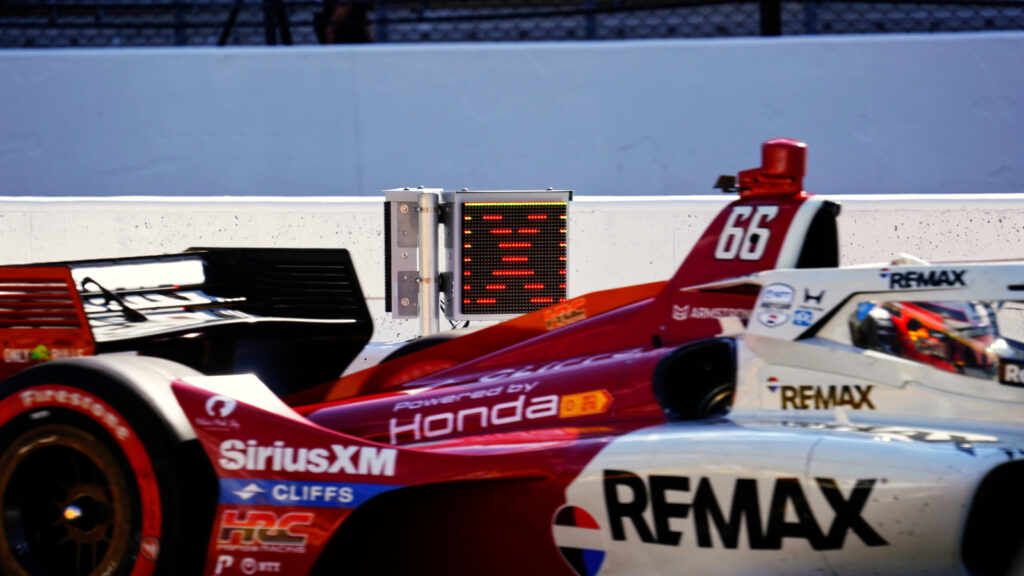
The confusion ended up being the most dangerous part of the entire scenario. For each driver that did not have clear information about the track status, another opportunity was there for bigger trouble.
The speed trap at the starting line recorded a top speed of 179.166 MPH by Scott Dixon during the race. That speed did not occur while the incident played out, but it is an indication of the speeds possible at that particular location. It is entirely conceivable that one driver could have unexpectedly slowed with the driver behind having to dive out to avoid a collision, only to run into a stopped car that was just off the racing line. And with that driver unstrapped and actively climbing from the car, it would have been a monumental disaster.
Making the call
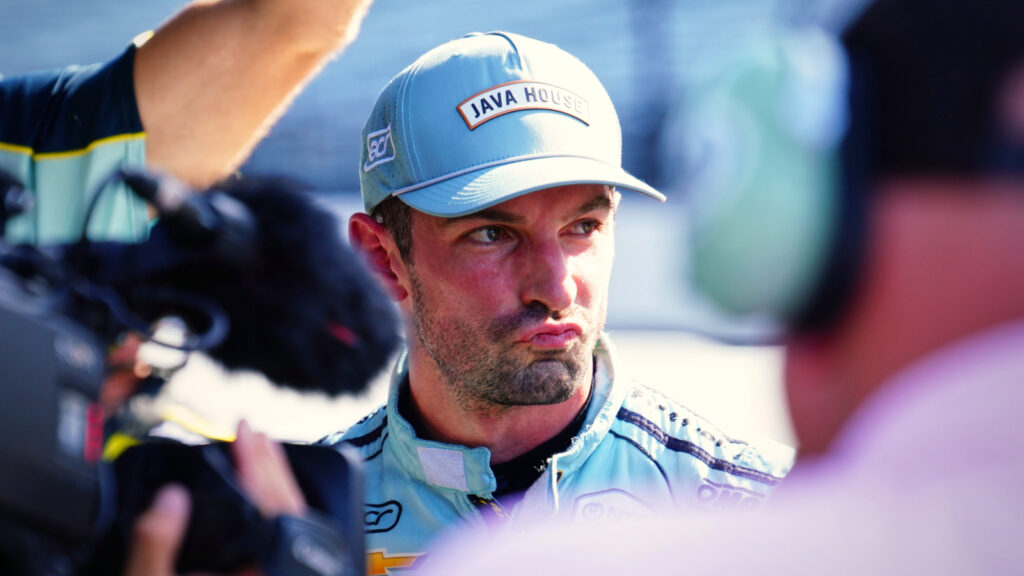
After safely arriving at his pit box on foot and discussing the situation with his crew, Rossi did his best to compose himself for a television interview. Though still visibly angry over the dangerous situation which he had just found himself, the 34-year-old told the Fox Sports crew that his safety did not seem to be a priority.
“The fact that it took that long to throw a full course yellow when the car is on the front straight and people are going by at 170 MPH also seems insane when they don’t let us drive in the wet yesterday. So I don’t really know where the priorities lie. Pretty frustrated.”
While Rossi was waving his arms, first in an attempt to draw attention and then afterwards in frustration, his gestures were aimed up at the starter stand. Throughout, IndyCar flag man Aaron Likens was waving a single yellow flag, but did not begin displaying a double waved yellow until the call came down from Race Control.
Procedure dictates that Likens could not have declared a full course yellow on his own, even if he felt one was warranted. Power is not given to the flag stand, or any corner marshals, to declare a caution period for the entire track.
The flag stand and all marshals can and do declare local yellows, and their responsiveness to rapidly changing situations in their area help to keep drivers appropriately informed. They each have multiple notification flags and have control over their local EM Motorsport digital display panels. They can display a number of different flags to communicate other local situations as needed, such as surface condition warnings and blue flags to warn of faster cars approaching.
But when it comes to full course yellow conditions, the marshals can only communicate what has been decided by Race Control. And in this case, the decision was made to hold off on that call until Rossi had already begun climbing from his car.
Changes should be made
The reason Race Control sometimes chooses to delay full course yellow calls is to allow the leaders a chance to pit before the pit lane is closed. When a pit cycle is partially complete, as it was on Saturday, being forced to pit under a full yellow could be devastating for a driver’s strategy.
The practice has long been controversial, even when a stopped car is in a relatively safe position. But this situation appeared to be much more dangerous and should have been above the threshold for issuing an immediate deployment of the safety car.
In addition, the delay did not even serve its intended purpose. Because of the confusion, Alex Palou, Kyle Kirkwood, and potentially others did not come to pit lane when they had the opportunity. And they were indeed disadvantaged because they had to complete their stops during a full safety car period.
But that should be well down the order of priorities for Race Control. Planning for unexpected events and managing risks is a well known part of the sport of motor racing. The primary role of Race Control is to provide a safe racing environment. That should always be the top priority. Always.
One of two changes should be made following the Rossi incident this past weekend. One option is that delayed full course yellow calls go away completely. As soon as it is apparent a safety car will be needed, then the full yellow is declared immediately. This includes when any car is stopped on track with no indication it will get going again, no matter how safe or unsafe the location may be. This would be the simplest remedy.
A second option would be to establish clearly defined rules around a delayed full course yellow. This could include a predefined map of risk areas, likely generated from estimated speeds and distance from the racing line. All cars already carry transponders that report their precise locations within the facility, so the process could even be automated.
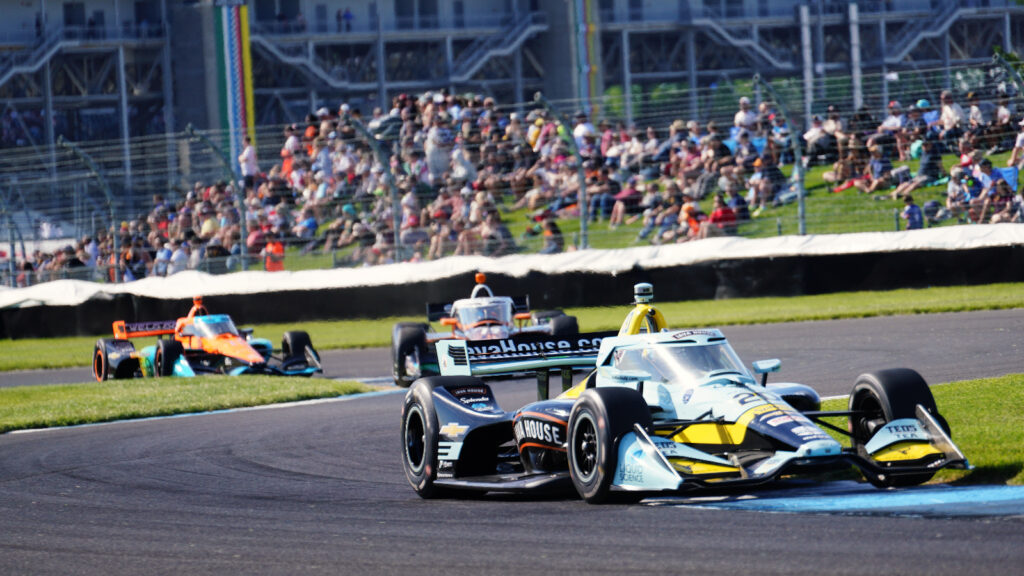
As an example, if a car is stopped in a predefined ‘safe area’, then the safety car call could be delayed for one lap. But after the car is stationary for longer than that, the full course yellow would be mandated. Similarly, if a car stops outside a ‘safe area’ and does not move for five seconds, or whatever length of time is decided, then a full course yellow would immediately be mandated.
With either option, predictability would be brought into the equation. When managing a motorsport event, there is a lot of reliance on common sense and split-second evaluations from experienced members of the sport. That component is necessary and frankly is part of what makes racing exciting. But when it comes to safety decisions, more defined conditions should be put into play.
There are likely other solutions to the problem as well, and one would imagine the newly implemented IndyCar Officiating Board could help arrive at an appropriate conclusion. Hopefully work has already begun behind the scenes on a solution.
Update: IndyCar has modified the full course yellow procedure shortly after this piece was published.




Discussion about this post