
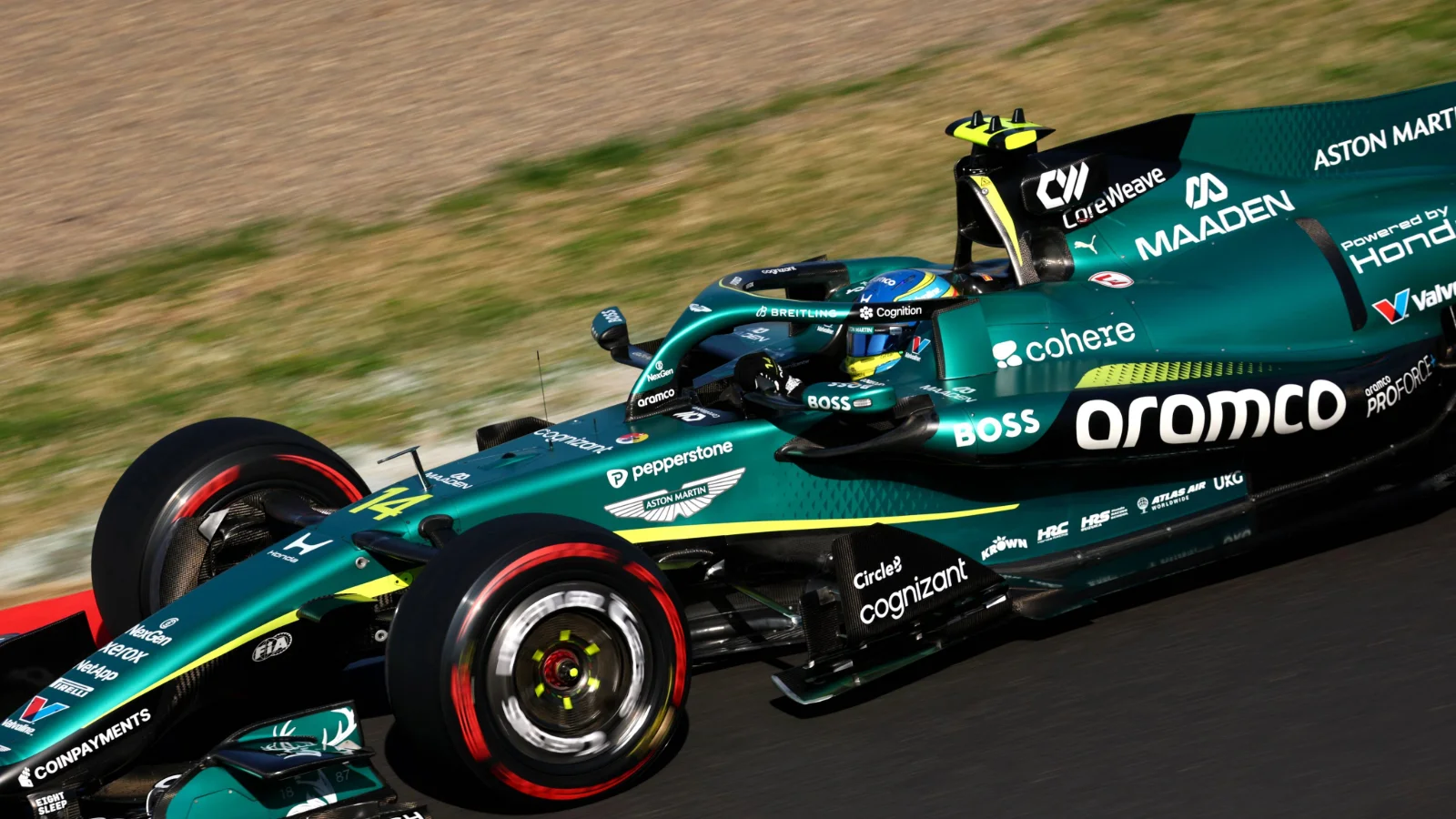
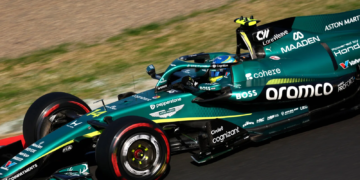
Honda has made a jaw-dropping admission that the Aston Martin chassis is partly responsible for the extreme vibrations that are plaguing the Silverstone marque’s Formula 1 season.
Aston Martin and Honda reached a milestone at the Japanese Grand Prix, as Fernando Alonso achieved the partnership’s first finish of the season, albeit one lap down.
The partnership has been beset by reliability woes, centred around excessive vibrations that are impacting the ability of drivers Fernando Alonso and Lance Stroll to drive the car.
Both team and manufacturer are working flat out to resolve the crisis, and Aston Martin sat firmly at the bottom of the standings.


Aston Martin has maintained throughout the crisis that the AMR26 chassis would easily rank within the top five on the grid, in a stance similar to McLaren did with Honda during its 2015 nadir.
Koji Watanabe, President of Honda Racing Corporation (HRC) was tight-lipped before Honda’s home race in Japan about any immediate gains Honda can make in the short term.
“Well, we have some recovery plan together with Aston Martin, but we cannot tell that today,” he said.

A startling admission from Honda
Answering a question on why Honda never saw the nightmare issues it is experiencing with Aston Martin, while with Red Bull. Watanabe then made the startling admission that the AMR26 itself is also to blame for the extreme vibrations that have threatened to leave permanent nerve damage to its drivers.
“We have enough experience until 2025. As I told you, the most difficult point is that we started the development a bit later compared to the others,” he said.
“Also, in the test on the dyno, the vibration is at an acceptable level, but once we integrate in the actual chassis, that vibration is getting much more than the test on the dyno.
“So, of course, on the PU (sic) we cannot solve the problem, only the PU, so we are really closely together with Aston Martin Aramco to solve the problem, not only the power unit, but also together with the chassis.”
Given the scale of Honda’s issues, which have left the manufacturer significantly behind its rivals’ output, it will likely qualify for an extra development allowance from the FIA.
But before attempting to take advantage of the FIA’s ADUO [Additional Development and Upgrade Opportunities], Honda has admitted it needs to understand the full picture of its problems.
“Well, it’s quite difficult to say, but at least we need to improve not only the reliability but also the performance,” he said on whether Honda would be forced to redesign its beleaguered power unit.
“Under current regulations, it’s difficult to improve the performance itself, so currently we are focused on how to improve the reliability, and also, within the rules, we have to improve the performance. Yes, that’s it.”
Aston Martin’s Mike Krack confirmed ongoing development, including a new front wing and floor in Suzuka, despite questions about reliability and performance.
“It is true that we have to focus on reliability,” he said, “but it is also true that we are not fast enough because, even if we finish the race, we are not strong enough to finish in the points.
“On the PU side, we have, obviously, to wait, because the regulation does not allow you to make any kind of changes in the time as you like.
“On the chassis side, we are working flat out to make it faster.”






Discussion about this post