
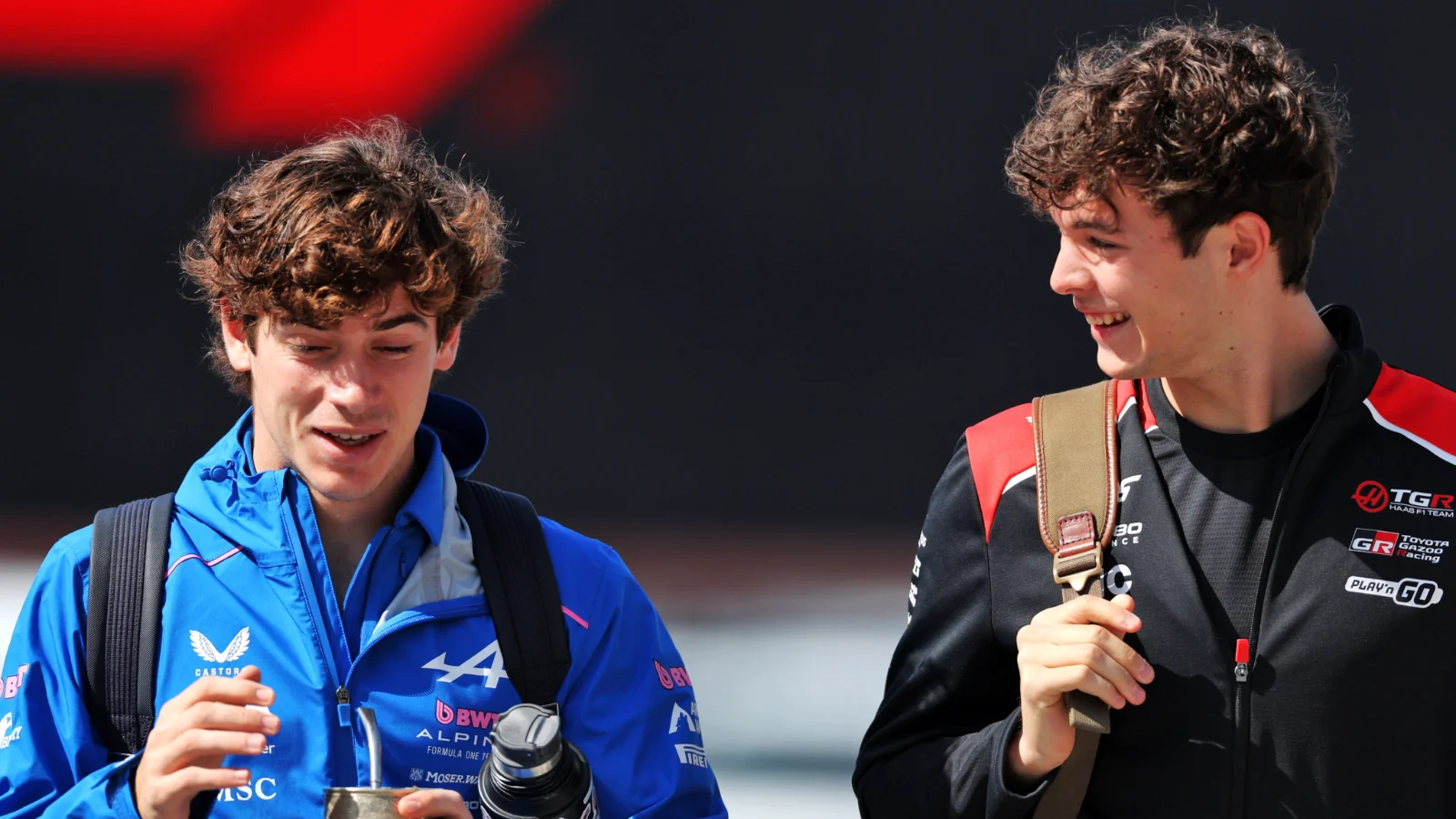
Franco Colapinto has denied being the direct cause of the horror smash that saw Oliver Bearman sent to the Formula 1 medical centre in Sunday’s Japanese Grand Prix.
The Argentinian was approaching the Spoon Curve of Lap 21 when Bearman’s Haas encountered him at a speed of 50kph faster than the Alpine.
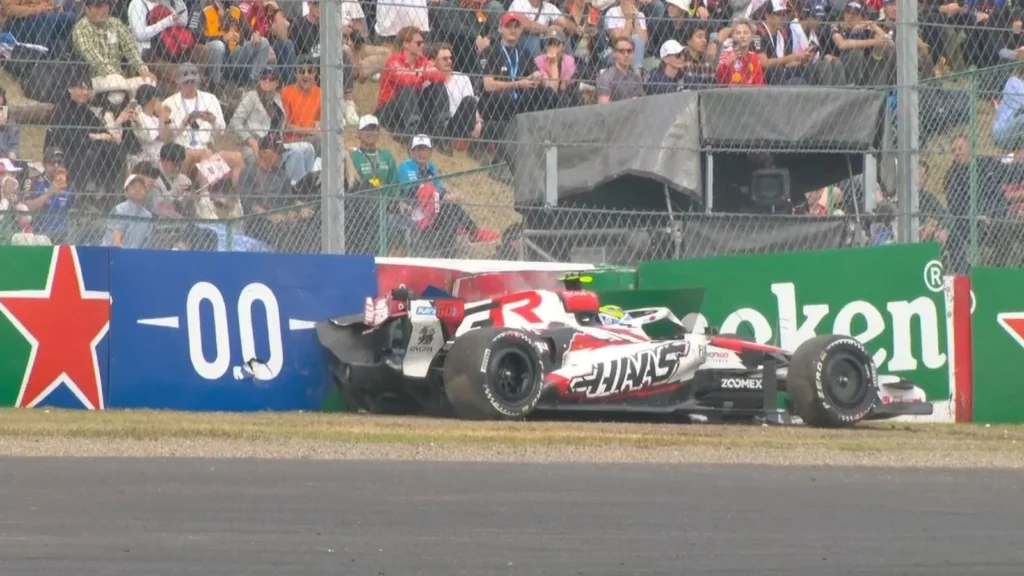
Bearman was forced to take avoiding action, spearing to the left and onto the grass on the lefthand side, sending him skidding backwards in to the opposite wall.
The crash, clocked at 50G on impact, left Bearman struggling at the side of the barrier, being helped to safety by marshals as the Englishman limped away, looking in considerable pain.


Bearman was swiftly taken to the medical centre where he was evaluated and x-rayed, where he was given the all-clear.
The Ferrari academy man was given dispensation to miss media duties after the race, but via Haas, spoke of the “scary moment,” and apologised to the team for the crash, but added that he felt Colapinto could have done his bit to minimalise the chances of the crash.
“Also I felt like I wasn’t given much space, given the huge excess speed I was carrying,” he said.
“We need to be a bit more lenient and a bit more prepared, as unfortunately this was the result of a massive delta speed which we’ve not seen in Formula 1 before.”
Colapinto acknowledges ‘understanding’ to avoid future speed difference-related crashes
Bearman also made the point that the accident was likely caused by Colapinto needing to regenerate energy in his battery, a risk that will now be omnipresent due to the new 50-50 hybrid engines, as part of the new regulations.
“There was a massive overspeed – around 50kph – which is a part of these new regulations, and we have to get used to it,” he said.
Colapinto denied being culpable for the incident, but acknowledged a similar viewpoint that getting used to the speed difference is a must.
“It was really strange, the speed difference was so big it was almost like I was on an out-lap, it was really odd,” the Argentinian told media, including Motorsport Week.
“It is a corner that we are doing flat, and he was 50kph quicker than me, so it is very strange.
“I think it gets sketchy when the straights are not straight, and it is turning, and as I looked in the mirrors, he was spinning on the grass and even overtook me, so imagine the speed difference.
“I think at some point, it becomes really dangerous, and I’m glad he was OK. I saw him walking in the paddock, and he seemed fine.
“I never moved or anything like that, so I think the speed difference, the marbles [contributed], but the biggest thing is that one car was doing 50kph more, and that is when it becomes dangerous.
“It is the same thing which happened in Melbourne, just that was in the race start, and I had to avoid someone doing 100kph less, but it is the things happening with these cars, and we just need to understand how to make it a bit less of a problem.
“I never used the boost in that straight corner, but I think Ollie was using it because he looked really strong and came like 45kph quicker than on his previous lap, and that is a really big difference.”
This is perhaps the biggest pitfall of the new regulations. With cars trading different speeds, the danger of running into a slow car is very real now and whilst drivers have impeccable reactions, accidents like this could be repeated across the season.
READ MORE – FIA issues urgent statement after Oliver Bearman Suzuka smash





Discussion about this post