
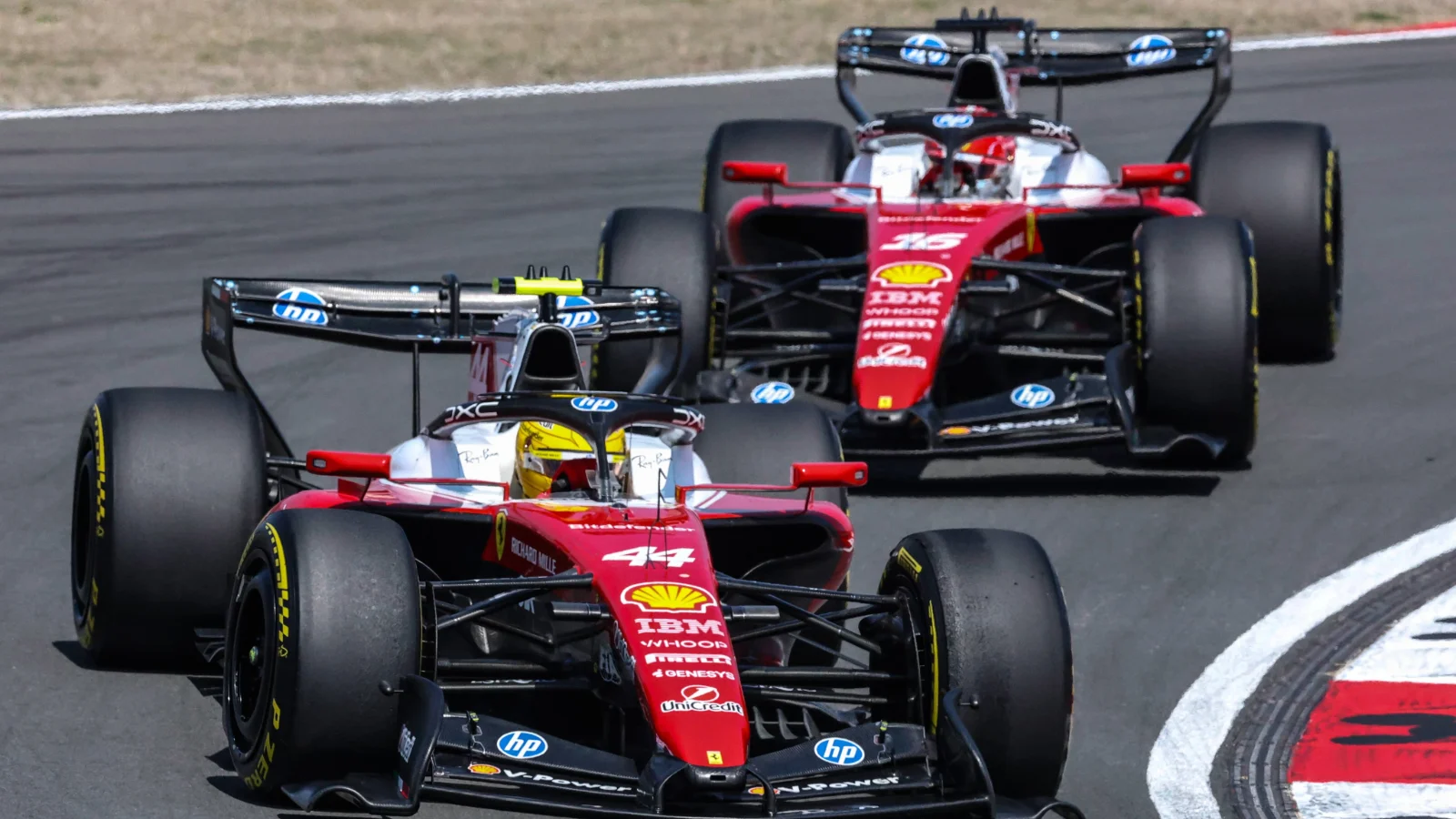
Ferrari heads to Suzuka with a clear objective: unlock more from the SF-26 and close the gap to Mercedes.
After two races, the Italian squad returned to Maranello for a detailed review.
The focus now shifts to energy management and aerodynamic balance, two areas that could define its performance at the Japanese GP.
Suzuka presents a fresh challenge. Its layout differs from the opening rounds, while a full resurfacing and cooler conditions add uncertainty.
Managing battery recovery will be key, though not as extreme as in Melbourne.
Ferrari’s early analysis shows promise. But the team still lacks a true benchmark against its closest rival, Mercedes.
The contrast between the two cars remains clear. Ferrari excels in technical sectors.
Mercedes gains on the straights, where its power unit delivers stronger top-end performance and more efficient energy recovery.
The German team can recharge its battery with less loss of speed—a critical advantage over a lap.
Ferrari is not trying to copy that approach. Instead, it is doubling down on its own concept.
Engineers are working to improve how energy is deployed across the lap, especially in slower corners and transition phases.
One solution under evaluation involves running lower gears to keep engine revs high and boost energy harvesting.
The power unit still has untapped potential. Ferrari believes it has yet to find the optimal setup to extract maximum performance.
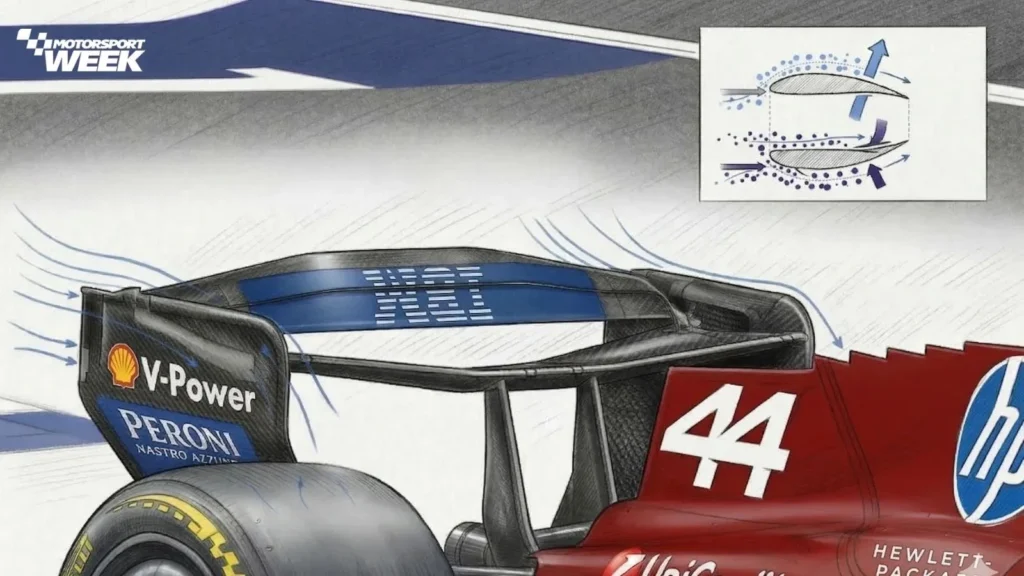
What about the “Macarena” rear wing at Ferrari?
Aerodynamics is the other major focus. The team continues to evaluate its experimental “Macarena” rear wing, first seen briefly in China.
The design increases straight-line speed, but it also introduces balance issues.
Drivers reported instability when the wing closed, particularly under braking. That makes an already tricky phase even harder.
Engineers are now refining how and when the system operates, alongside adjustments to the front wing to stabilise the car.
The concept shows clear gains when open. Less so when closed. There are also trade-offs; the system adds weight, and the SF-26 is already above its target. A reduction of several kilograms is still needed.
Elsewhere, smaller details are also under review. A halo-mounted fin tested earlier in the season could return in revised form after raising concerns over visibility.
Suzuka will offer an important signal. It may not decide the fight at the front, but it will show whether Ferrari’s direction is the right one before a short break in the calendar.
READ MORE – Audi F1 rift rumours continue amid ‘long conversation’ with Jonathan Wheatley






Discussion about this post