Formula 1 has long been a sport where margins matter more than most. A tenth of a second, a fraction of a degree in tire temperature, a misjudged pit window — any one of these can separate a podium from a points-scoring drive.
The tools teams use to manage those margins have changed dramatically, and the sport now generates enormous volumes of data across a single race weekend.
For fans following the competitive picture through sports betting markets, the increasing unpredictability that data-driven strategy introduces has made race outcomes considerably harder to call.
Telemetry as the foundation of race strategy
Modern F1 cars transmit hundreds of data channels to the pit wall in real time. Tyre temperature, brake wear, fuel load, suspension load, and throttle application are among the variables monitored continuously throughout a race.
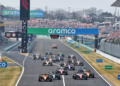
Engineers use this stream of information not simply to observe what is happening, but to model what is likely to happen over the next ten or twenty laps.
Tyre degradation curves have become a particular point of focus, because the decision of when to pit — and onto which compound — is frequently the most consequential strategic call of a race weekend.
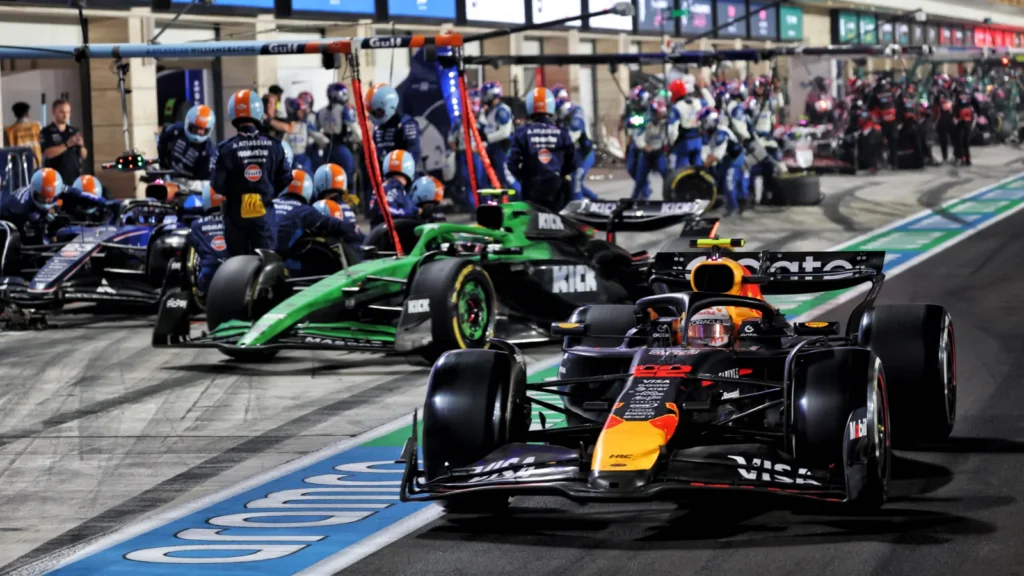
Simulation and predictive modelling
Before a car takes to the track on race day, teams have already run thousands of simulated race scenarios. These models incorporate track-specific data from previous years, weather forecasts, competitor pace estimates, and safety car probability distributions.
Strategy teams use this work to build decision trees, a set of pre-mapped responses to conditions that might develop during the race.
When those conditions arise, engineers do not start from scratch but adjust an established plan against incoming live data. The speed of that adjustment is where competitive differences most visibly emerge.
Driver feedback in the data pipeline
Data analytics does not replace the driver’s role in strategy; it reframes it. A driver’s subjective sense of tyre feel or car balance is cross-referenced with objective sensor readings to build a more complete picture of performance.
When a driver reports instability under braking, engineers can isolate the specific telemetry channels corresponding to that sensation and begin diagnosing the cause far more quickly than was possible in earlier eras.
Over a race weekend, this exchange between human perception and machine data shapes both immediate setup decisions and longer-term development priorities.
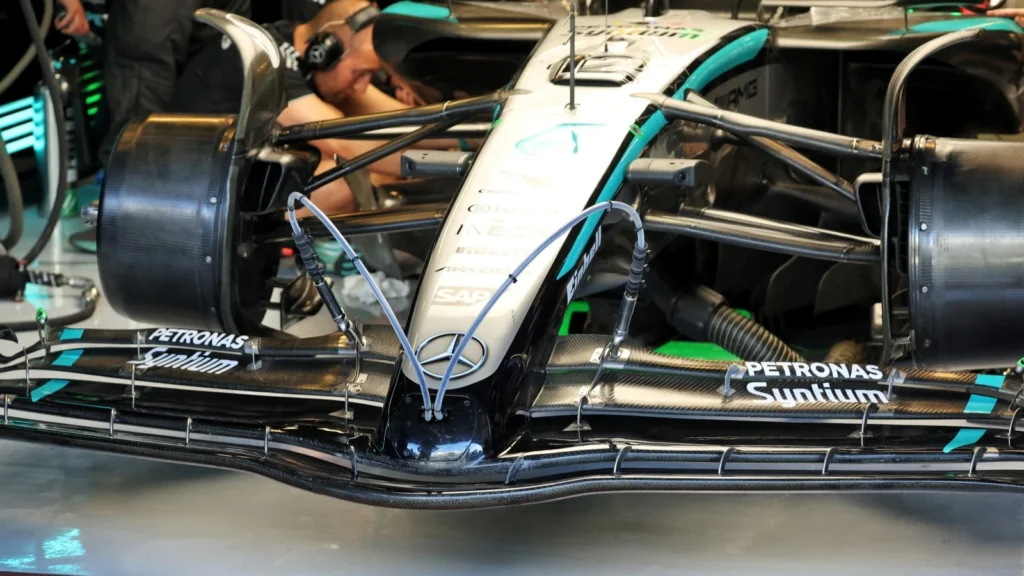
Car development across a season
The data collected on race weekends feeds directly into the ongoing development cycle of the car. Computational fluid dynamics models are updated with real-world aerodynamic data gathered during sessions, allowing simulation environments to be refined on a rolling basis.
Teams with stronger data infrastructure can close the gap between simulated performance and on-track reality more efficiently.
Over a long season, that efficiency accumulates, and teams that manage their data pipelines well tend to find performance gains in areas their rivals have not yet examined. The quality of the analysis, not just the volume of data collected, increasingly determines how much of that potential is actually converted into lap time.