Over the years, race fans have witnessed periods of absolute dominance in Formula 1, sometimes for multiple seasons.
For example, the era of Michael Schumacher with Scuderia Ferrari or the later supremacy of Mercedes AMG Petronas Formula 1 Team.
But the history of Formula 1 shows a completely different side to the sport, especially when looking at how fans have placed bets with the most popular online casino.
In some years, the championship turned into complete chaos, and sometimes technical revolutions decided the fate of the title literally in the last turn of the final race.
In this article, we will look at the most unpredictable seasons in Formula 1 history – championships that shattered experts’ predictions and went down in motorsport history forever.
What makes an F1 season truly unpredictable?
A championship rarely becomes chaotic on its own – more often than not, it is the result of a combination of technical, sporting, and human factors.
One of these is the most unpredictable Formula 1 season. Sometimes the title is won by a driver or team that almost no one considered a favourite before the start of the season. Another factor is changes in technical regulations.
In Formula 1, rules play a huge role. Even small changes in aerodynamics or engines can completely change the balance of power between teams.
Unpredictability can also arise when a long period of dominance suddenly ends. A team that has won championships for years can unexpectedly lose its advantage due to new technology or a mistake in the design of the car.
There are also more dramatic reasons:
- Serious accidents and injuries to drivers;
- F1 title battles;
- Extreme weather conditions;
- Technical scandals;
- Team disqualifications
The history of Formula 1 has seen many examples of one of these factors turning the entire championship upside down.
1976: The legendary Hunt vs. Lauda title fight
The 1976 season is considered one of the most dramatic Formula 1 championships. At the start of the championship, the Scuderia Ferrari team and its leader Niki Lauda looked virtually unbeatable.
Lauda was confidently leading the championship and seemed to be the main contender for the title. Everything changed during the race at the legendary Nürburgring Nordschleife circuit. As a result of a terrible accident, Lauda’s car caught fire and the Austrian driver suffered severe burns and barely survived but returned to the track just six weeks later.
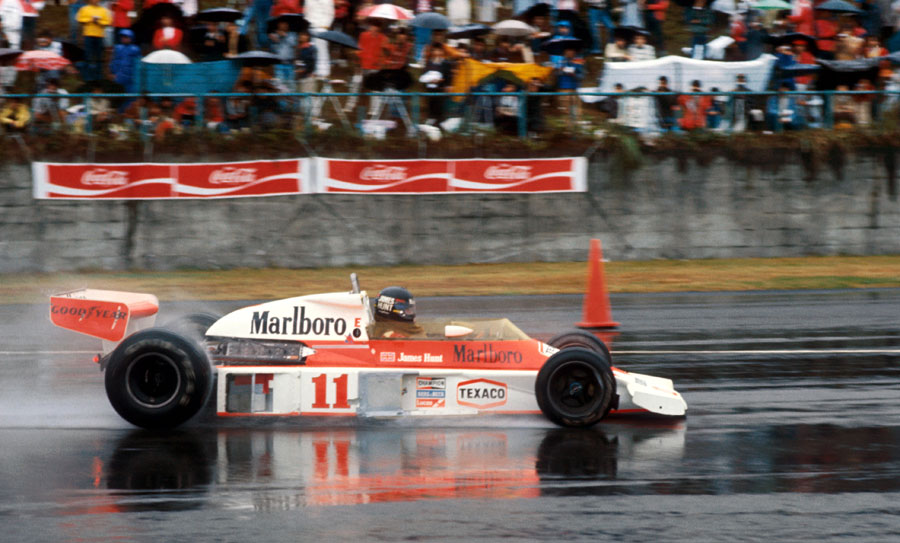
His main rival, Briton James Hunt, began to rapidly close the gap in the championship. The McLaren driver won race after race. The season culminated in the final grand prix in Japan at the Fuji Speedway.
The race took place in pouring rain with both title protagonists being wary about starting in the monsoon conditions. Shortly into the race, Lauda, fearing for his life after his recent accident, decided to retire leaving Hunt to finish third and this securing the title.
1982: A season without a dominant driver
That year began tragically. During qualifying for the Belgian Grand Prix, driver Gilles Villeneuve was killed, shocking the entire motorsport world. Later, Didier Pironi was seriously injured in an accident during qualifying in Germany.
The championship ended up with virtually no clear leader. The season’s statistics are incredible: 11 different race winners, changes in the championship leaders, and no dominant team. In the end, the title was won by Keke Rosberg, driving for Williams Racing.
2007: The rookie who nearly stole the title
The 2007 season was one of the most intense. The main sensation was the debut of young British driver Lewis Hamilton with McLaren. The rookie immediately began fighting for the title and led the championship. His teammate was reigning two-time world champion Fernando Alonso.
A tense rivalry quickly developed between the two drivers. The situation was further complicated by the famous Spygate scandal, involving allegations of industrial espionage between McLaren and Ferrari.
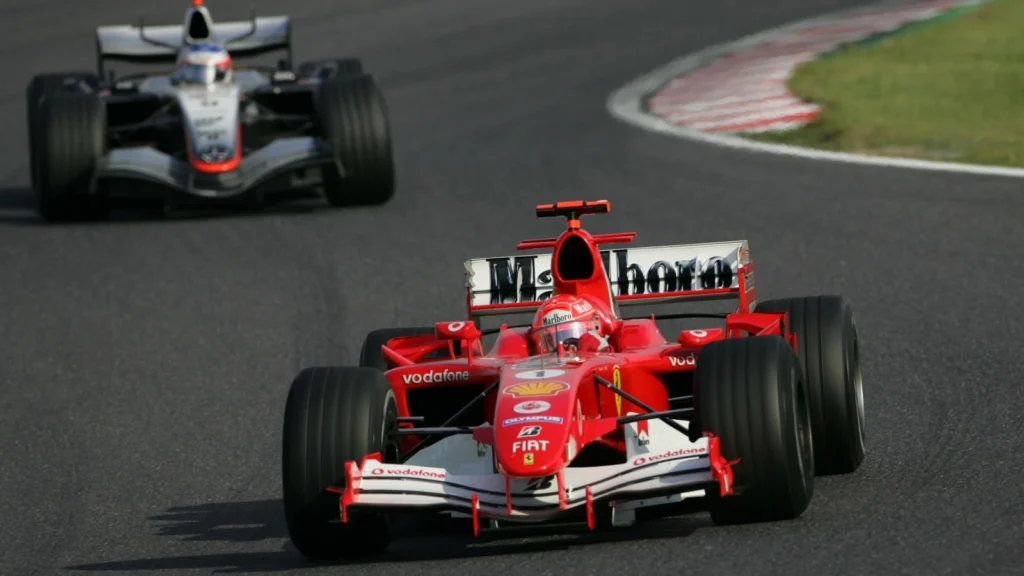
But the hero was one of the unexpected Formula 1 champions – Finnish driver Kimi Räikkönen in his Ferrari. He approached the final race at the Autódromo José Carlos Pace in Brazil with an outside of winning the title but ended up winning the race and the championship.
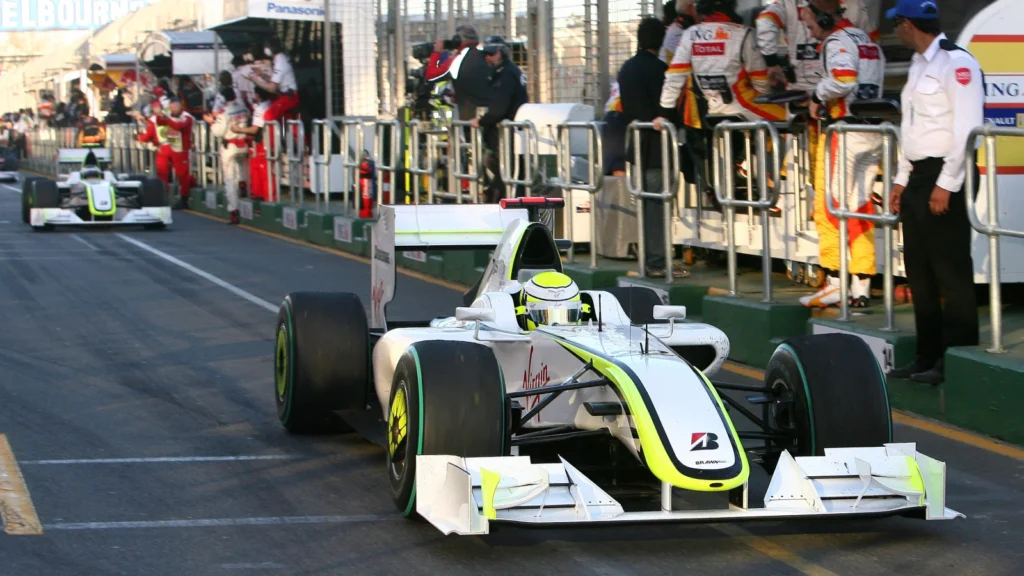
2009: Brawn GP and the greatest ever underdog story
This is rightly one of the most chaotic Formula 1 seasons. The Honda Racing F1 Team unexpectedly left the championship at the end of 2008 due to the financial crisis. The future of the team was in jeopardy but team principal Ross Brawn bought the team and created a new structure – Brawn GP. The team barely managed to get the car ready for the start of the season.
Their main technical advantage was the double diffuser, an innovative aerodynamic solution that gave the car a significant advantage. Jenson Button won six of the first seven races of the season and although rivals gradually caught up with Brawn GP in the second half of the championship, the early advantage proved decisive. Button became world champion and Brawn GP won the Constructors’ title.
2012: The season of seven different winners
The 2012 season was one of the most diverse and unpredictable championships. The first seven races of the season were won by seven different drivers: Jenson Button, Fernando Alonso, Nico Rosberg, Sebastian Vettel, Pastor Maldonado, Mark Webber, and Lewis Hamilton.
The balance of power was constantly shifting. Different teams found advantages on different tracks. Ultimately, the battle for the title unfolded between Sebastian Vettel of Red Bull Racing and Fernando Alonso of Ferrari.
The season finale at the Autódromo José Carlos Pace in Brazil was truly dramatic. Vettel spun out on the first lap but ultimately won the title.
2021: The dramatic Verstappen vs. Hamilton finale
The focus was on the battle between Max Verstappen of Red Bull Racing and seven-time world champion Lewis Hamilton. The two teams, Red Bull and Mercedes, were virtually on equal footing.
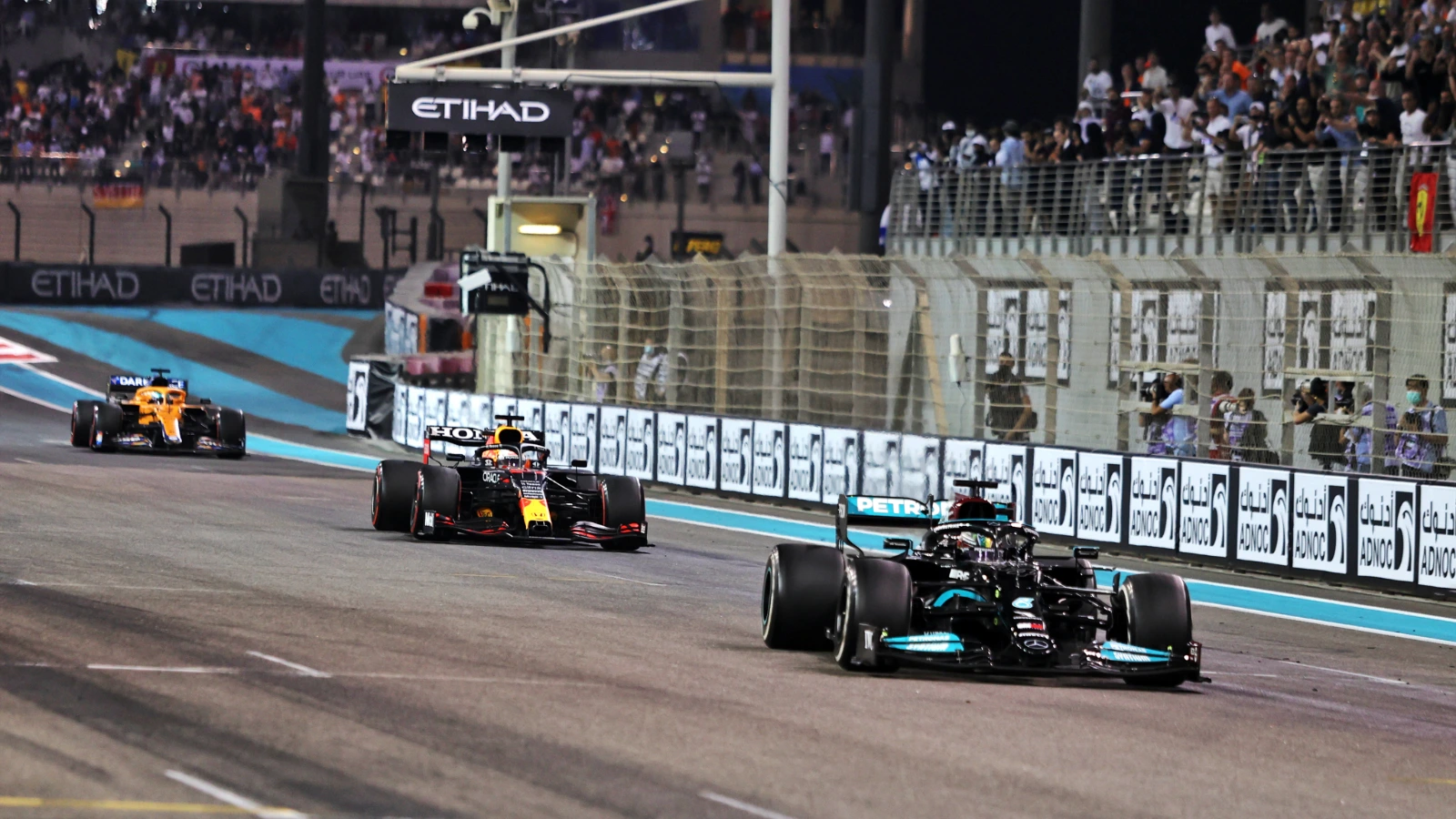
There was plenty of drama: a crash at the British Grand Prix, a collision at Monza, and tense tactical duels. The climax came in the final race at the Yas Marina Circuit in Abu Dhabi. After a late safety car deployment, the championship was decided on the last lap of the season. Verstappen overtook Hamilton and became world champion for the first time.
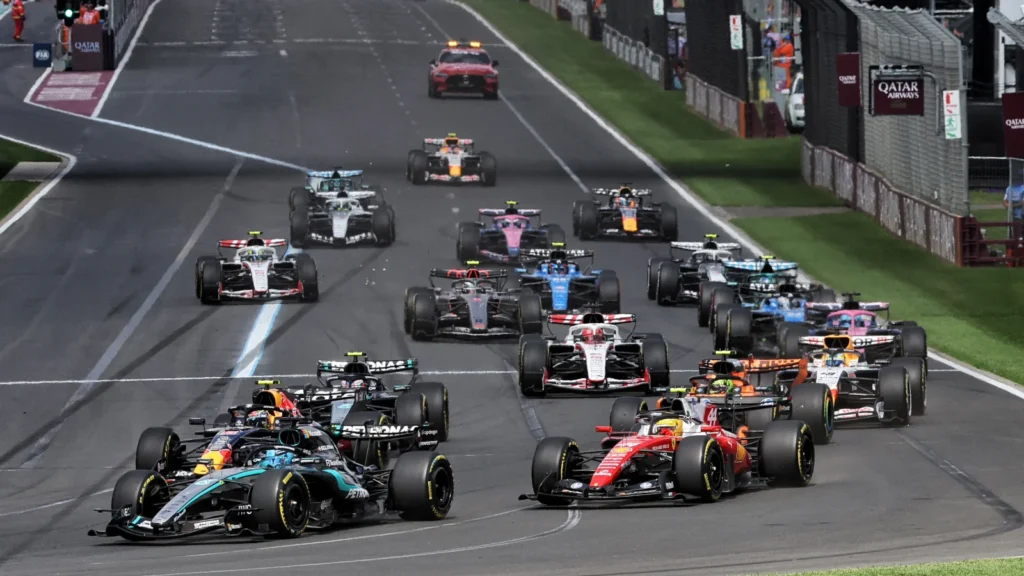
Could the 2026 season become the next unpredictable championship?
The 2026 season is particularly interesting because new technical regulations will come into force in the championship, with significant changes:
- New hybrid powertrains;
- Revised aerodynamics;
- A change in the power balance between electric and gasoline components.
In addition, new engine manufacturers and new teams may join the championship, which will further increase the intrigue.
Why fans love chaotic F1 seasons
When the outcome of the championship is a foregone conclusion, interest in the races can wane. But when the battle continues until the final stages, every event on the track takes on enormous significance. Chaotic and historic Formula 1 seasons create dramatic sporting stories, legendary rivalries, and unexpected heroes.
Conclusion: When uncertainty creates motorsport history
The most unpredictable seasons have become part of motorsport legend. Such championships remind us that even in the high-tech world of Formula 1, it is impossible to completely control the outcome of events. It is unpredictability that turns ordinary seasons into historic ones and drivers into sporting legends.