

Adrian Newey has all but confirmed restricted running for Aston Martin in Formula 1‘s Australian Grand Prix due to its car’s current issues risking “permanent nerve damage” to its drivers.
The Silverstone-based squad has faced issues with its Newey-designed AMR26 throughout pre-season testing, largely due to reliability issues with its Honda power unit.
As a result, the team, as well as the Japanese marque, have manfully toiled in both the UK and in Japan to resolve the afflications, which is largely comprised of vibrations that cause the battery in the PU to fail.
This sparked rumours that the team were pre-planning an early double-DNF from the race, something that Newey has appeared to corroborate.


“That vibration into the chassis is causing a few reliability problems: mirrors falling off, tail lights falling off, all that sort of thing, which we are having to address,” he told media including Motorsport Week in Melbourne.
“But the much more significant problem with that is that that vibration is transmitted ultimately into the driver’s fingers.
“Fernando is of the feeling that he can’t do more than 25 laps consecutively before he will risk permanent nerve damage into his hands.
“Lance is of the opinion that he can’t do more than 15 laps before that threshold.
“We are going to have to be very heavily restricted on how many laps we do in the race until we get on top of the source of the vibration and improve the vibration at source.”
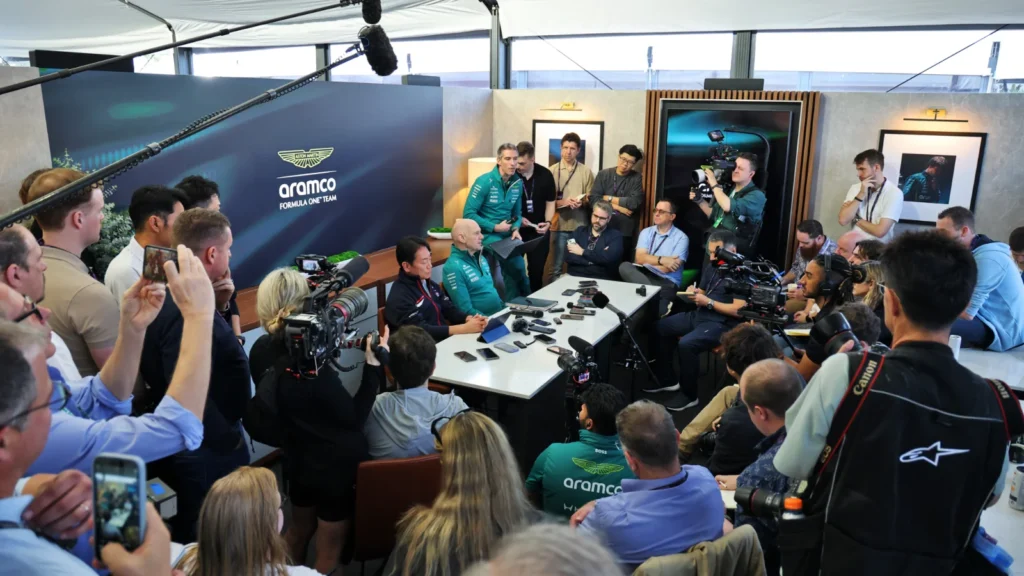
Newey reveals cause of Aston Martin vibrations as well as ongoing improvements
Newey explained that, naturally, work on the battery has been the particular area that both parties have been working on to ensure long runs are completed.
The 67-year-old also revealed where the vibrations themselves are coming from, as well as the “significantly reduced” vibrations alraedy from work carried out.
“The battery is the thing that we are have been focusing on because that’s the critical item on life,” he said.
“Without giving away any technical details, what we have achieved this weekend, for this weekend, it tested on the dyno over the course of the weekend and got to the solution that we propose, which we will be using here at Melbourne on Tuesday, Monday, Tuesday, that has successfully, significantly reduced the vibration going into the battery.
“What is important to remember is, effectively, the PU, the combination of the ICE and possibly the MGU as well, is the source of the vibration. It’s the amplifier.
“The chassis is, in that scenario, the receiver. A chassis, a carbon chassis, is a naturally stiff structure with very little damping, so the transmission of that vibration into the chassis, we haven’t made any progress on.”
READ MORE – Lewis Hamilton dismisses potentially major Ferrari issue in F1 2026








Discussion about this post