

Mercedes’ customer teams are expected to start the new Formula 1 season with an upgraded power unit specification at the Australian Grand Prix after running alternative versions during pre-season testing.
McLaren, Alpine, and Williams did not use the latest Mercedes engine throughout winter running, as the manufacturer focused on reliability while adapting to Formula 1’s new technical regulations.
The 2026 season marks a major reset for power unit suppliers.
Mercedes also faces the added complexity of providing engines to four teams, increasing pressure on production and development schedules.


During testing, Mercedes prioritised stability and data gathering.
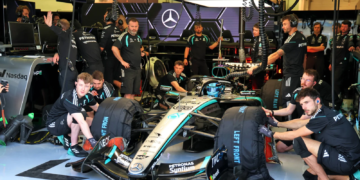
At the same time, the Mercedes works squad evaluated the newest evolution of the M17E Performance power unit.
Limiting the newest specification to a single team reduced manufacturing strain and helped Mercedes validate the final version before the homologation deadline on March 1.
While performance differences between the units are not believed to have been dramatic, Formula 1 regulations prevent any long-term variation once the championship begins.
The regulations are clear
Customer teams must receive identical hardware to the works entry from the opening race onwards. That requirement means Mercedes’ partner squads should see a step forward when the season begins in Melbourne.

McLaren Team Principal Andrea Stella avoided discussing technical distinctions between testing specifications but emphasised the importance of arriving at the correct package for round one.
“I don’t want to comment too much in terms of specification of hardware,” he told media.
“I think that’s part of the strategy that HPP deployed in terms of supplying the hardware, the power units, to the customers and to the works team.
“It’s certainly been an intense and pushed programme for power unit manufacturers, not only for the teams from a chassis point of view.
“But what is important is that the right specification is available for race one.
“I have to say that the power unit we had during this test behaved extremely reliably and gave us the opportunity to do all the tests that we wanted to do, and also learn about the interaction between power unit, chassis and driver.”
Formula 1’s rules strictly enforce equality between works operations and customer teams.
Article 1.4 of Appendix 4 of the technical regulations states: “each power unit manufacturer must submit one homologation dossier which applies to all competitors it intends to supply.
“Only the fuel specification, the engine oil specification and power unit wirings may differ between competitors.”
The regulations also mandate identical operational settings. All power units must be “operated in the same way”, “run with identical software for PU control”, and be “capable of being operated in precisely the same way.”
Fuel and oil specifications must also match those used by the factory team unless a customer selects an alternative supplier.
READ MORE – Cadillac hands Mario Andretti unique honour ahead of F1 debut






Discussion about this post