
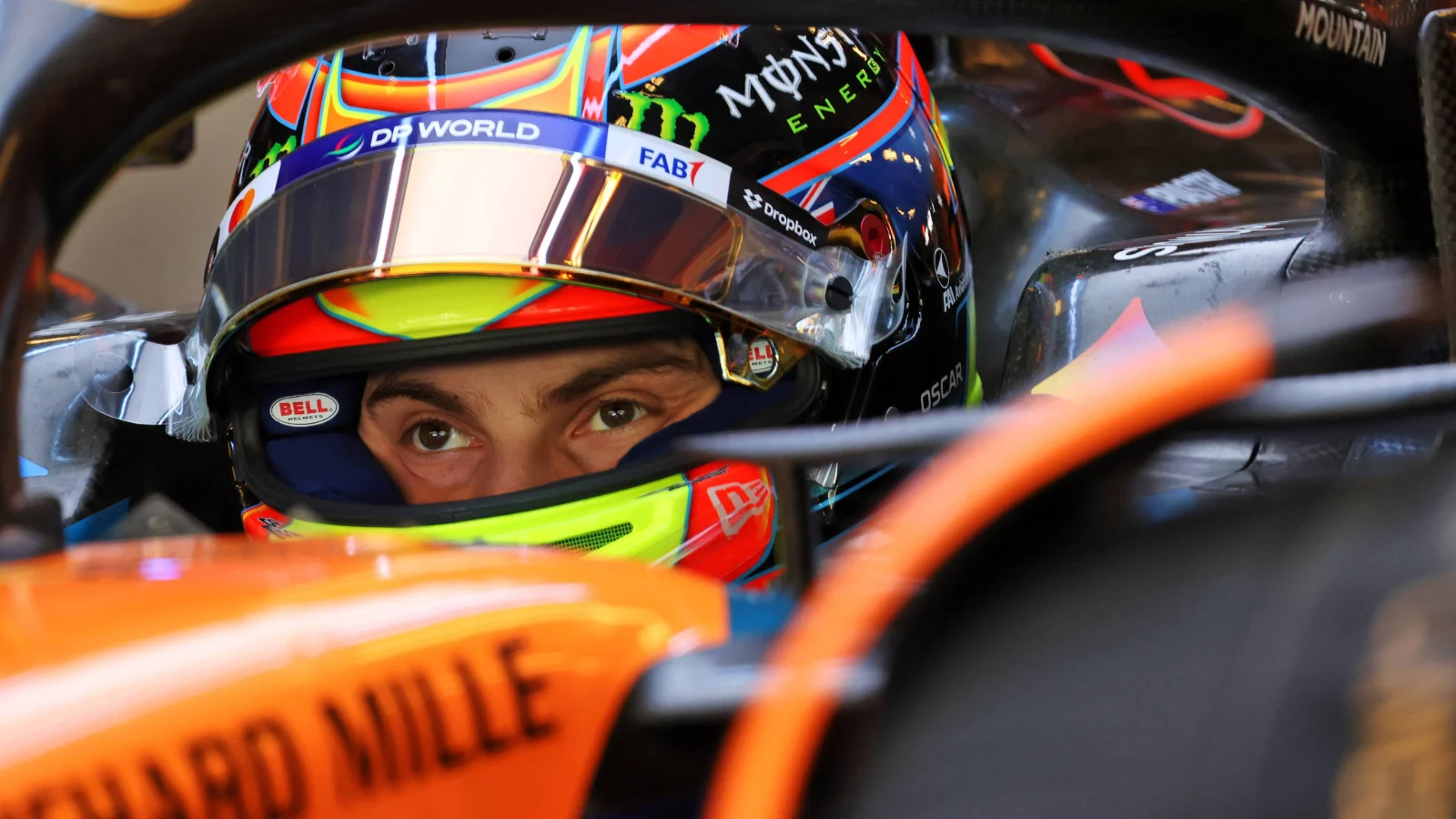
Oscar Piastri believes Formula 1 has a “recipe for disaster” if race starts and overtakes are not properly addressed ahead of the season opener in Melbourne.
Following the first of two testing weeks in Bahrain, many drivers shared contrasting opinions on the 2026 challengers.
Max Verstappen infamously hailed the new regulations as “Formula E on steroids.” Whilst Lando Norris shared a more positive sentiment, believing the cars were “a lot of fun to drive.”
However, Australia’s Oscar Piastri offered a more nuanced opinion on the new hybrid era of cars.


“The cars are certainly different, that’s for sure,” Piastri said to Motorsport Week when asked his thoughts on the dramatic new driving style needed in 2026.
“I think the low-speed corners probably feel the same, or maybe a little bit nicer, because it’s a little bit lighter. But obviously, the high-speed performance in terms of downforce is significantly less than last year.”
In just the driver’s second official testing week, Piastri and McLaren’s main focus remained on learning the differences between the cars. Ultimately, fine-tuning their skills for the remainder of the season.
“We’ve been learning a lot about how to get the most out of the power units this week, which is unconventional,” Piastri highllighted
“But (it’s a) new challenge for a moment”
Despite these new challenges, the Australian believes the pecking order at the front of the field remains similar. Highlighting that the top four teams from previous seasons remain the same ahead of 2026. However, the order is still not definitive.
“Where we are in the pecking order, I don’t know,” Piastri stated.
“I think it kind of looks like the top four teams are still the top four teams, but I don’t know where exactly we sit in that at the moment”
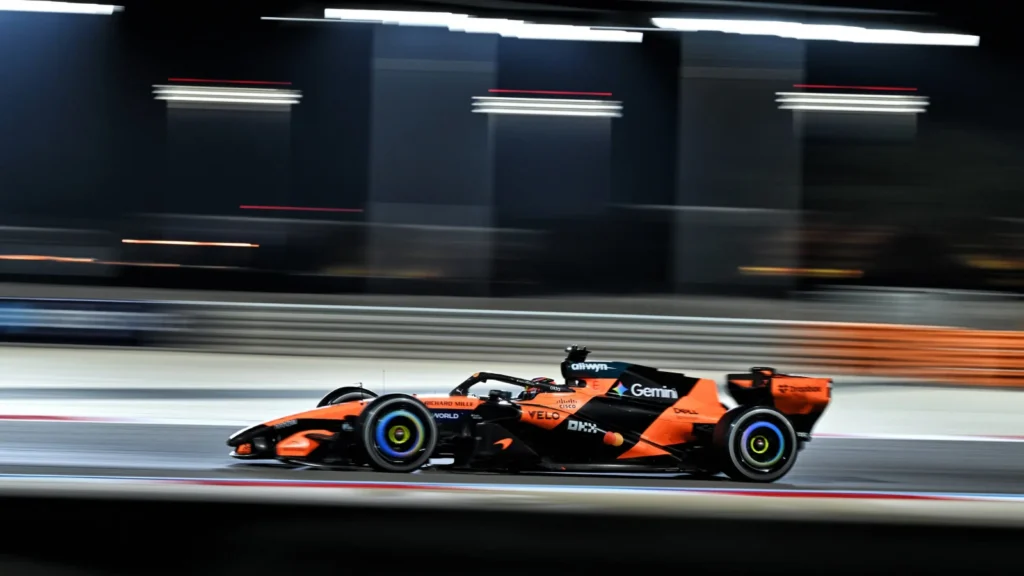
Piastri echoes F1 safety concerns
A major talking point of the first week of testing was race starts. The removal of the MGU-H will make the process more difficult for drivers in this new era of cars.
But as discovered on the final day of testing, this can take up to 10 seconds for engine revs to achieve an ideal position. Potentially compromising drivers starts if they do not engage in the starting procedure early enough.
Bahrain’s final minutes exposed concerns as drivers lined up for a practice race start to close the session. When the lights turned green, some drivers got off the line as per normal; however, others remained stuck on the grid.
Piastri quickly clarified that this issue ultimately had nothing to do with the car, rather it was a communication error.
“I think the start today was just a mix-up in instructions,” the Australian said.
“I got told to wait until whoever was in front of me had gone… and clearly, some other people had a different idea.
“So that was nothing to do with the power units”
Despite this, the McLaren driver echoed the concern of his team principal, Andrea Stella, over several aspects of racing. Particularly, race starts.
Stella sent a plea to the FIA to look out for drivers’ safety and implement solutions to address the various issues that have arisen during testing. Piastri reinforced these concerns and expects discussions to take place before the grid heads to Melbourne.
“Starts need to be addressed,” Piastri said.
“As we’ve all seen, it’s a pretty complicated process now to have a safe start, let alone a competitive one.
“It’s something that we’ll talk about between now and Melbourne, I’m sure, and there are plenty of topics to address.”
Overtaking concerns remain present
The sport has replaced the Drag Reduction System (DRS) with a more strategic energy boost system. Forcing drivers to harvest and deploy electrical power strategically throughout the race. Adding yet another layer of strategy to an already tactical sport.
Piastri emphasised that the teams will have to learn how to utilise this on-track to make cruical overtakes.
“DRS was obviously just a pure advantage used to gain,” Piastri explained.
“With the energy boost, you’ve obviously got to harvest that extra energy somehow and then deploy it, which, with some of the rules in place, is not always that straightforward.”
Despite this, the McLaren driver believes, success lies not only in on-track performances but also in changing the way that drivers go racing. These new cars will force drivers into reprogramming the way they race, helping them to learn new techniques.
Namely, due to the lower downforce cars drivers will have to begin lifting on straights to manage energy. Something that goes against what a drivers natural instinct.
“When you’ve driven a certain way for the last 15 years, it’s pretty tough to undo some of those things,” he said.
“Obviously, as a driver, you never want to be lifting at any point.”
Whilst acknowledging the trickiness of the new cars, Piastri believes some aspects require discussion at a regulatory level before competitive racing begins.
“I think the starts are probably the most obvious one for now,” he said when asked about the biggest obstacle.
“Overtaking, it’s always going to be tough to manage until you’ve actually had a race.
“I think a pack of 22 cars with a couple hundred points less downforce sounds like a recipe for disaster to me.”
READ MORE – Key change to Oscar Piastri backroom team announced as ex-F1 driver steps back




Discussion about this post