Formula 1 has entered a new era with substantially changed cars and power units in 2026, making launch season one of the most eagerly anticipated in years.
Lando Norris won the 2025 World Championship, becoming the 11th British driver to achieve the feat and McLaren’s first champion since 2008. He sealed the title by finishing third in Abu Dhabi, which was enough to beat Max Verstappen by just two points in a season that went down to the wire.
Looking ahead to the new campaign, George Russell has been tipped by the bookies and free bet offers as the early favourite for the Australian Grand Prix as Mercedes appear to be the team to beat.
The Silver Arrows released the first renders of their latest challenger back in January, before running the car for the first time at a wet Silverstone later in the day.


Mercedes are hoping to return to title-contending ways after disappointment during the ground effect rules era that concludes with the 2025 season.
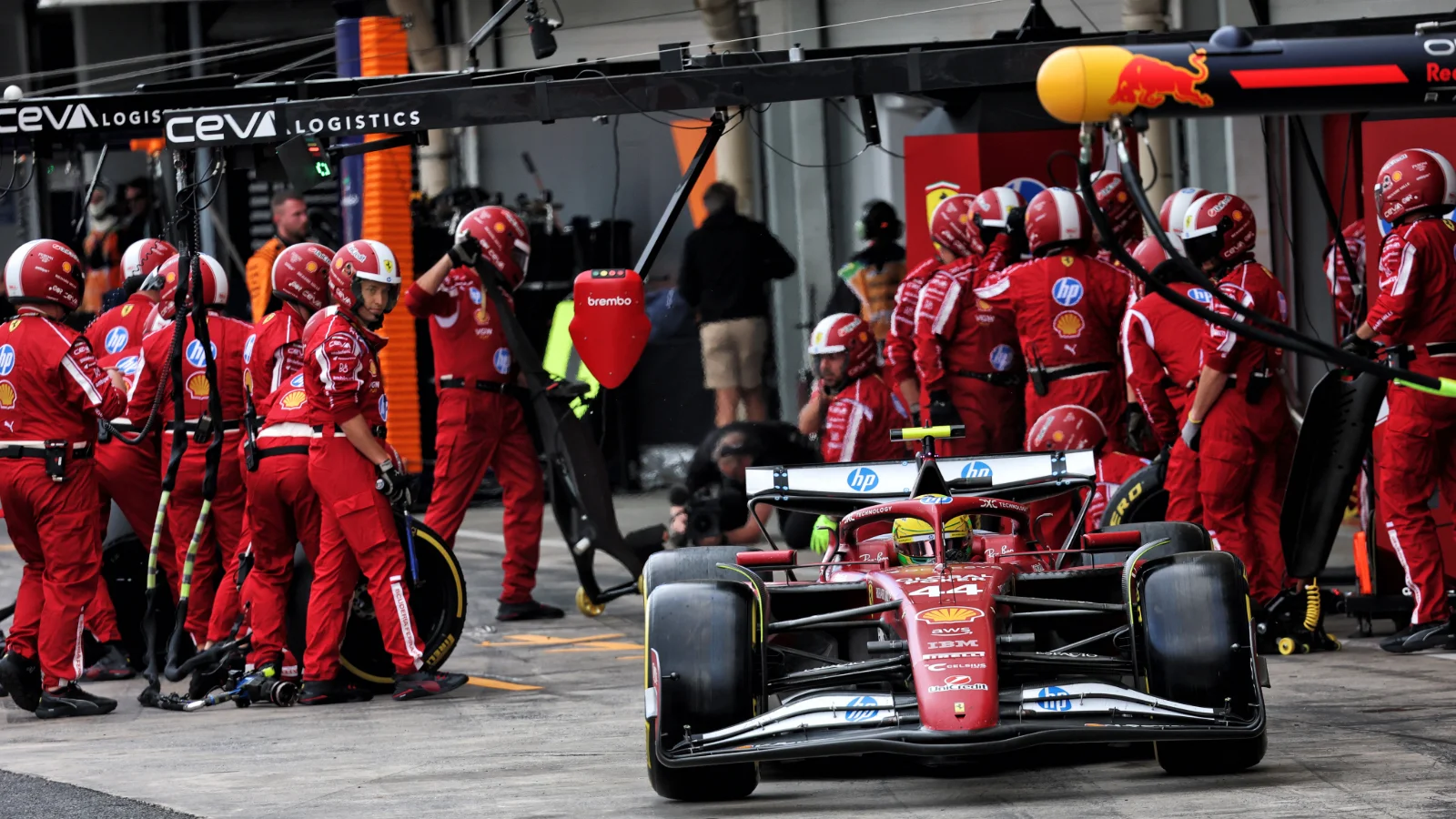
Yet for all the engineering breakthroughs that define modern Formula 1, success still hinges on the fundamentals. Championships are decided by tenths, and pit stops remain one of the few variables that can instantly flip a race.
In Formula 1, pit stops are choreographed to the millisecond. Every mechanic has a single job, and any hesitation or fumbled wheel costs two seconds or even more…
Even a one-second delay can be the difference between emerging ahead of a rival or getting stuck behind a DRS train until the chequered flag. With the best teams executing stops in under two seconds, even the smallest error erases an entire race strategy.
When pit stops go wrong, the consequences can be catastrophic. Here are some of the most costly errors in recent Formula 1 history.
Jenson Button, 2013 Malaysian Grand Prix (McLaren)
Jenson Button arrived in Malaysia with McLaren, showing flashes of pace. The Sepang circuit suited the MP4-28’s characteristics, and Button was running a clever strategy that had him firmly in podium contention.
Then came the pit stop that derailed everything. McLaren’s crew suffered a wheel gun issue, briefly preparing to release Button with a loose wheel before frantically stopping the car. The chaos lasted several seconds as mechanics scrambled to fix the problem while track position evaporated.

“We did everything correctly, pitted on the correct laps and looked after the tyres as we should,” Button said. “We would have only had to have done three stops instead of four for those around us.
“But we had a problem in the pit stop, it is what it is.
“Once I had turned the car off, had it pushed back and the wheel changed, I was never going to get a result.
Button rejoined with his rhythm shattered and his strategy in ruins. A rare podium chance for a struggling McLaren became a frustrating afternoon of damage limitation.
Daniel Ricciardo, 2016 Monaco Grand Prix (Red Bull)
Daniel Ricciardo was utterly dominant around the streets of Monte Carlo, controlling the race from the front. Monaco wins don’t come often, and Ricciardo was delivering a masterclass.
He pitted from a commanding lead expecting a routine service. Instead, his tyres weren’t ready. Red Bull scrambled frantically as Ricciardo sat stationary for 13 seconds while mechanics hunted for the correct rubber. By the time the wheels were fitted, Lewis Hamilton had swept past into the lead.
Ricciardo’s anguish was clear. He was fuming on the radio. He would finish second, but the pain lingered. Monaco 2016 remains a stark reminder of how quickly perfection can unravel in Formula 1’s pit lane.
Felipe Massa, 2008 Singapore Grand Prix (Ferrari)
If Ricciardo’s Monaco heartbreak was painful, Felipe Massa’s Singapore disaster was catastrophic on an entirely different scale.

The Brazilian was leading the inaugural night race at Marina Bay, commanding proceedings from the front in a Ferrari that looked untouchable under the floodlights. Massa was on course for a crucial victory in his intense title battle with Lewis Hamilton.
Then came the pit stop that would haunt Ferrari for years. The team’s traffic light release system misfired catastrophically, sending Massa accelerating out of his pit box with the fuel hose still attached.
Massa then dragged the hose and equipment through the pit lane before he could be stopped, leaving a trail of debris and chaos in his wake.
The subsequent drive-through penalty dropped Massa to the back of the field, transforming a commanding lead into a hopeless race at the tail end.
What should have been 10 points became zero. Massa would ultimately lose the 2008 World Championship to Hamilton by a single point, a margin that made the Singapore nightmare even more unbearable. I
It wasn’t just a race lost; it was potentially a world title thrown away by a split-second error in the pit lane.
The unforgiving nature of perfection
As Formula 1 prepares for its 2026 revolution, the sport’s technological leap will demand even greater precision. New power units, overhauled aerodynamics, and radical car designs will test engineering departments to their limits.
Yet the fundamentals remain unchanged. Pit stops will still be won and lost in fractions of a second.
A loose wheel gun, a miscommunication, or tyres not ready can undo months of development in an instant.
While the cars may change, the brutal truth of pit lane mistakes remains eternal. One error, and a certain victory becomes a painful footnote in racing history.