
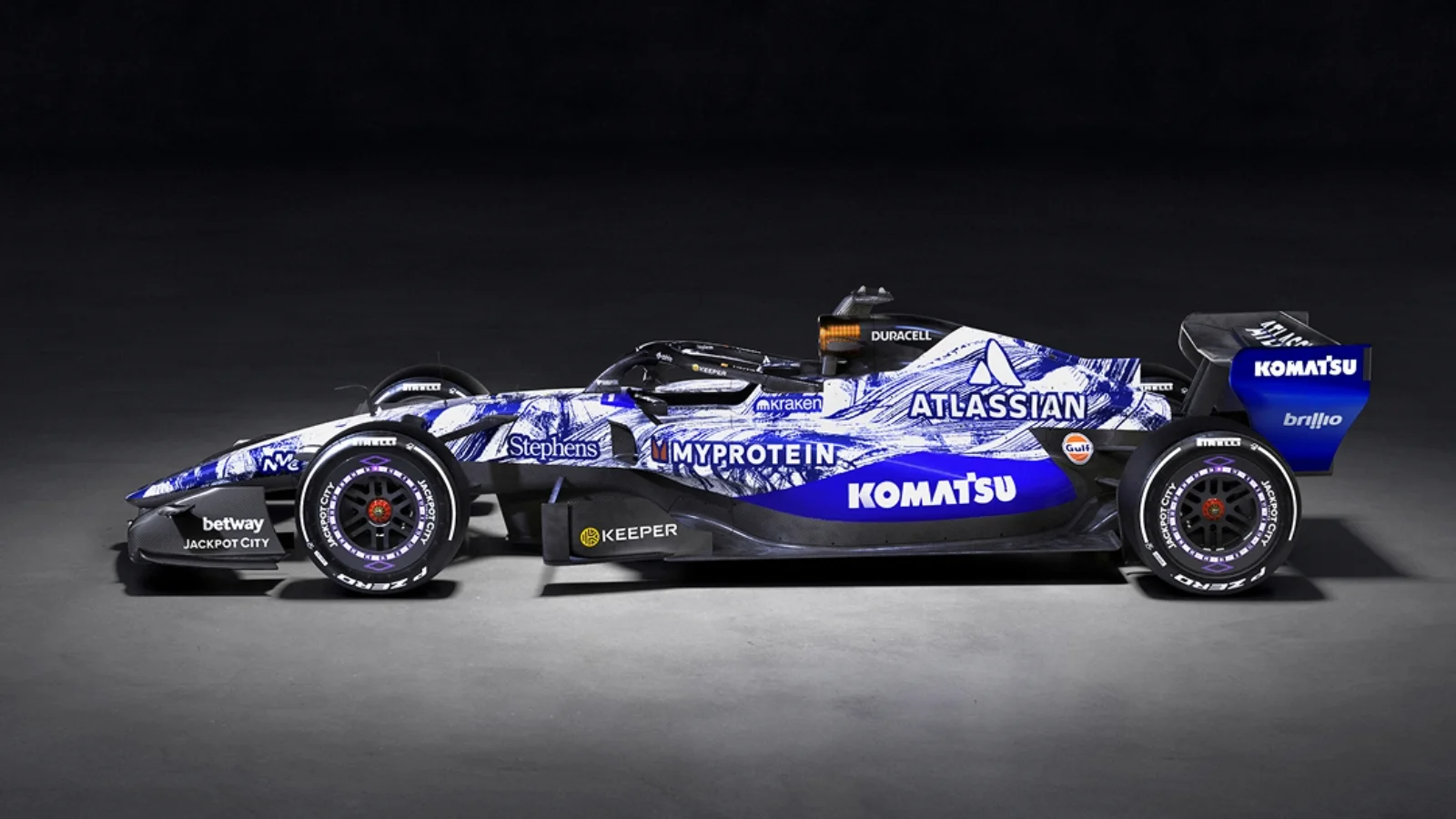
Williams boss James Vowles has addressed claims the team’s new Formula 1 challenger failed mandatory crash tests, and revealed when the FW48 will finally take to a racetrack.
The Grove-based squad had been tentatively labelled as possible dark horses for the 2026 season, after a much-improved 2025 campaign, and the continuing usage of Mercedes power units, reputed to be one of the best ahead of the new regulations cycle.
But with the announcement that it was pulling out of the behind-closed-doors test in Barcelona this week, a flurry of rumours were triggered, many of which were centred around the apparent failure of three crash tests, and a chassis that was overweight, reputed to be between 20-30 kilograms too heavy.
Speaking to media, Vowles confirmed that the FW48 will be on track at the Bahrain test programme next month, and indicated that there will only be a true comprehension of the weight issue once it is on track.


“There’s no knowledge of the weight until we get to Bahrain in terms of understanding where it is,” he said.
“There’s not a single person that will truly know it. It’s impossible to know it, because you need the car together without sensors in the right form. And that doesn’t exist today.
“If we end up being over the weight target then from that point along, it’ll be an aggressive programme to get it off.
“But I think right now, anything that you’re seeing as murmurings in the media are murmurings.
“I’ll come out and explain to everyone at the point where we know that. That isn’t today.”
Vowles hints at truth in Williams crash test theory, explains Barcelona withdrawal decision
In regards to the crash test issue, Vowles was coy on revealing a precise riposte to the speculation, but intimated that it failed an early test, citing the rigorousness of them.
“They are one item out of quite a few that were pushing us absolutely beyond the limit of what we can achieve in the space of time that we have available to us,” he explained.
Naturally, there are significant costs to think about for teams when it comes to development and the subsequent testing, and Vowles revealed that it could have made the Barcelona test, but decided to step back from it, opting to conduct its own shakedown before flying the FW48 to Sakhir.
“We could have made it, but in doing so, I would have to turn upside down the impact on spares, components and updates across Bahrain, Melbourne and beyond,” he said.
“And the evaluation of it was that for running in a cold, damp Barcelona, against doing a VTT test, against the spare situation – and frankly, there was zero points for running in a shakedown test – we made the decision.
“And I stand by it, that the right thing to do is to make sure we’re turning up at Bahrain correctly prepared and prepared in Melbourne as well.”
READ MORE – Williams achieves major step in F1 car development but faces further issues – report







Discussion about this post