
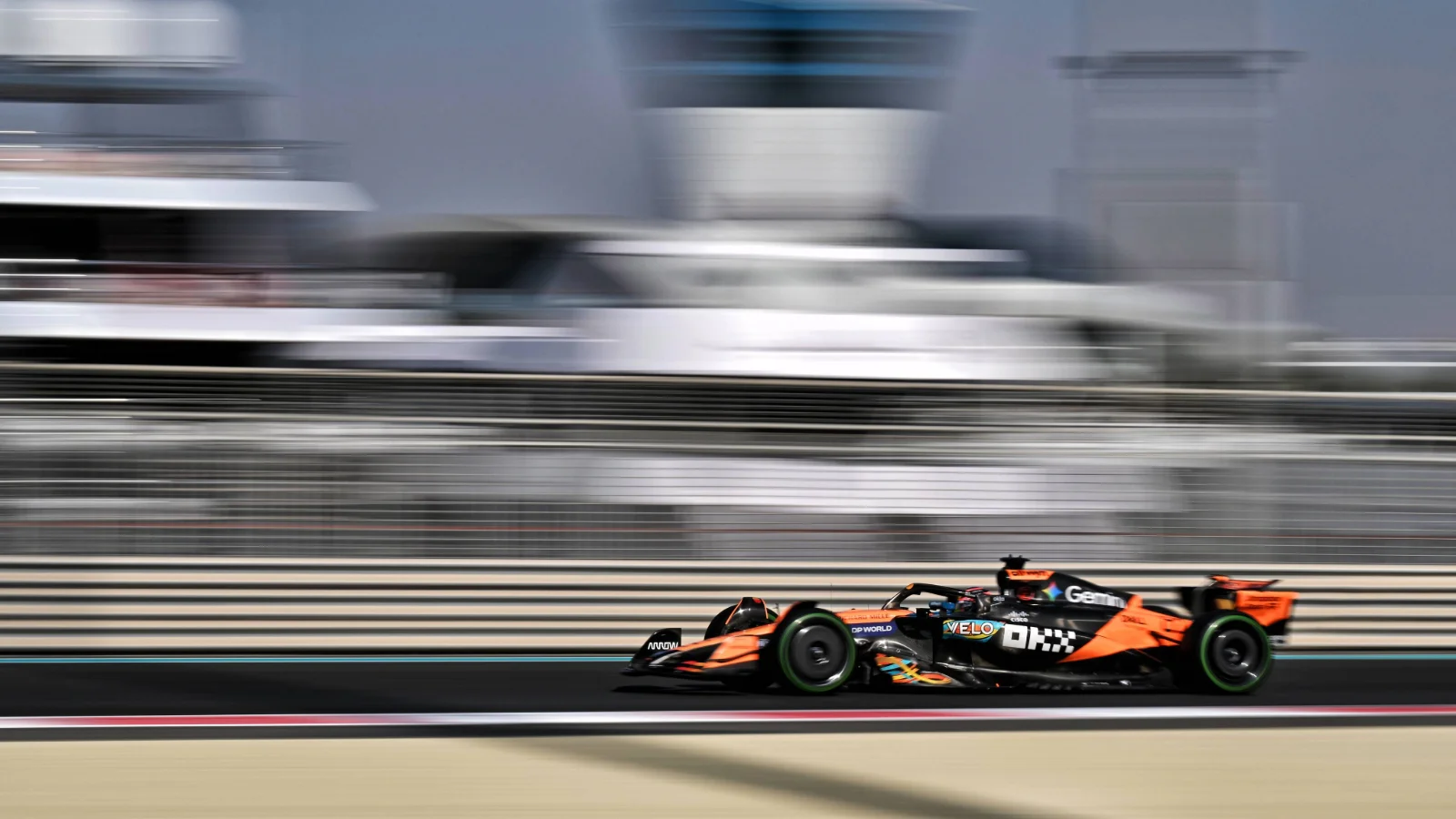
As Formula 1 prepares for a new era of racing ahead of 2026, McLaren expects to see more tactical decision-making rather than a simple straight-line advantage.
F1 enters a new hybrid era of the sport, with redesigned power units and chassis expected for the upcoming season. This, brings an expected reshuffling of the field, with the pecking order set to look vastly different from what it did at the end of the 2025 season.
Alongside these changes, drivers will also need to reassess their strategies for competing against their rivals. All 22 drivers will have access to several new tools, including overtake mode, boost mode, active aerodynamics, and recharge mode.
McLaren’s Technical Director for Performance, Mark Temple, suggests that these added modes will create a brand new style of racing for drivers, encouraging them to play mental games against their rivals.

“Obviously there’s an amount that we can do to brief the drivers to help them understand the principles that the 2026 regulations and power units create around the need to use your energy more intelligently, more strategically around the lap,” Temple said.
Under these regulation changes, Temple believes drivers will have added pressure with performance gains no longer coming from a single mode, such as DRS.
“The need to harvest energy more consciously and then choose where you use it is going to be critical.”
“A lot of the management of that energy is done by the power unit control,” Temple added.
“But there’s also some elements which are within the driver’s control, which they need to understand and use optimally.”
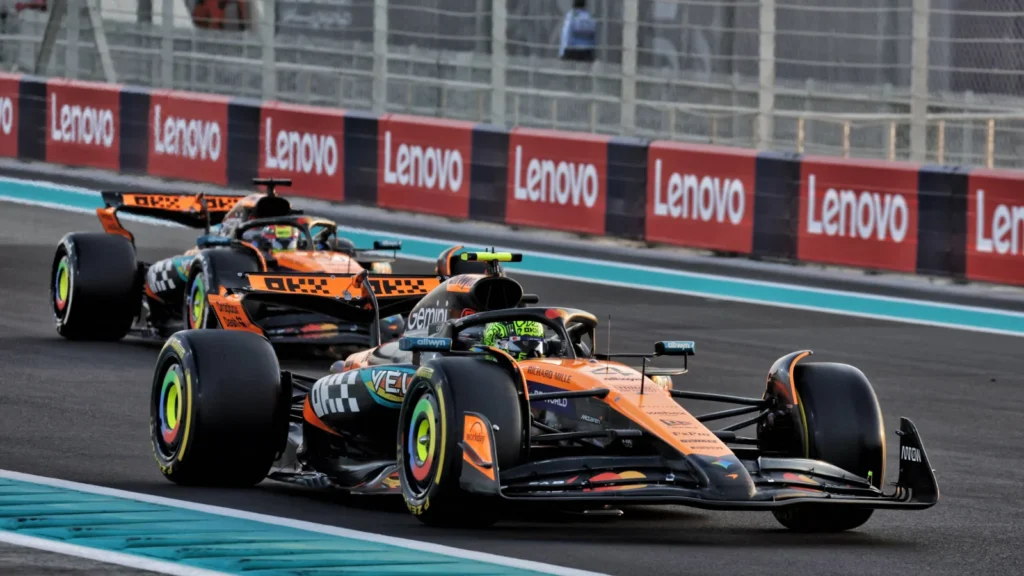
McLaren’s F1 simulator work will be cruical in 2026
Despite the drastic changes drivers will undoubtedly experience in the opening rounds, Temple believes there is a way to expose them to these demands. In turn, allowing the drivers to have experience in race-defining situations.
“The simulator is by far and away the best tool for that,” Temple emphasised.
“So working with our partners at HPP, we’ve been able to kind of recreate some of those behaviours in our simulator.
“And then initially with the test drivers, then ultimately with the race drivers, do simulations and understand the different challenges that there are for maybe a qualifying lap or, a race lap or even different racing situations.”
The Briton also noted that while drivers will receive guidance through dashboard displays and engineer feedback, much of the learning will be instinctive.
“The part of it is going to involve the information that they receive from the car through the dash.”
“The information they get from the engineers, but a lot of it will just be them learning and understanding how to use that energy and how to manage things for performance.”
Overtaking set to become harder
Whilst the simulator will be able to help drivers understand how to master new modes, there is still one major issue McLaren is not able to replicate.
Temple believes overtaking and defending scenarios will be the most unpredictable aspect of the new regulations.
Previously, the use of DRS made overtaking easier if drivers were within a second of the car in front. However, drivers must now overtake in difficult ways.
“I think the most interesting aspect, and in a way the thing that’s the hardest to simulate, is going to be those kind of overtaking, attacking and defending scenarios,” he said.
“Previously, you got DRS. As long as you were close enough, there wasn’t too much of a tactical element to how you used the controls that the driver had, whereas in 2026 the amount of energy that you have will be much more of a factor in the strategy.
Temple went as far as to compare the early stages of the season to a game of Cat and Mouse.
“And particularly in the beginning, I think they will be on quite a steep learning curve while they understand, ‘if I do this, how does my competitor react’. There’s a bit of cat and mouse there.
“So I think that’ll be really both interesting and exciting and I’m very interested to see how that all goes. We can’t predict that completely.”
Racing in 2026 could look confusing
McLaren team principal Andrea Stella has acknowledged that this change in racing may be hard for some viewers to understand, particularly when overtakes look more complex and less straightforward than previous seasons.
“It may look a little weird that one car can overtake so easily another car,” Stella said.
“It’s important the spectators understand why that was so easily done, or even that in one car the battery is now quite full, while the car ahead has the battery quite empty.”
With power-unit deployment playing a far greater role than in previous seasons, Stella believes communication will be essential as the sport embarks on one of its biggest challenges in recent memory.
“Therefore, something [new] is coming from a racing point of view,” Stella emphasised.
“The power-unit exploitation as a racing and overtaking variable will be particularly important in being able to communicate effectively to our spectators.”
READ MORE – McLaren announces multi-year deal with German sportswear giants




Discussion about this post