
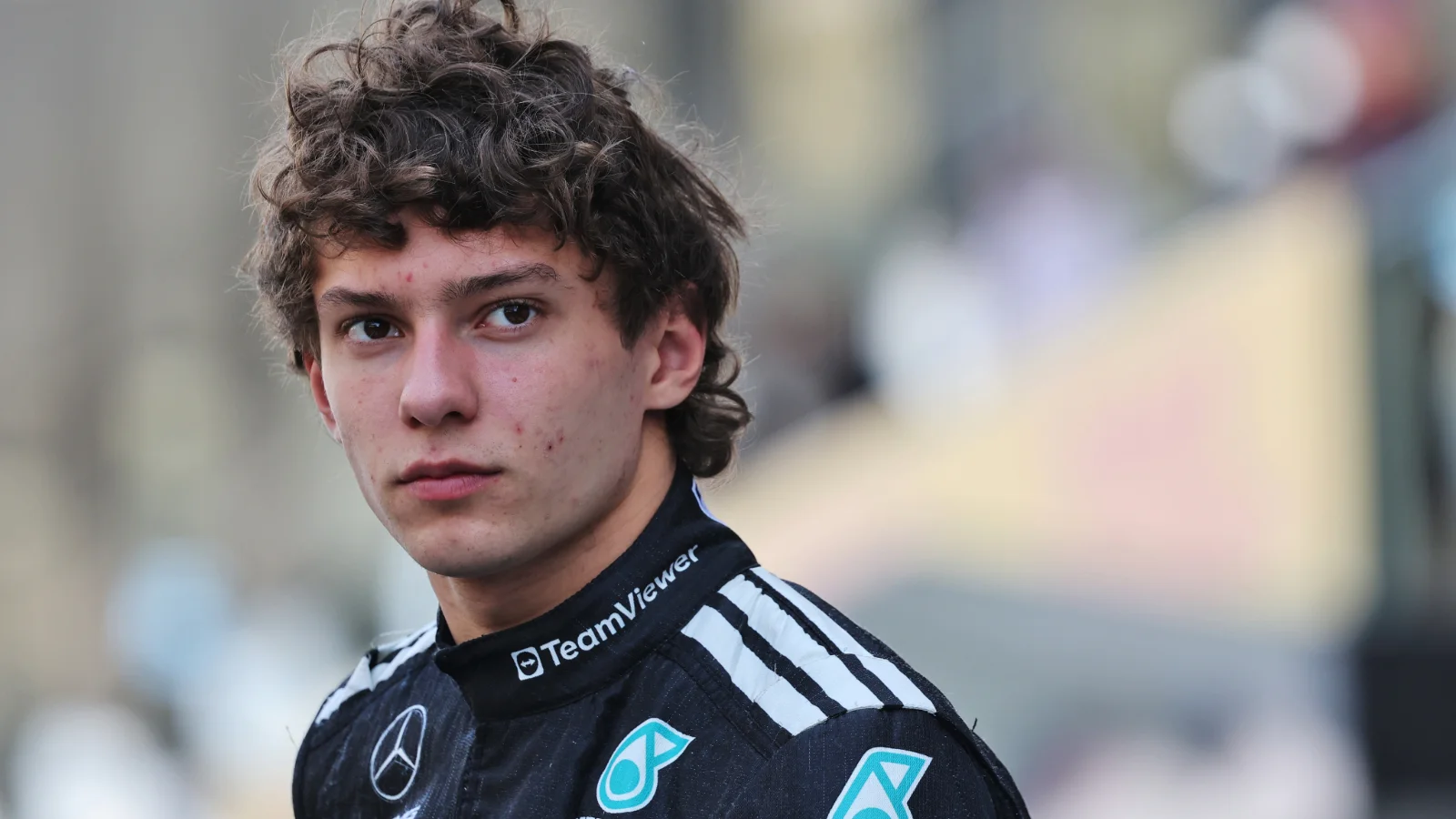
Mercedes has revealed a unique skill of Kimi Antonelli it hopes to exploit during the 2026 Formula 1 season as the Silver Arrows prepares for the new technical regulations.
Ending 2025 as the highest placed rookie, Antonelli’s season became characterised by a renaissance following a mid-season decline.
Following taking pole position for the sprint race in Miami, the young Italian’s form dipped off dramatically, with a series of Q1 crashes and eliminations.
Rescuing his season in the second half of the year, he took back to back podiums in Mexico and Brazil en-route to seventh in the standings.

Coming into 2026, Antonelli has a raft of new technical regulations to master, including changes to car characteristics and power units.
But Mercedes Trackside Engineering Director Andrew Shovlin however is confident Antonelli will adapt quickly thanks to his extensive simulator experience.
“We’re starting to understand him a lot better,” said Shovlin, speaking to media, including Motorsport Week.
“He’s getting very comfortable in the team. He’s comfortable in his own performance, and we’re excited to see how he does [this year].
“Adapting to the rules, that will really be about practice. Kimi, because he’s a youngster, has a pretty impressive ability to sit in the sim and drive it all day long.
“I think all the younger drivers who’ve grown up gaming develop that spare mental capacity to drive while talking, while making fun of everyone else who’s on the game with them.
“It does help to have that cognizant thing of thinking while you drive, and the driving becomes secondary. It frees up your brain to think about energy, strategy, and how you overtake.
“But he enjoys driving it [the simulator], and he’ll do as many hours as is required, and that’s by far the biggest bit.”
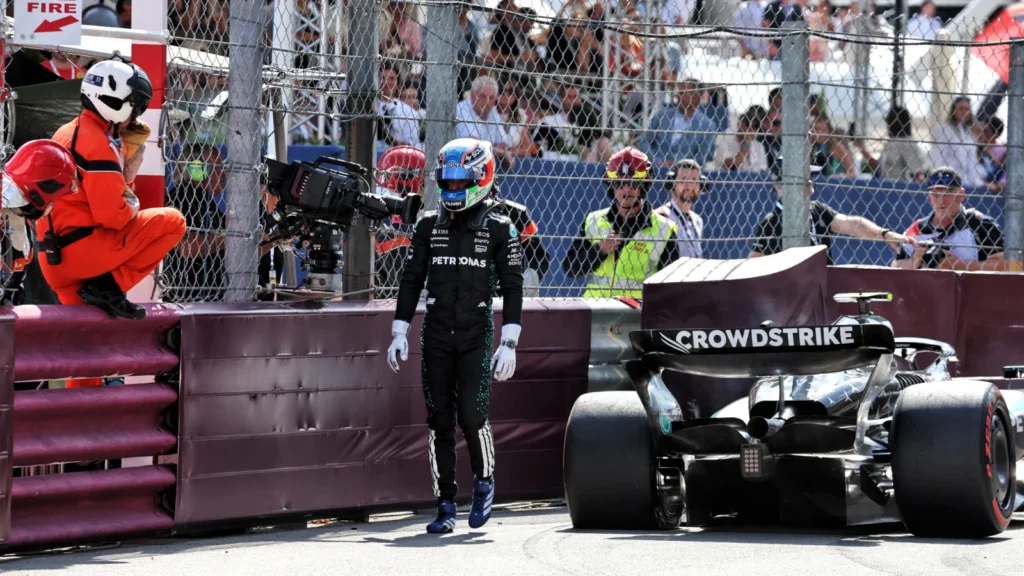
A question of experience for Kimi Antonelli
Shovlin revealed that as the relationship with his race engineer Pete Bonnington developed, this has unlocked performance for the young Italian, as he learned how to manage tghe balance of the W16.
“Because Kimi can describe to Bono exactly what the car is doing, Bono knows what to do with it,” he said.
“Over time, you can start to explain how everything’s working and all the various ways of balancing the mechanical balance of the car around the lap with all the tools we’ve got.
“That’s increasingly coming to him, and they [young drivers] start to build up this sort of database of ‘When I made this change, this is what the car felt like, therefore if I know I’ve got this balance that might be a useful trick to deploy’.”
The result was him being unable to shed the higher temperature in his tyres around the lap, with qualifying for the Hungarian Grand Prix a good example of that when he qualified a lowly 15th. “He just overcooked it.”
“As the results were getting better towards the end of the year, there were a number of sessions where he probably got a bit ahead of himself. He performed very well in Q1, Q2, and then he just overdid it in Q3 and paid the price.
“But this is all the real fine detail that drivers with six years, 10 years under their belt have learned by going through it, learning it the hard way.
“What has been good is that he did get through to Q3, which means you can maximise the learning there, and he finished all the races. Again, you maximise that learning. It will be easier for him when he comes round to doing all the tracks again.”
READ MORE: Former F1 champion makes bold Lando Norris title prediction for 2026





Discussion about this post