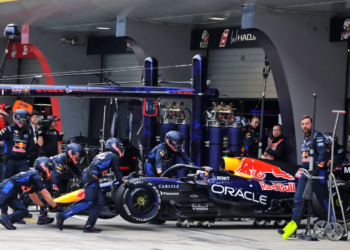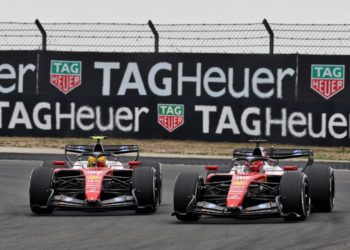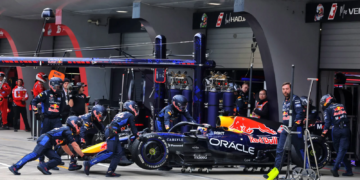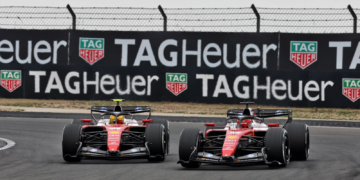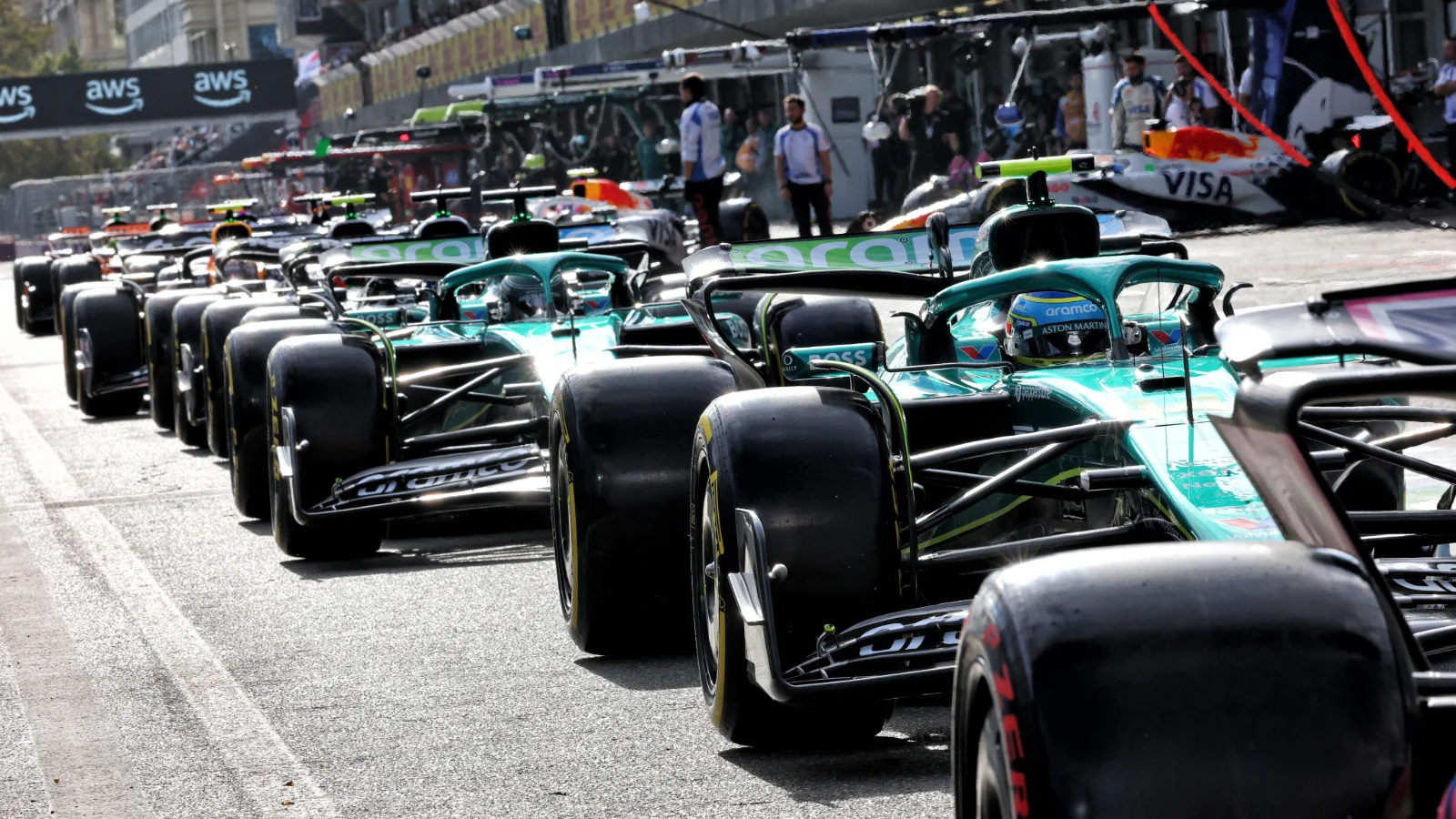
Formula 1 may look like a driver-focused spectacle from the grandstands, but the true battleground lies inside the garage and the data rooms linked to it.
Modern F1 is a sport defined by information. Every lap produces a torrent of numbers that engineers analyze, simulate, and translate into decisions that can determine the outcome of a race. From practice sessions to the final laps on Sunday, data drives performance just as much as talent behind the wheel.
The difference between a midfield finish and a race victory often comes down to how effectively a team can convert raw telemetry into actionable insight. This process is continuous, collaborative, and increasingly complex, blending cutting-edge technology with human judgment under extreme pressure.
From sensors to strategy, the digital backbone of modern F1
At the heart of modern Formula 1 is telemetry. Each car is equipped with hundreds of sensors that monitor everything from tire temperatures and brake wear to aerodynamic loads and suspension movement. These sensors transmit data wirelessly to the pit wall in real time, giving engineers a detailed picture of how the car behaves through every corner and straight.
Away from the track, fans may be comparing Florida online gambling options during race weekends, but inside the garage, attention is fixed on live data streams that update thousands of times per second. Engineers monitor dashboards that highlight deviations from expected performance, allowing them to spot issues before they become costly problems.
Telemetry does more than confirm what the driver feels. It often reveals underlying causes that are not immediately obvious from the cockpit. A slight loss of rear grip, for example, might be linked to rising tire surface temperatures or a subtle aerodynamic imbalance at high speed. Engineers use this information to guide setup changes and driving instructions with remarkable precision.
Simulating the race before it happens
Long before the cars line up on the grid, engineers have already run countless race simulations. These models incorporate weather forecasts, fuel loads, tire degradation curves, traffic scenarios, and potential safety car periods. The objective is to prepare for every plausible outcome so that decisions can be made quickly when circumstances change.
As practice sessions unfold, real-world telemetry is fed back into the simulations. If tire wear is higher than expected or lap time falls off sooner than predicted, engineers adjust their models accordingly. This constant refinement allows teams to build increasingly accurate forecasts of race behavior.
During the race itself, simulation tools run continuously in the background. When a competitor pits early or a safety car is deployed, engineers immediately calculate how different strategies might play out over the remaining laps. The ability to react faster and with greater confidence than rival teams often defines the sharp end of the grid.
Adjusting the car in real time
Data-driven decision-making extends beyond strategy and into the physical setup of the car. Aerodynamic balance is adjusted through wing angles to optimize downforce and straight-line speed. Suspension settings are refined to improve mechanical grip and stability over curbs. Engine modes are selected to balance power output with fuel efficiency and component longevity. Tire pressures are adjusted to maximize grip while keeping temperatures within an optimal operating window.
Telemetry allows engineers to see how each of these elements interacts on track. A change intended to improve cornering performance might increase tire wear, while a conservative engine mode may protect components at the cost of lap time. Engineers must constantly weigh these trade-offs as conditions evolve.
The human element on the radio
Despite the sophistication of modern data systems, Formula 1 remains a deeply human sport. The relationship between the driver and the race engineer is critical, particularly during high-pressure moments. Engineers must condense complex data into clear, concise messages that drivers can process instantly while traveling at over 200 miles per hour.
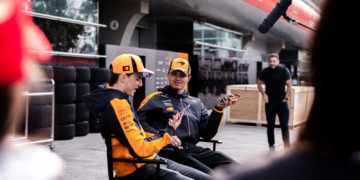
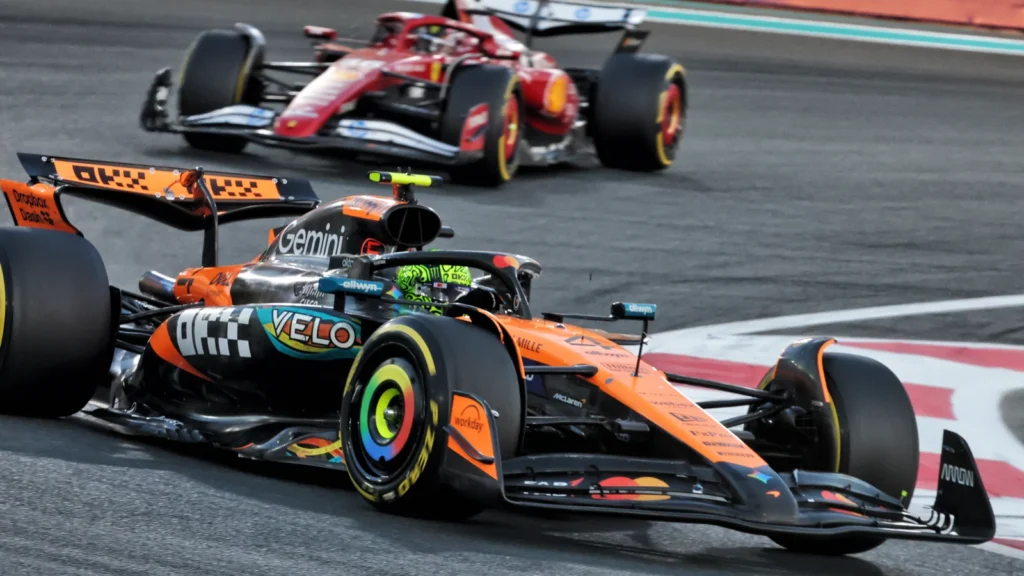
This collaboration has proven decisive in championship campaigns, including the title-winning season of Lando Norris. Throughout crucial races, telemetry revealed growing tire degradation patterns and energy usage limits. His race engineer used that data to guide adjustments in engine modes, braking technique, and pace management. The trust between driver and engineer allowed Norris to respond immediately, preserving tire life while maintaining competitive lap times.
Where data Is taking Formula 1
As Formula 1 continues to evolve, data analysis is becoming even more central to success. Machine learning tools are increasingly used to identify performance trends and predict outcomes faster than traditional methods. Remote operations centers support trackside teams by analyzing data in parallel, expanding the decision-making capability of each team.
Yet technology alone does not win races. The real advantage comes from how well teams integrate data with experience, intuition, and communication. Engineers must interpret information accurately, drivers must execute under pressure, and the entire operation must function as a single unit.