
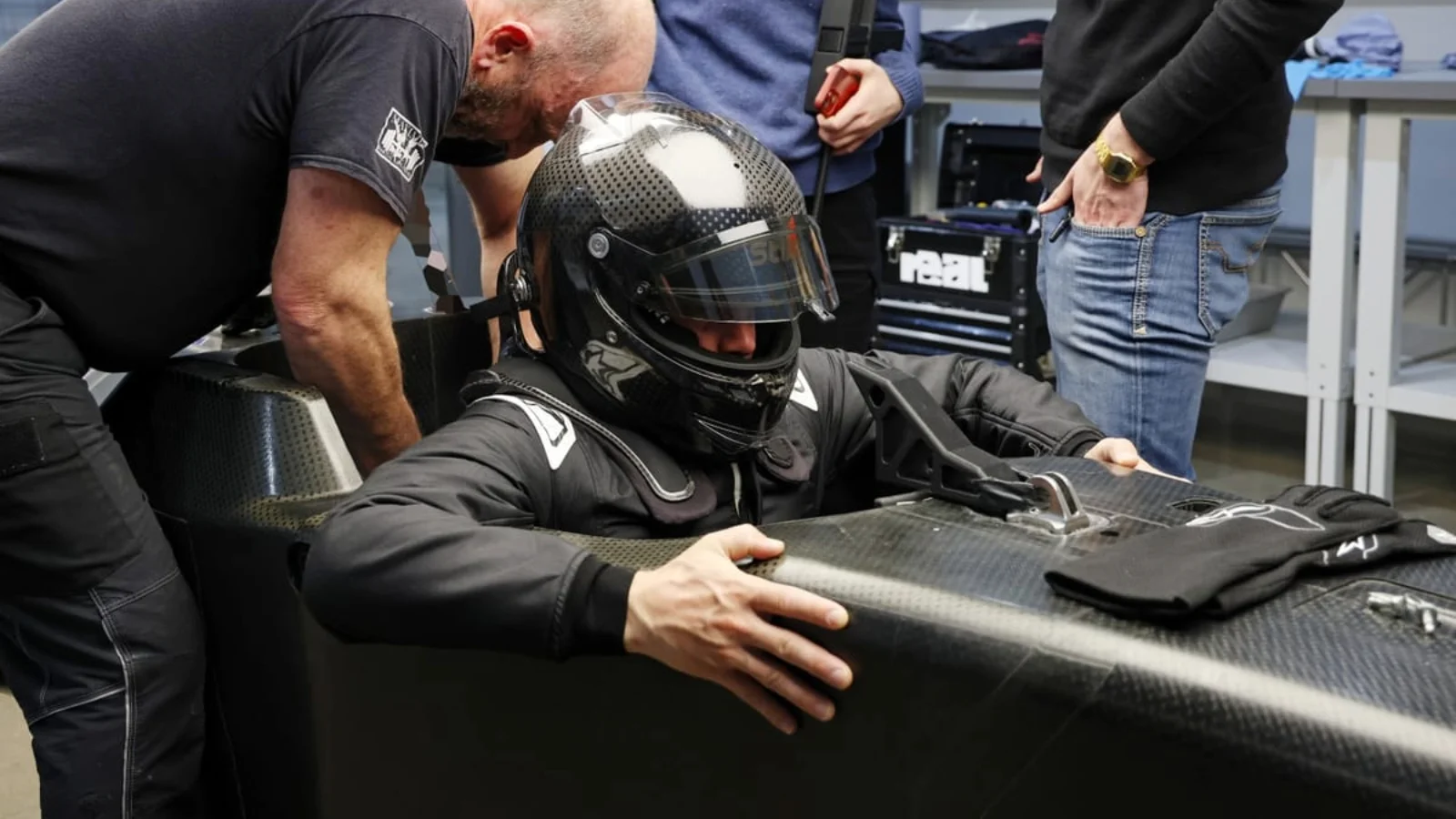
Cadillac boss Graeme Lowdon has revealed that the team’s first-ever Formula 1 chassis has passed the FIA’s homologation tests ahead of its 2026 debut.
With the latest era of the sport ready to kick off, F1’s newest entry, Cadillac, has been working hard in the background to prepare for its maiden season.
The initial shakedown, which would be the first of three pre-season testing events, is scheduled for late January at the Circuit de Barcelona-Catalunya.
Ahead of this, Lowdon has revealed that the Anglo-American outfit has passed the FIA’s mandatory homologation tests on its chassis’ survival cell and rear structure – something he believes the team should be “really proud of”.


“Passing those tests by December was something I think the design group within the Cadillac Formula 1 team can be really proud of,” Lowdon said per The Race.
Not only did Cadillac have to build its own chassis from scratch, but it had to do so under arguably one of the most extensive periods of scrutiny in F1 from a safety perspective, only exacerbated by a 30kg weight reduction in the minimum weight as compared to the ground effects cars.
“If we look at the design challenges in the new formula, with the weight of the car significantly reduced, these tests become effectively more and more stringent in comparison, because you’re targeting a lower overall car mass,” he explained.
“So, for any team to pass them, I think it’s a milestone. For us, it’s more so because we haven’t got years and years and years of team-based experience of designing these components.”
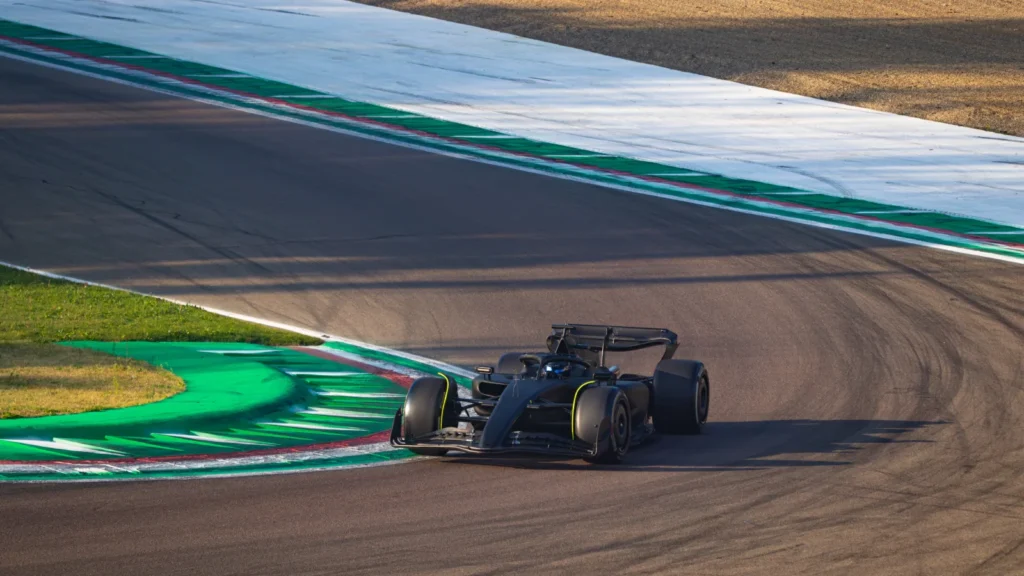
Cadillac outlines F1 2026 testing priorities
Running during pre-season testing has always been a game of cat and mouse with teams oftentimes hiding or over-exaggerating their packages’ prowess.
For Cadillac, however, the three pre-season tests are all about consistency, focusing on itself and slowly building up its repertoire.
Lowdon emphasised that this was the only path the team could undertake, given that it has prioritised having an assembled, track-ready car at Barcelona rather than a competitive package.
“You’re constantly faced with these trade-offs. What we’ve done, which I think is sensible, is prioritised delivery over everything else,” he revealed.
“Because we’re still building our factories and manufacturing facilities and all sorts of other things, and they’ll take years to come fully online.
“Some of the other teams know how far to push their internal production processes to the absolute limit. That wouldn’t be a sensible approach for what we’re doing coming in as a new team.
“You have to leave some margin, and like everything in Formula 1, as soon as you make any decision, there is a compromise, and there is a cost to it.”
But that doesn’t mean the 11th team on the grid is ready to become a sitting duck next year. Lowdon explained that the team already has plans in place to utilise as much track running as it can during testing to eke out the last bit of performance before they arrive at the season-opener in Australia in March.
“But equally, we’ve got programmes in place to catch up in those areas as well,” asserted the Briton.
“The good thing about the ’26 season is there’s an awful lot of testing opportunity. Those opportunities can give us a chance to bring new parts even at that stage.”
Naturally, Lowdon is glad that the team doubled down its focus on getting the car ready and assembled, which hopefully will be reliable, rather than chasing the mirage of outright performance.
“Every single bit of focus is on ’26 so having the opportunity to test is super valuable,” he concluded.
“It’s not a mandatory test at the end of the day. So if teams decide that it’s not useful, they won’t go. We know that the challenge that we have is different. The very fact that we can actually go and test is great.”
READ MORE – F1 reveals new 2026 renders and tweaks to terminology









Discussion about this post