Of all the sports people bet on, Formula 1 is one of the lesser-tasted options. It tends to be repetitive when it comes to domination.
Underdogs rarely get to step up and deliver extra surprising results that can result in big winnings for those who take a chance on them. We know that it’s not for a lack of talent, but for a lack of car capabilities.
However, not all sports betting needs to be serious risk-taking. It can always go in the direction of hedging, not to mention the idea of incremental wins, thanks to the principle of betting on odds that can give small upticks. But there can be different horizons that still provide a level of significant value.
One of them is the idea of arbitrage betting. While not devoid of risk, it provides an alternative with less volatility than going for whichever outcome you think would work best for you. It’s a method that not many bettors would consider within the context of Formula 1, or motorsport in the broader sense.


Explaining arbitrage betting and the idea of covering multiple outcomes
For the sake of clarity in this discussion, we should explain what arbitrage betting is.
Unlike the context of traditional betting, in which you bet on an outcome, be it a winner or a happenstance within a sports event, arbitrage betting is all about covering for multiple outcomes. It implies the idea of betting on all possible results of an event, making sure that there is always a bet that hits.
At face value, the practice seems somewhat counterintuitive because it generates losses without acting in the spirit and by the general rules of the psychology of prediction. However, the twist is that the bets on each outcome must meet certain conditions.
- The odds that a bettor would stake on must be disproportionate compared to the rest of the market. Cases like overleveraged odds due to incorrect or overly optimistic calculations prove that such offerings of odds are not according to the market (other sportsbooks).
- The stake placed on each outcome would depend on the odds. Some odds require bigger stakes if they are to generate winnings that can cover the losses incurred in incorrect bets.
- The bets must be at different bookmakers. While not illegal in any sense, bookies dislike this kind of betting because it exposes cracks in their oddsmaking typology. As such, it incurs a level of risk in the long run, including account restrictions.
- The margin that such a strategy implies is quite small. It requires significant bets on certain outcomes in order to generate a net win.
- It requires a sport where there are as few possible outcomes as possible. In basketball or tennis, there are no ties, which means that there must always be a winner, requiring arbitrage for two outcomes. In football, there is the possibility of a tie, which adds another loss to the mix, except for double-chance betting.
The context of Formula 1: Markets you may consider
The last point that we’ve made about the nature of arbitrage betting is one of the most difficult things to consider in the context of Formula 1. We have 20 drivers on the grid (22 starting in 2026), and each of them has the opportunity to win any given race.
Naturally, we know that some cases are almost impossible. However, the tightening windows of differences between lap times showcase a level of professional sports parity that we’ve rarely seen in this field. As such, there are cases where arbitrage betting is too much of an effort to consider.
However, based on the front-runners and their strengths at a given time, contenders may be from a slim pool that opens up arbitrage opportunities. Let’s analyse some scenarios based on various betting markets (criteria).
Pole positions, podiums and grand prix winners
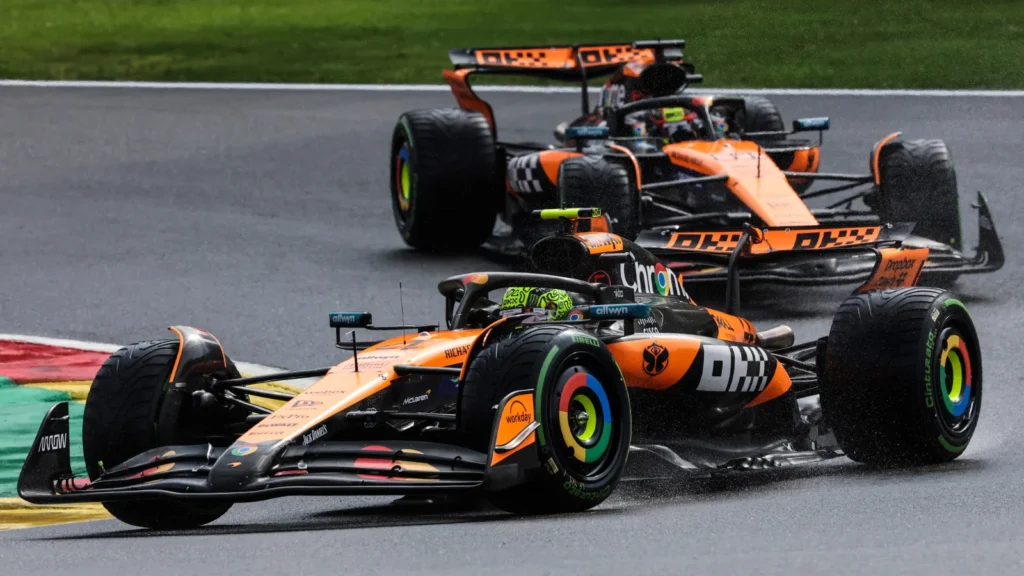
The direct entry that we have in such a situation is the season that we have at hand. We are writing this article in November 2025, when the title race is quite heated. Most of the races have been an affair of the McLaren drivers (Norris and Piastri, in case this is no longer the line-up when reading this article) and Verstappen.
In general, you would think to bet on arbitrage opportunities in which you bet on all 3 of them to get pole position, be on a certain podium position, or win the GP.
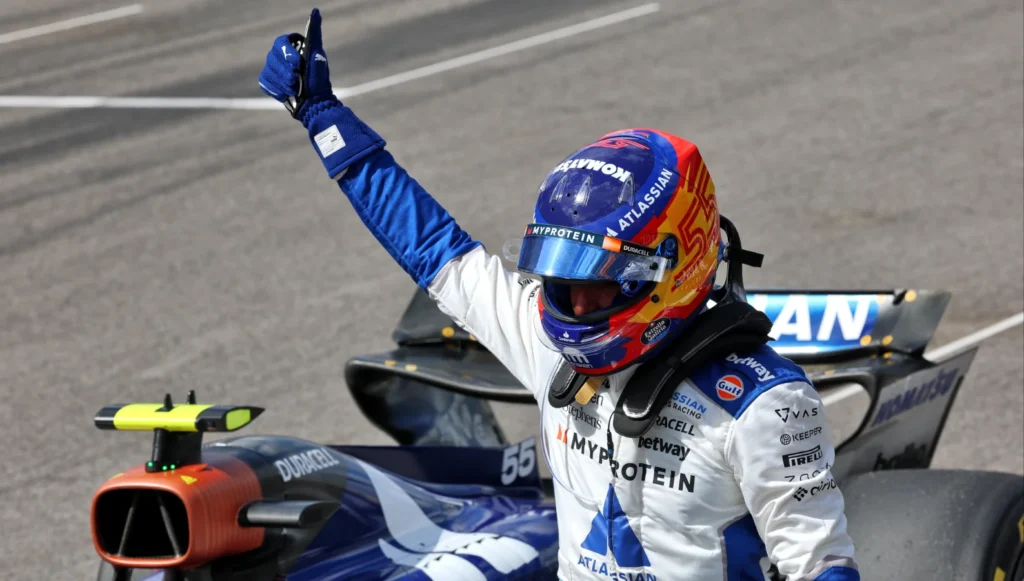
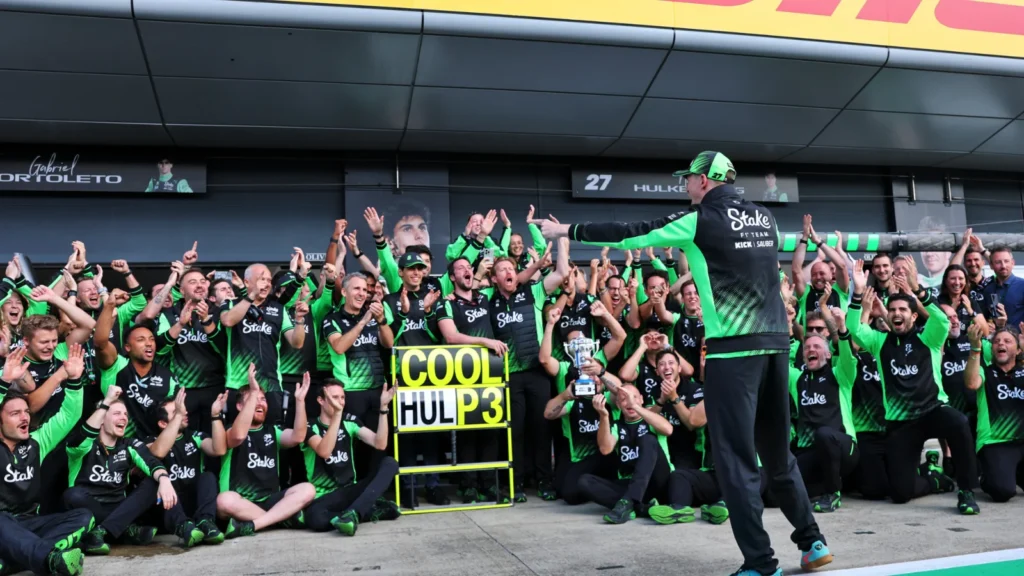
However, as we know, Russell has been prowling and staying ready to take a pole and/or a win, while Leclerc (and, arguably, Hamilton) have been outsider threats. We even had surprise podium appearances like Sainz and Hulkenberg. This should tell you that some outcomes can be risky for arbitrage, which is not beneficial for such betting.
If the hunt for pole positions and race-winning is all about 2 or 3 drivers, arbitrage is possible. However, the volatility of F1 events provides too much of a risk.
Head-to-heads
This is the only type of arbitrage betting that you should truly consider as a proper fit with this wagering model. It’s the only one that sees only two possible outcomes, both when it comes to betting on who prevails over the course of a race weekend or a season.
If you understand how arbitrage betting works, you can bet on both drivers within a team to out-qualify the other, place higher within the race, or beat the other throughout the season in terms of points.
In such a case, you can make both future bets (for season-long head-to-head) or go for arbitrage wagers within a race weekend. Since one of two must prevail, there is less strenuous effort.
Conclusion
To close this article, you need to remember that any arbitrage betting strategy depends on the value of the odds that you find. It requires you to make calculations based on the best-looking odds, including the portioning of your stake, and go for markets that have as fewer possible outcomes as possible (preferably just two).