
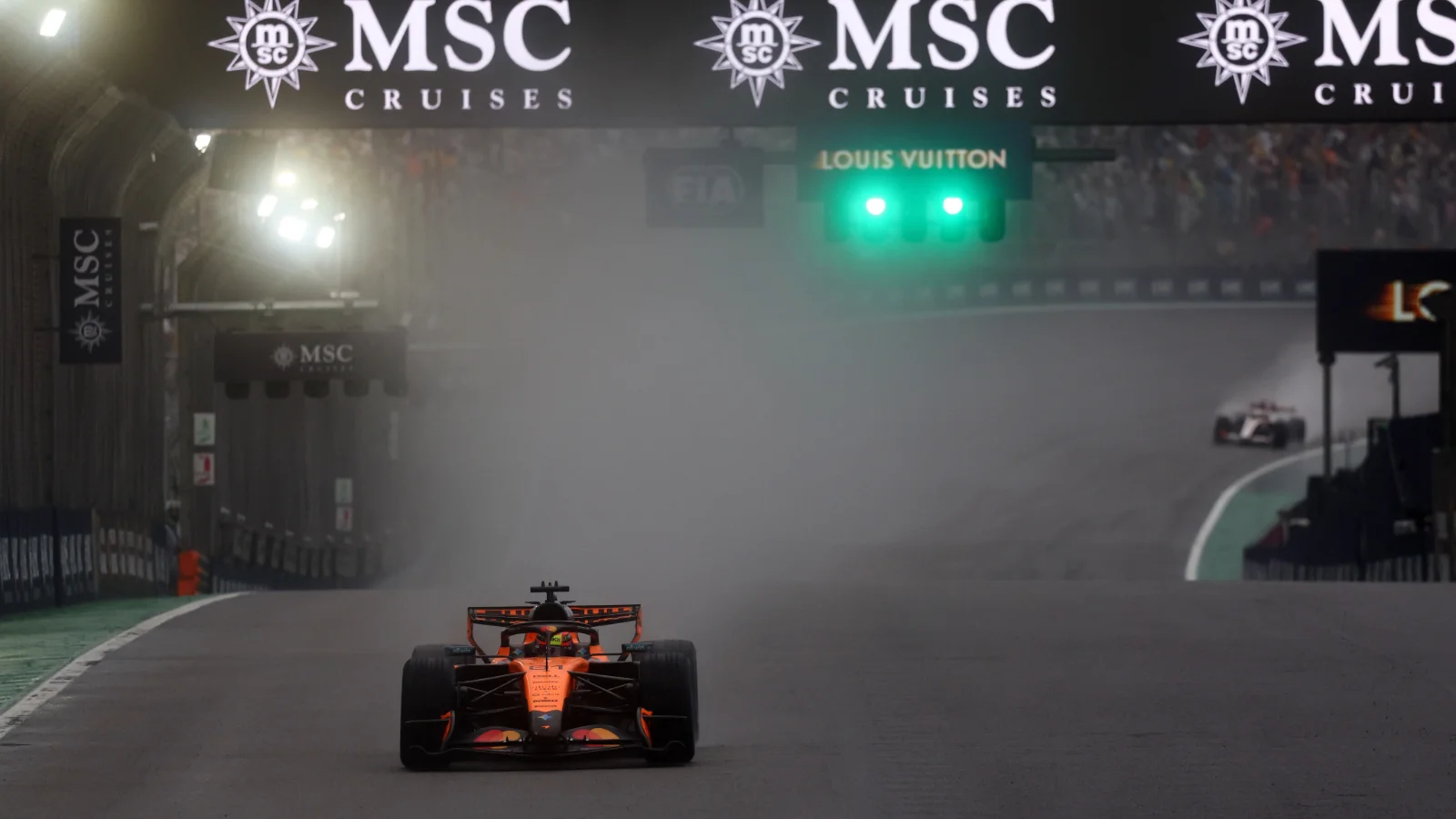
For today’s São Paulo Grand Prix, McLaren is the only one of the 11 teams bringing upgrades, and in the process, giving us a sign of its 2027 package.
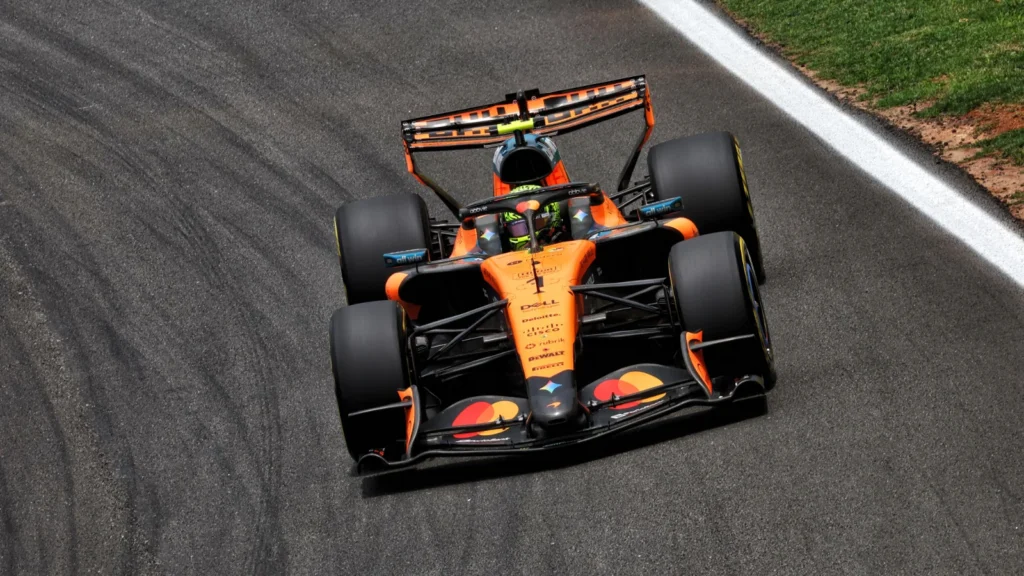
The Woking-based squad has brought four updated parts to Interlagos, including a new front wing, a new rear wing, a new beam wing [a small wing that sits below the main rear wing] and a few small changes to the floor.
Teams have already been producing teasers of next year’s cars in recent races, with development for the second season of the new regulations having begun months ago.
McLaren is precariously balancing its willingness to challenge as well as keeping its eye in with this year’s Constructors’ Championship, entering today’s race – which Lando Norris will start on pole position – only 17 points behind Red Bull.
Peter Prodromou, McLaren’s chief technical officer for aerodynamics, said the aim was “to improve the car now and help us in our fight for third in the Championship.”
Although this is a long way from where McLaren were sitting this time last year, having won the last two Constructors’ Championships, and Norris taking the 2025 drivers’ title. But 2026 brought one of the biggest rule changes in the sport’s history, and Norris believes that was the price of chasing last year’s titles.
“The compromise was this season for a world championship last season,” he said, speaking to the media at Interlagos on Thursday.
Since then, McLaren has been playing catch-up in the development race. “I think Red Bull this year’s been probably the benchmark,” Oscar Piastri said. “We’ve not been the benchmark this year like we have in the last couple of years.”
The Front Wing
The front wing is essentially the first part of the car to meet the air head-on. While pushing the front of the car into the track for grip, it also shapes the airflow that travels back over the rest of the car. McLaren has said its new design is aimed at improving the flow towards the floor and bodywork.
McLaren’s new wing looks perceptibly different from the old one in two ways.
First, the main lower section of the wing now blends fluently into the “foot” of the endplate, the vertical panel at each end of the wing. On the old design, these were more clearly separate pieces. In theory, it should make the wing less sensitive to its distance from the track, so it delivers grip more consistently.
Second, the supports that join the wing to the car’s nose have been reshaped. They now curve backwards and attach further back on the wing, which could be linked to how the wing behaves under this year’s rules.
One of the changes in the 2026 regulations is that F1 cars have moving wings. On the straights, parts of the front and rear wings flatten out to cut drag and increase top speed. In the corners, they tilt back up for maximum grip. McLaren’s new design changes which parts of the front wing move. That appears to trade some straight-line benefit for a stiffer, more consistent wing.
But McLaren have made it clear that their sights are set for 2027, and that these changes aren’t for this year alone.
“While the learning we take from these upgrades will feed into next year’s development, we also expect to carry over the concept of the new front wing into the launch specification of next year’s car,” Prodromou said.
The rest of the package
The rear wing was designed specifically for this event. Interlagos sits around 800 metres above sea level, where the air is thinner, so wings produce less grip than they would at sea level. The floor change is, in McLaren’s own words, a small modification.
Will it fix the car?
Both McLaren drivers have been open about the car being hard to drive.
“You’ve got to manhandle the car a bit,” Piastri said. “As soon as you’re not at 100 per cent, you lose a lot of time very quickly.”
Norris called “the drivability, the difficulty of driving it” one of the biggest factors holding the team back.
Piastri hoped the new parts would help the car “behave a little bit nicer”. But after Friday practice, Norris described them differently. He said the upgrades were not designed to change how the car handles, only to add grip.
The early signs were encouraging. Norris topped the first practice session and finished P2 in FP2. He described the car as “still tricky”, but said the upgrade brought a small lap-time improvement.
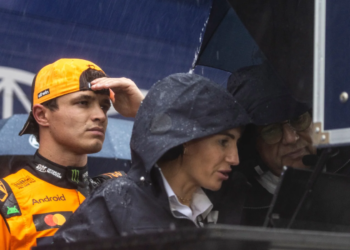
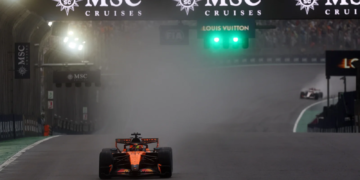
Finally, in the wet conditions of qualifying, the McLaren’s looked strong, with Lando Norris taking pole and Oscar Piastri landing in P12 after an untimely red flag.
READ MORE – Lando Norris reveals ‘pretty quick’ McLaren lesson en route to Sao Paulo pole




Discussion about this post