
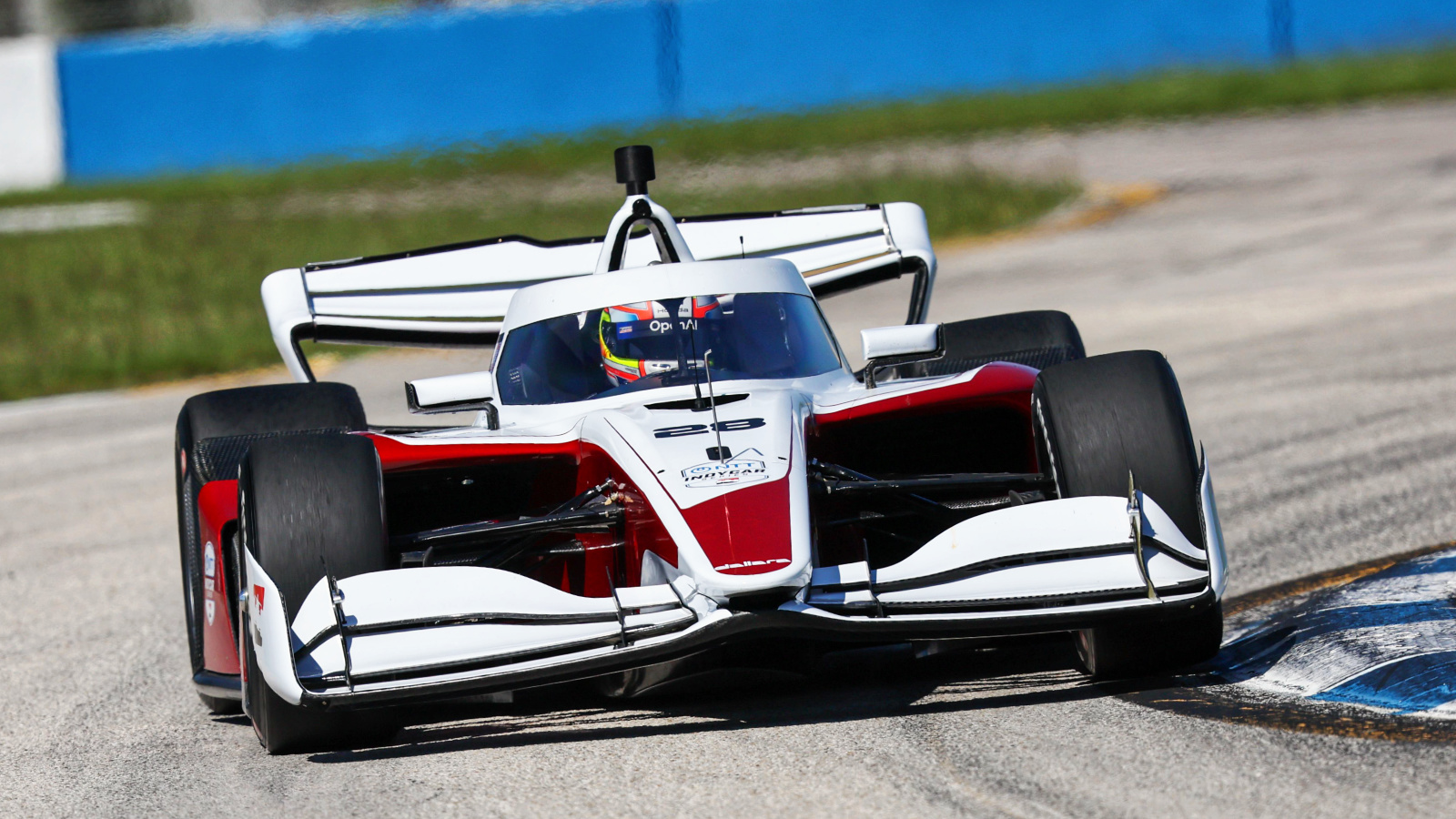
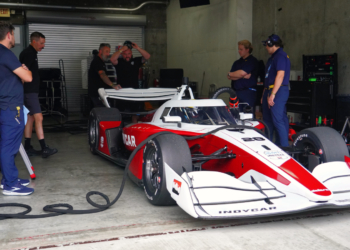
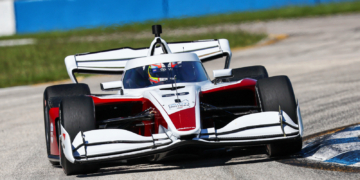
IndyCar’s next generation car completed another milestone earlier in the week, running a two-day test at Sebring International Raceway.
The Florida course is extraordinarily bumpy and is comprised of multiple surface types, which simulates a street course in a closed course configuration.
Alex Palou and Alexander Rossi once again traded driving duties, putting the new chassis through its paces over the course of two days.
Palou completed 43 laps, while Rossi turned an impressive 134 laps during his runs.

The car held up well, and both drivers continued to be impressed with how few issues the development car has.
“What’s good about this place is it’s the poorest-quality surface that you can have in a permanent road course,” Rossi said.
“It mimics a street course kind of. Because it’s a permanent road course, it gets used a lot, so it’s a higher grip level than a street course.
“In terms of bumps, pavement changes, difficult changes in the asphalt, that’s why everyone comes and tests here. It’s somewhat of a preview that you’re going to get in street courses.
“The messaging we get is ‘run the car as if it’s your race car.’ From there, we’ll see what issues, problems, surprises come out of that.
“I think all the test list items were really accomplished in the first two tests. Just making sure things worked as you would expect.
“It generates more grip in high-speed corners. It’s a very nice car to drive. It’s well-built and incredibly well-engineered.
“Cooling-wise, we made a pretty big step in this test, in particular. It’s night and day different in terms of comfort and drivability in the cockpit.”
Rossi even had a chance to drive the IR-28 in dirty air for the first time, as two current-gen cars were also on track completing a separate Firestone tire test.
The two testing plans overlapped at some stages, allowing both generations of cars to run nose to tail for short periods of time.




Discussion about this post