
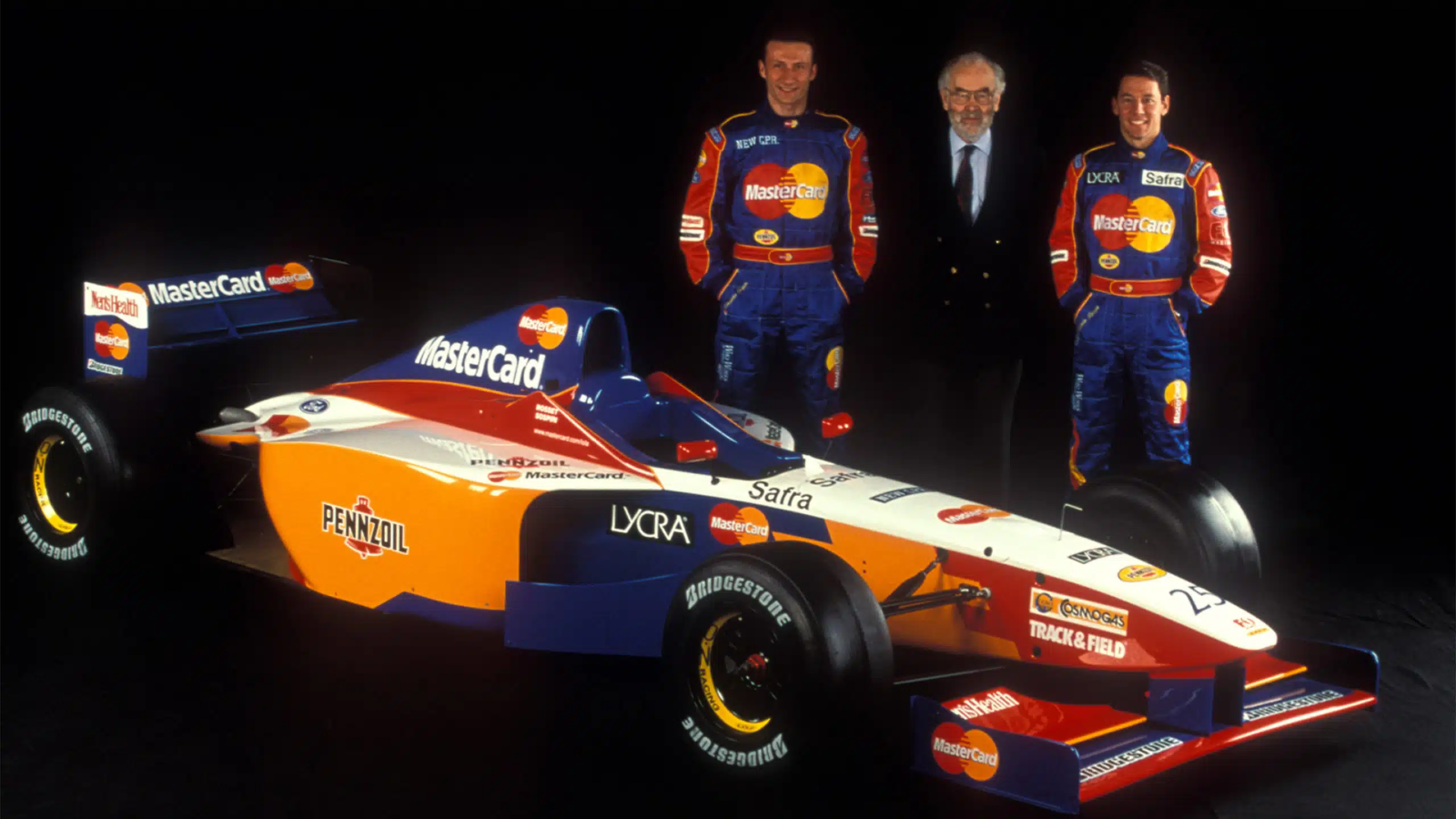
Quite literally defining the term “blink and you’ll miss it”, Mastercard Lola is one of the most disastrous chapters in Formula 1 history, the consequences of its failure reaching far beyond the grid.
Lola. A name that is now synonymous with Formula E and making its mark in the all-electric series. Much fanfare was made by many about its “return to single-seater racing”, which it has executed with professionalism, even securing its maiden win courtesy of Lucas Di Grassi. It is carving out a name for itself in a way that is securing its future legacy in the motorsport world.
Of course, it already has a great legacy, with di Grassi’s victory in Shanghai in July meaning Lola has taken a victory in every major series in which it has competed. It has always been a name omnipresent in motorsport, having built race and title-winning chassis for teams across a plethora of different competitions.
But some will remember the name from another era: the 1990s. But instead of nostalgia, many shake their heads in disbelief at what transpired in the opening quarter of 1997.
Let’s come back to that rather loaded statement: “return to single-seater racing”. Because Lola did once grace motorsport in a major way, with, as aforementioned, a reputation for building fantastic race cars, but that ended with one decision: Lola found itself goaded and pressured into doing something it shouldn’t have. The results were catastrophic, and its very existence became the cost of that sorry episode. I am of course talking about when Lola attempted to field its own F1 team at the start of the 1997 season.
For this week’s look at memory lane, I wanted to revisit this sorry saga, as it remains one of the most intriguing examples of unfulfilled potential and corporate mismanagement in F1 history. Lola was the victim in this scenario, forced to the bidding of a title sponsor that forced the team into an impossible position and left it in financial ruin as a result. Yet, arguably, we’ve seen similar causes of Lola’s downfall many times since: corporate mismanagement and utter delusion.
It is important to caveat that these events do not reflect Lola in its current form. It is an entirely different organisation from these events, with a new identity, and has firmly put what happened back in 1997 to bed, a memory best left forgotten. Sometimes we have to learn and reflect from the past to make the future better. This is one of those moments.
Extensive preparation
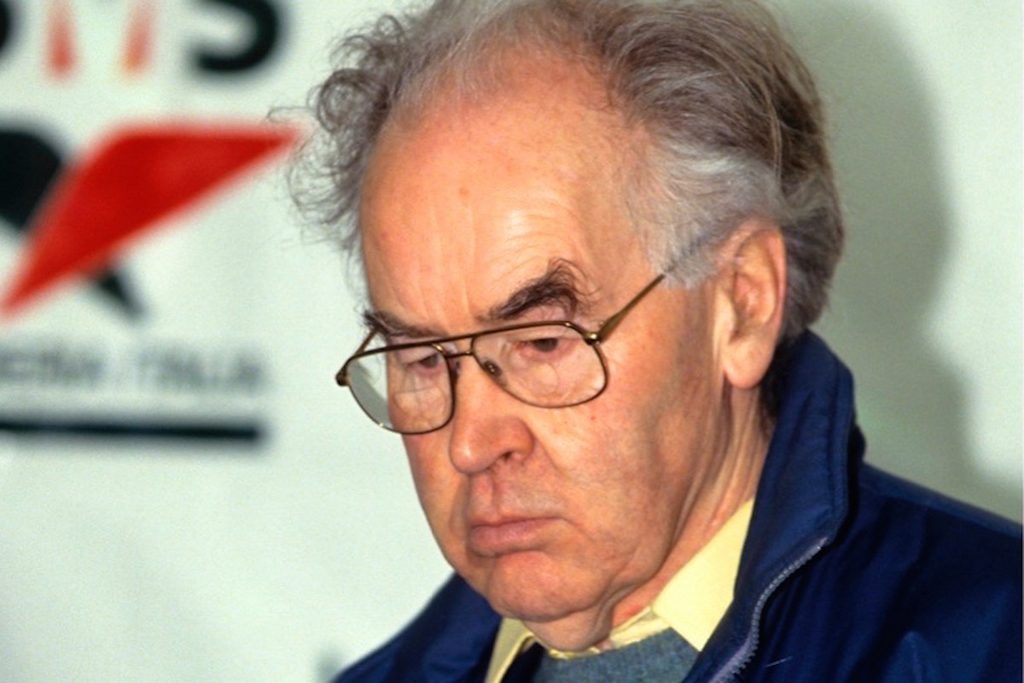
Eric Broadley, founder of Lola, had been manufacturing cars for multiple racing series for years, including F1. In the early 1990s, Lola produced the LC90 and LC91 for backmarker team Larrousse in 1990 and 1991. This proved to be Lola’s most competitive offering, with the LC90 securing third place at the 1990 Japanese Grand Prix for home hero Aguri Suzuki. Its other offering, the T93/30 for Scuderia Italia, failed to match the results of 1990, rooted to the back of the grid, with the team folding before the season’s end.
Lola’s next venture was bold: to develop its own factory-based works team. In late 1994 and across 1995, Lola developed the T95/30, a car that never raced. Drafting in Allan McNish, Broadley wanted to be thorough, testing both the aerodynamics and packaging of its potential entry. The goal was never to race the car, but to evaluate it.
The T95/30 did not exactly push the boat out in terms of being adventurous; it featured high sidepods and a raised needle nose, a far cry from the championship-winning Benetton and Williams of 1994 and 1995. It did, however, get the results required to begin its journey to the F1 grid.
With his findings, Broadley set his sights on Lola being on the grid. But having extensive experience, he knew the only way to get the team into a competitive position involved an all-or-nothing approach. He wanted the car, gearbox, and crucially, the engine to be developed in-house. Greater effort, yes, but it also guaranteed more control. Broadley and Lola had seen first-hand the results that customer V8’s had on the team’s competitiveness in a series dominated by manufacturer V10s, and chose the nuclear option.
Of course, this amount of work takes time to come to fruition, and needs extensive facilities, not to mention planning. With this in mind, Broadley set a target of entering the 1998 F1 championship with a full works entry, sponsor and engine. Former Cosworth engineer Al Melling joined the project to develop the engine, while work began at its Huntingdon base for wind tunnel testing. This gave Lola two years to develop and get itself financially ready for racing at the pinnacle of Motorsport. But all that hope and work was about to come crashing down around them thanks to an approach made to a potential title sponsor: Mastercard.
Enter Mastercard
Before I delve into the corporate ineptitude, negligence, and frankly downright stupidity Mastercard demonstrated that led to Lola’s demise, I will again caveat that Mastercard today is very different. Not only is it back in F1, but it is also a title sponsor once again, this time for McLaren. The decision-makers involved in the Lola debacle have long since disappeared, and a repeat of what happened to Lola is about as likely as me becoming a prima ballerina and performing at Royal Albert Hall by the end of the 2026 F1 season.
Back in 1996, Lola and Mastercard entered and concluded discussions over a title sponsor deal, removing a major headache. But problems began almost immediately thanks to the executives at the card payment giant. The cause? Another fledgling team: Stewart. Three-time F1 world champion Jackie Stewart’s outfit had entered the final stages of launching its own team, with the white cars entering the start of the 1997 season. Mastercard executives set their sights on Stewart, seeing them as the competition.
But this is where corporate ineptitude begins to raise its ugly head. Mastercard demanded that Lola enter F1 at the same time as Stewart, but it failed to account for one thing: backing. Stewart had secured title sponsorship through HSBC, marking a rare occasion for that time when a tobacco sponsor did not adorn an F1 car. To Mastercard, this was a disaster. To them, a banking sponsor on the grid meant lost prestige, reputation, and, vitally, commercial novelty.
Mastercard’s deal with Lola was like nothing else on the grid, and not in a good way. It would raise money through the “MasterCard Champions Club”, a deal that had no upfront capital and relied on consumers to buy into the scheme via subscriptions. Tiers ranged from $100 a year to several thousand, each with its own perks. Then there were Champions Club credit cards, a small fee from each transaction directly feeding Lola’s operating budget. In theory, even the tiniest conversion rate would rake in tens of millions of dollars.
So, with Stewart and HSBC taking to the grid, they issued Broadley an ultimatum: race in 1997, a year ahead of schedule, or the deal was off. Faced with this, Lola had no choice but to comply, with dire consequences.
Debut and death
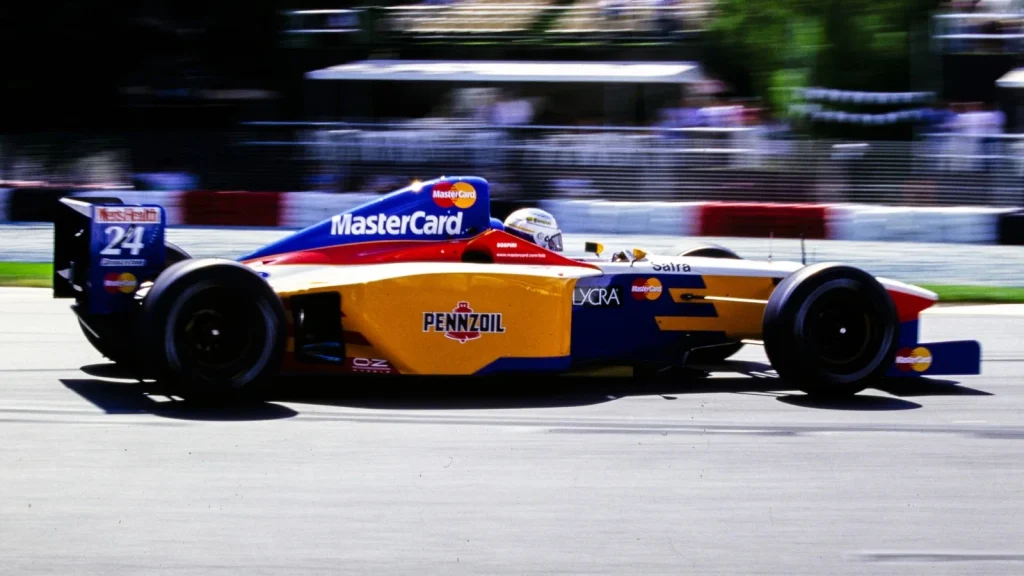
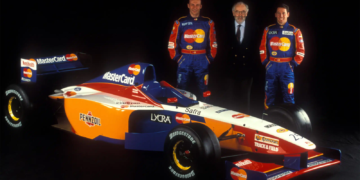
Hopes were high at the launch of the T97/30. Broadley signed Vincenzo Sospiri and Ricardo Rosset to drive the car, which looked resplendent before the world’s media. But a quick look beneath the surface indicated that all was not well. Sospiri raised alarm bells by stating he expected to encounter “small problems, I hope not too much”.
The T97/30 also looked nothing like other cars on the grid. It was underdeveloped, having had no time in the wind tunnel, and designed in under four months. While an achievement in itself, it meant realistically spelt competitive doom. Lola’s in-house engine was nowhere near ready, so despite knowing V8 power would hinder the situation further, Broadley had no choice but to lease Ford Cosworth ECA Zetec-R V8s. For context, Stewart had years of build-up to their debut, including a Ford V10 fully backed by the American manufacturer, due to the great relationship he and Ford he enjoyed via Ken Tyrrell, whose cars powered all three of the Scotsman’s three World Championships.
But the time for talking had ended, and the team arrived with the rest of the grid in Australia, with almost no income from the Champions Club. In debt before it had even turned a wheel, Sospiri and Rosset had another barrier to overcome: the 107% rule. Should they fail to be in this time limit, their weekend was done. But no one could have predicted what would happen during qualifying on Saturday.
Jacques Villeneuve took pole position for Williams with a time of 1:29.369. This set the 107% time at 1:35.625, giving Lola a large margin of error to secure their first Grand Prix start. Sospiri, the fastest of the two Lola drivers, set the fastest lap of 1:40.972, over 11 seconds off pole position, and five seconds away from the 107% cut-off. Rosset’s best time, a further two seconds back, all but secured Lola’s failure in Melbourne. The T97/30 had no hope of qualifying, more akin to a rolling roadblock than a car.
Mastercard took a dim view of the situation, all of their own making. With the Champions Club failing to raise revenue at the season opener, given Lola’s remarkably terrible performance, no one wanted to give money or be associated with the team. Lola itself, due to its running costs, had debts exceeding £6 million, leaving it in an impossible position, with no choice but to withdraw from F1 after Mastercard decided to pull the plug on a ship more doomed than the Titanic. Stewart meanwhile achieved a podium finish in its maiden year. It just goes to show hard work reaps rewards, not shortcuts.
Lola paid a heavy price for its association with Mastercard. It entered administration later that year, before being rescued by Martin Birrane. After a successful spell, it suffered the same fate again in 2012, although the naming rights, IP and wind tunnel remained under his control. Upon his death in 2022, his family sold Lola to Till Bechtolsheimer, who has overseen the brand’s venture into Formula E, as well as the marvellous reimagining of his classic T70.
Mastercard is back in F1, but has yet to mention its association with Lola. Executive greed killed off Lola, though Lola should have known better than to be bullied by Mastercard. Hindsight is a wonderful thing; however, making an impossible decision as Broadley had to is difficult enough without a metaphorical gun being pointed at your head.
Seeing Lola back in single-seater racing after the Mastercard debacle is brilliant, and a sign of its future potential. One might even call it priceless…




Discussion about this post