
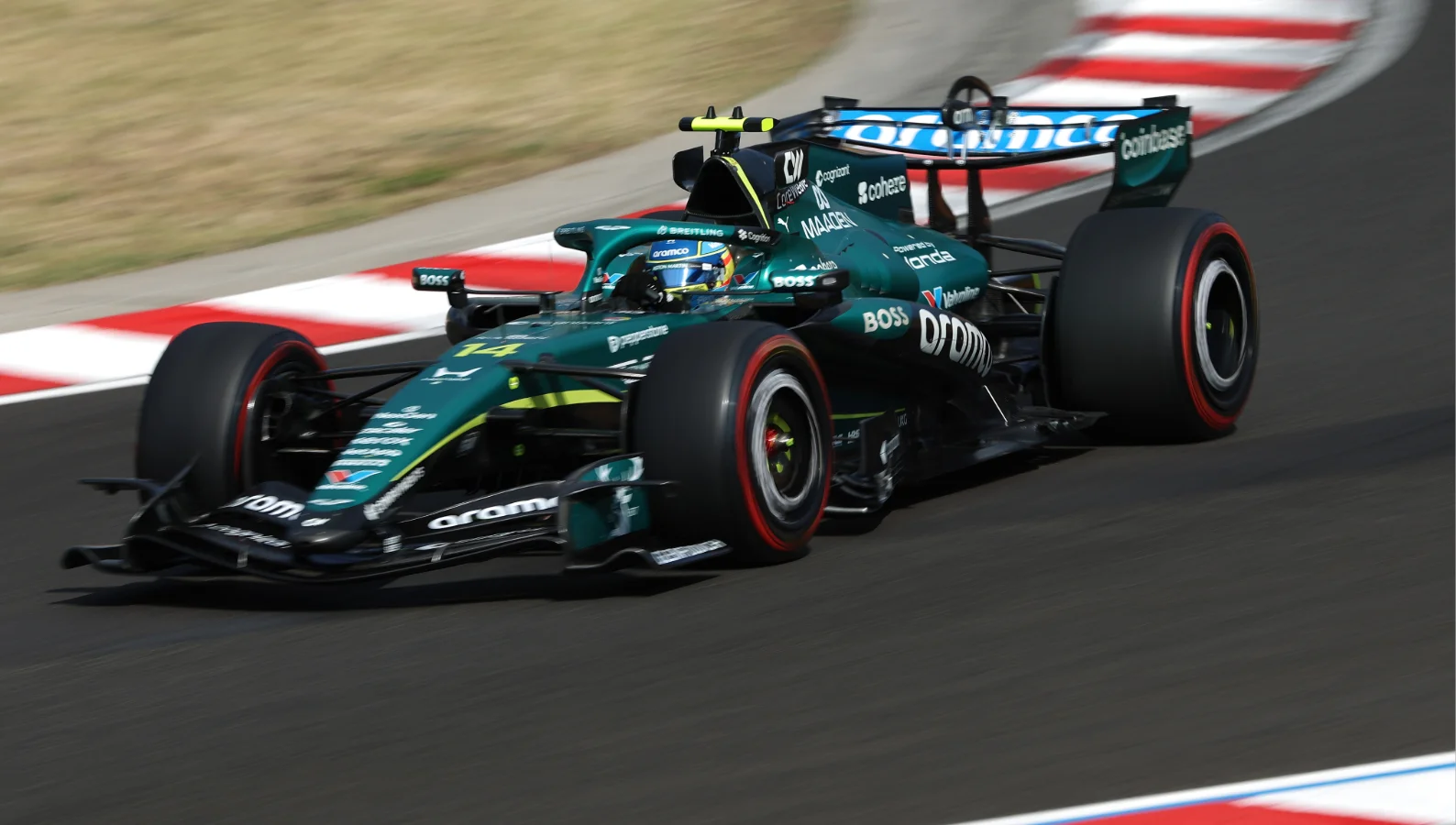
To say that Aston Martin has endured challenges during the first half of the 2026 Formula 1 season is as much of an understatement as saying Argentina is still a bit miffed about the result of the World Cup.
It has, frankly, been nothing short of disastrous. Yet, as light finally shines into the tunnel of misery, one cannot deny that the team has managed to emerge better for it, and that is down to the way the team has chosen to handle the situation.
When teams enter periods of steep decline, the usual approach is to close ranks. The idea is to control the narrative as much as possible by issuing carefully constructed statements, curating media sessions to specific topics, or just refusing to engage with the outside entirely beyond FIA and F1 commitments.
McLaren did this to brilliant effect at the turn of the century, when the 2004 MP4/19 and Mercedes engine proved to be a bucket of bolts that would rival a Morris Marina. The “Ron Speak” coming out of Woking courtesy of Ron Dennis was fantastic; I was lucky enough to get access to McLaren’s magazine as a teenager during this period (yes, they had one), and would see a foreword by Dennis praising the team’s fightback. One such passage read, and this is accurate: “the most important thing is that both Team McLaren Mercedes cars finished the race”. Not exactly inspiring.

Honesty the best policy
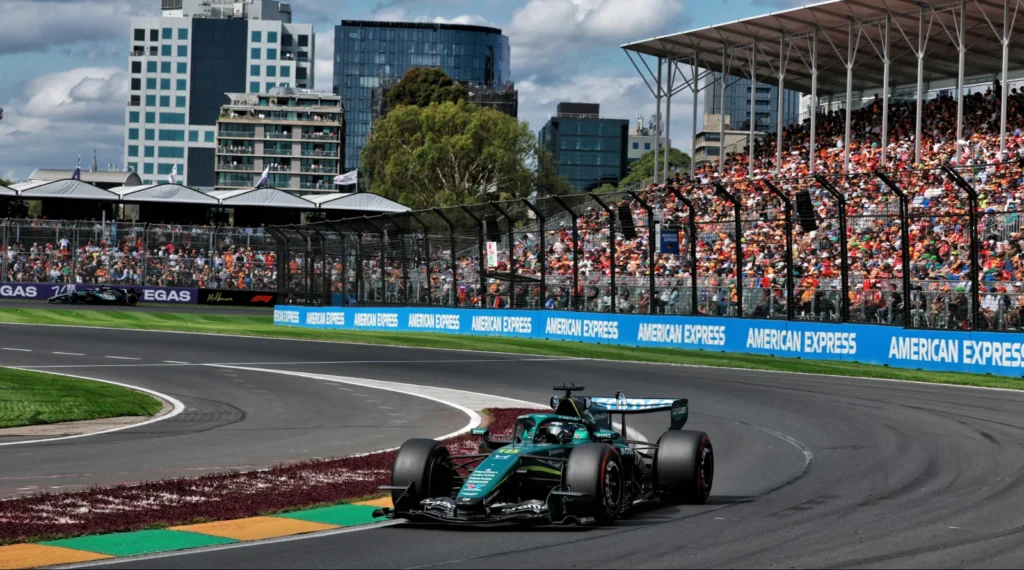
Aston Martin, a giant of a car company and beloved British brand, has chosen to do the polar opposite. It has been open about its problems to the point of sharing too much. In Australia, it sat down with journalists, and like an episode of the Maury Povich show, aired its dirty linen in public, though it must be said, with more class than the guests who appeared on that unique piece of television. From the off, we were aware of the scale of the problems – a Honda power unit that vibrated to the point it risked nerve damage to the drivers, handling problems, a horsepower deficit…the list was extensive. But they shared it all, and in doing so, brought us on the journey of recovery.
Neither Fernando Alonso nor Lance Stroll has shied away from the severe malaise affecting the team. Alonso, known for being outspoken, has never criticised either the team or Honda; instead, he factually confirms where the team is and states they are working on the upgrade. It has been a completely united front.
As journalists, we are given incredible access to race weekends, something we never underestimate and forget. But there is one location I have spent more time in when in the paddock than anywhere else in 2026 – The Aston Martin Motorhome, or the House as the team calls it. This impressive structure, spread across three floors, features a rooftop terrace off the main room on the top floor, where the team holds media breakfasts directly before or after one of its sessions.
The delicious pastries and hot chocolate aside, we are free to have meetings here or talk to the team. Again, they are open and honest about the situation, but they have always carried an air of confidence in their decision to wait for what effectively amounts to a B-spec car. I felt this steadfast resolution again at their Media evening, when we were treated to yet more delicious food, a tour of the facilities and a few words from Adrian Newey on the team’s progress.
Everyone believed in the process and Newey’s vision. I hear some pessimists saying, “Of course they would say that in front of you; the audience were journalists!” But here’s the thing about scenarios like that: PR trained lines can be seen a mile away. They have praise but no emotion, lack substance and most of all, passion. Every single team member engaged with at Aston Martin all had passion, and that cannot be faked.
Honesty has been the best policy at Aston Martin, and it now has had a secondary effect. They are mostly loved by F1’s fanbase. It has become an underdog to root for, and one that commands respect in the pitlane despite its 2026 malaise. It has carved out its own identity, but this will now develop as the team begins to turn around its fortunes.
Though, selfishly, I hope the media breakfasts continue. The hot chocolates in there are not just the best in the paddock, but the best I’ve ever had. But hot chocolates will not take the team back to the heights it enjoyed in 2023 and beyond. That is down to car development.
The upgrade that delivered
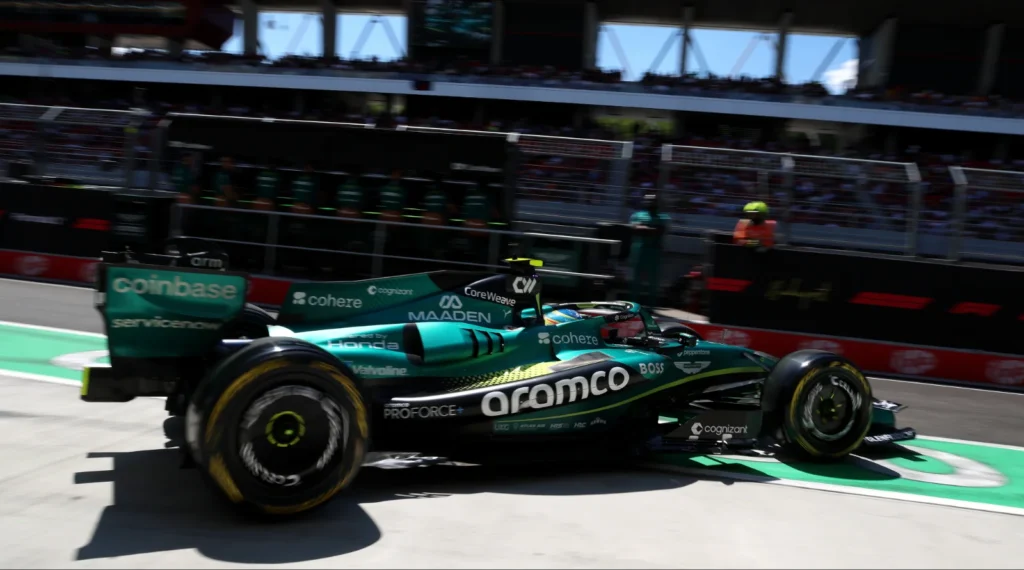
The entire first half of the 2026 F1 season has hinged on this upgrade. After months of buildup, and the team defending its decision, Hungary was to provide the answer. Of course, the one downside of promoting and relying on an upgrade of this magnitude is that the egg will be very much on your face if it fails harder than a mum taking to the stage with their child to do karaoke at a school assembly. Thankfully in Aston Martin’s case, this concern proved unwarranted.
When the car presentation document was released on Friday, the paddock got the first indication that Aston Martin was not messing around with the upgrade package. Rather than playing spot the difference when comparing the Spa spec car to the Hungary upgrades, it became clear that the AMR26 had become a brand new car overnight. Everything from the front wing, the floor, and sidepods had been given a complete overhaul.
Normally on pit lane walks, the bottom half of the garages is devoid of fans or media, the action centred on the likes of Mercedes, Ferrari or Red Bull. If anything, it’s bliss: getting away from the crowds, selfies, and cameras high above your head making an impact on your face as someone tries to get the shot they absolutely must have, no matter the cost. But all year, Aston Martin has had some attention around it. In Hungary, everyone wanted to see the changes, and that is down to the narrative and openness the team has fostered.
The car looked different, and Aston Martin tried to keep a lid on expectations ahead of early running. But what became clear on Friday was that the new car was seconds faster than its predecessor, somewhere in the region of four to five seconds, to be precise. In the world of F1, that is nothing short of incredible. After FP1, Newey called the first running of the car “promising” – somewhat of an understatement. A suspension failure for Lance Stroll on a part not changed as part of the upgrade was the only fly in the ointment.
Then came qualifying. Alonso reached Q2, which surprised many and alerted the midfield pack of a new rival. It no doubt sent a shiver down Williams’ spine, as the Grove team now looked in serious peril of being overtaken in the development race. What made Fernando Alonso’s 15th place grid spot all the more impressive was the tantalising tease from the Spaniard that he could have gone faster.
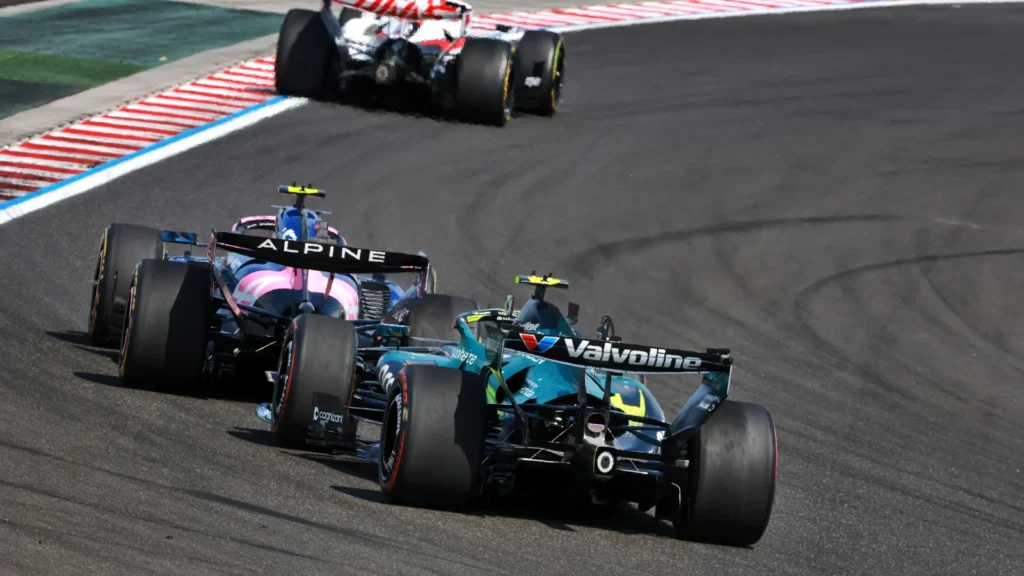
The race validated the immense gains. No longer trailing around at the back, cut adrift from even the Cadillacs, Alonso in particular shone, comfortably faster than both Haas’, Williams, and even splitting the two Alpines. The steadfast faith in the plan truly paid off, and the team is now on a very different trajectory to just a week ago.
What next for Aston Martin?
Make no mistake, the road ahead for Aston Martin is perilous and arduous. Bumps will be encountered that will threaten to derail its progress. But like McLaren back in 2023, it has pulled off nothing short of a development miracle. Although not fighting for wins, it is now a firm midfield contender, and that is nothing short of a spectacular turnaround.
I recall being in the Spa media centre and looking at the 107% times for Q1: with Stroll’s first lap within a second of the maximum time before he found more “speed” to counter it. This, thankfully, is relegated to history now, a bit like a bad school memory your mind tries to bury but occasionally flashes in front of you for no apparent reason.
Unlike McLaren in 2023, however, the next step for Aston Martin is unlikely to come easily. Finding four to five seconds to lift yourself off the back of the grid is one thing; to find another three seconds to reach the frontrunners could be mistaken for blue sky thinking, frankly. But there is one final, quite important element to the team’s fightback that will impact its ability to move forward: Honda.
Honda’s power unit deficit is rumoured to be in the region of 100bhp. To put this into context, a Fiat Panda has escaped from its engine and buggered off up the road. Like the B-Spec car in Hungary, Honda has put a lot of onus on this upgrade, and all eyes will be on the Japanese giant in Zandvoort to see if it has not only caught up with the wayward Panda, but if it has managed to add more horsepower.
Aston Martin’s journey back to the podium has now begun. The sleeping giant of the paddock is awakening, and while not yet ready to roar, is already making waves with the first part of its fightback. The second half of the season is going to be very interesting.
I’m looking forward to my hot chocolate in Monza…





Discussion about this post