
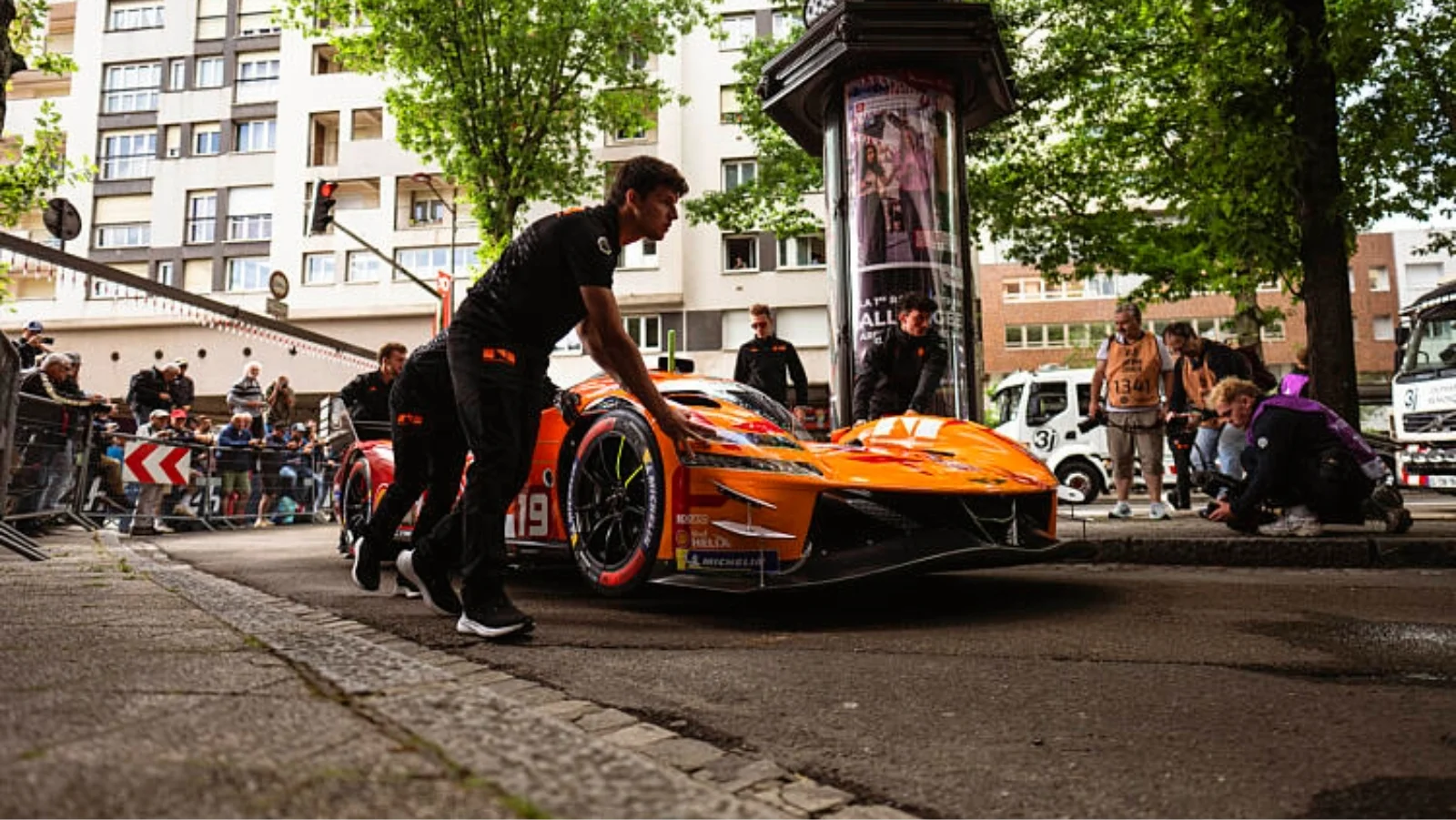
During the annual ACO press conference ahead of the 24H of Le Mans, the organisations have announced the base of the rules for top-class endurance racing, expected to debut in 2030.
The goal is to have a single platform with one set of regulations, that would still allow brands to diversify and explore their own identity across both the World Endurance Championship and IMSA Sportscar Championship. This should improve budget contain for manufacturers while maintaining the same competitive potential.
The technical model is based on the manufacturer having a choice to use registered constructor’s complete spine and single-sourced parts with a common or bespoke hybrid system, and no exclusivity contract with the constructor of the spine. Or, to use bespoke components with manufacturer spine and common hybrid system. In both cases the components will be under the same specifications.
The homologation will be for a 5-year period minimum, with no performance evolution allowed. Reliability and safety issues are of exception, as those can be addressed despite homologation.


Furthermore, all cars have to be hybrid and two-wheel, rear, drive. Engines are expected to be slightly stronger, with 20kW more than currently permitted in the top class.






Discussion about this post