
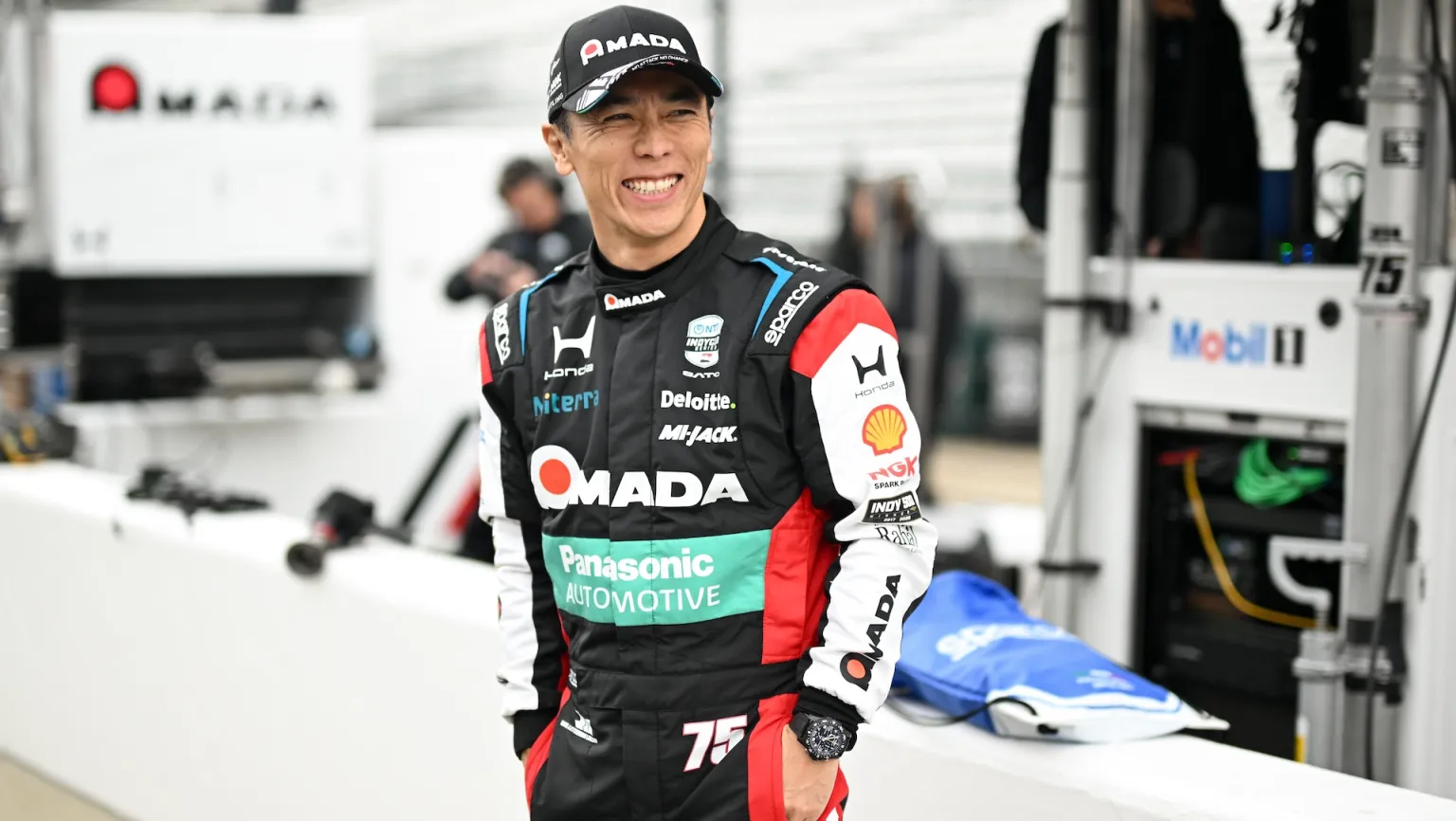
Anything can happen over the course of a 500-mile oval race — and, in fact, it probably will. But two-time Indianapolis 500 victor Takuma Sato believes he’s figured out the secret to winning the ‘Greatest Spectacle in Racing’.
The former Formula 1 driver knows what he’s talking about, too; he’s won the race twice and has clocked some of his career-best finishes at the 500 since that first victory in 2017. Where he used to flounder at the rear of the field, you can now find him dicing with the best of the best up in the top-10 for most of the race. And that’s because he’s witnessed firsthand what it takes to guarantee each stint feeds into the next.
Speaking to media, including Motorsport Week, during a Honda-organized round-table interview, Sato laid out what he believed would be the strategy — and the circumstances — necessary to win the 110th running of the Greatest Spectacle in Racing.
“If you are up in front from the very beginning, that would be better, for sure,” Sato said with a laugh. After all, history dictates that the drivers who start on the first two rows of the 11-row, 33-car grid are more likely to take victory than anyone else. Yet a strong starting position isn’t the only thing a driver needs to win these days.
“Especially for the last few years, the competition level is one of the highest, and [where] across the paddock or team, our speed differential is very small,” Sato explained.
“Now, everybody’s finding 99.9% [of a car’s performance]. That’s why the competition is so high.
“It’s very difficult to overtake, and particularly in colder conditions, it’s like a band-aid, because you have so much premium on the heavy air that the downforce it’s producing is enormous.
“Anyone who can balance the car will be able to go fast. But when you have a hot day, then it’s like, ‘game on’.”
Sato emphasized time and again throughout our conversation that experience is key at the Speedway; while it is absolutely possible for a rookie to win, the drivers who have endured the unique conditions of the Indy 500 — eight pit stops, a 2.5-mile lap, drafting and passing in traffic — are the ones with the “tools” required to succeed.
“For example,” Sato explained, “everybody is good in the first five laps when the tires are new, but after that, everybody struggles because of the balance shift.” But the drivers with experience at the Speedway are more likely to anticipate that balance shift and account for it in their race performance.
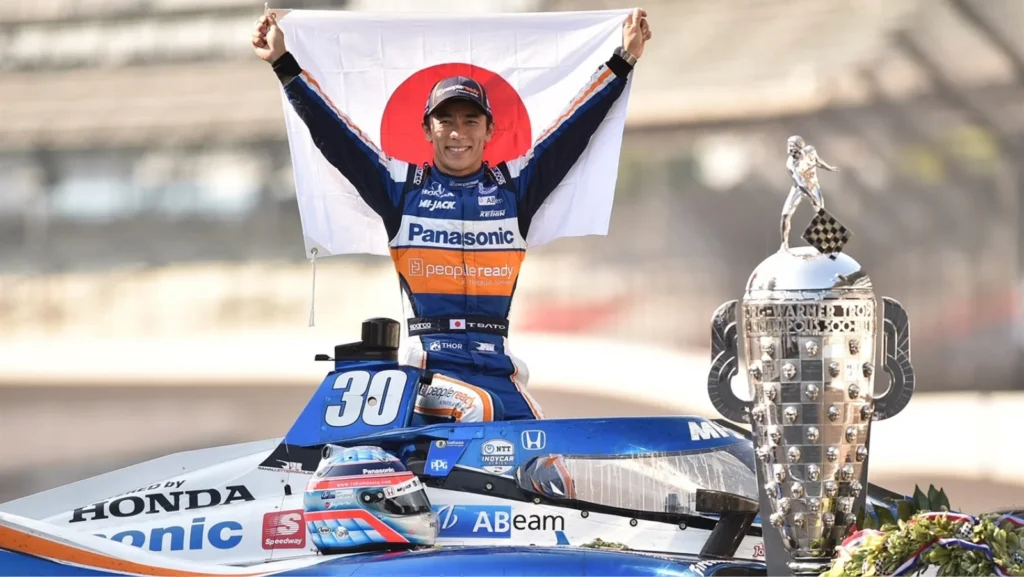
Top 5 with 100 laps or trim if you are too slow – Indy 500 victory 101
From there, the Japanese driver laid out the strategy required to win.
“What I do usually is like, within 100 laps, you need definitely need to be top five,” he pointed out. “And by yourself, you really need to run by yourself to see how much speed you can pull. Then you have a car to compete.
“If you are too slow, then you have to trim.
“But at the same time, if you go second place here, [it’s] relatively easy to overtake. Almost within half a lap, you can switch back and forth and back and forth — but it’s only the guys in the top two. When you’re P3 and onwards, it’s very difficult with the turbulence.
“So therefore, the last two stints, ideally, you don’t want to touch the car, which means the tire pressures and front wing and rear wing are done after four pit stops. The last two stints, ideally you don’t want to touch the car. And the last stint, you need to be within P3.
“Otherwise, unless you have yellows or something, your chances to win the race are very small. Very difficult. That’s how it’s been the last few years. That’s why, statistically, by the end of each stint, slowly but surely, you need to move forward.”
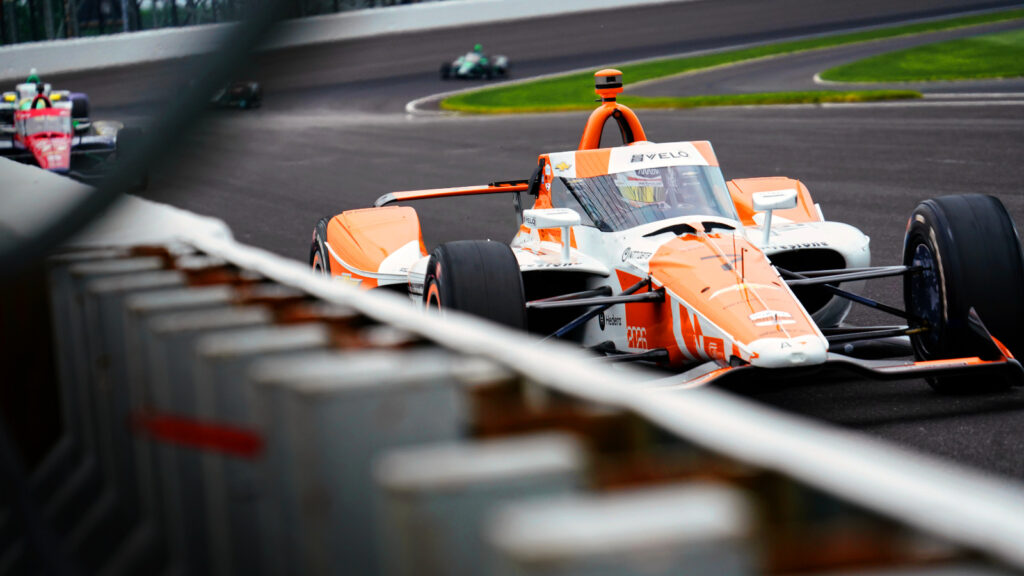
Rosenqvist proves Sato’s Indy 500 theory correct
At the close of 2026’s 500-mile dash to glory, it was not Sato who took the checkered flag first. That honor instead went to Meyer Shank Racing’s Felix Rosenqvist — a fellow Honda driver from a small team who took advantage of a heavy right foot and a one-lap green flag run to secure victory.
But Sato’s strategy was still relevant. Rosenqvist, who qualified on the front row, stayed within the top 10 throughout the race. A flurry of late-race cautions and red flags meant that he and Pato O’Ward — two drivers on an alternative pit strategy — were the favorites for victory because neither of them would need to pit in the closing stages. The Swedish driver remained in the top-five through the closing stages; on the final restart, his third place meant he was perfectly positioned to slip past his teammate Marcus Armstrong and Team Penske’s David Malukas for a narrow margin of victory.
Yet in some ways, Sato’s performance can still be considered a ‘win.’
His 10th-place finish made him the best-placed Rahal Letterman Lanigan Racing machine in the field, which is a high honor considering he was the only one of the team’s four racers to only be racing at Indianapolis and nowhere else this year. In terms of former winners of the 500, only seventh-placed Alex Palou finished better.
That said, Takuma Sato will be hungry to return to the Indianapolis Motor Speedway in 2027 for another chance at victory.
READ MORE – Indy 500 purse climbs dramatically, surpassing $30 million




Discussion about this post