
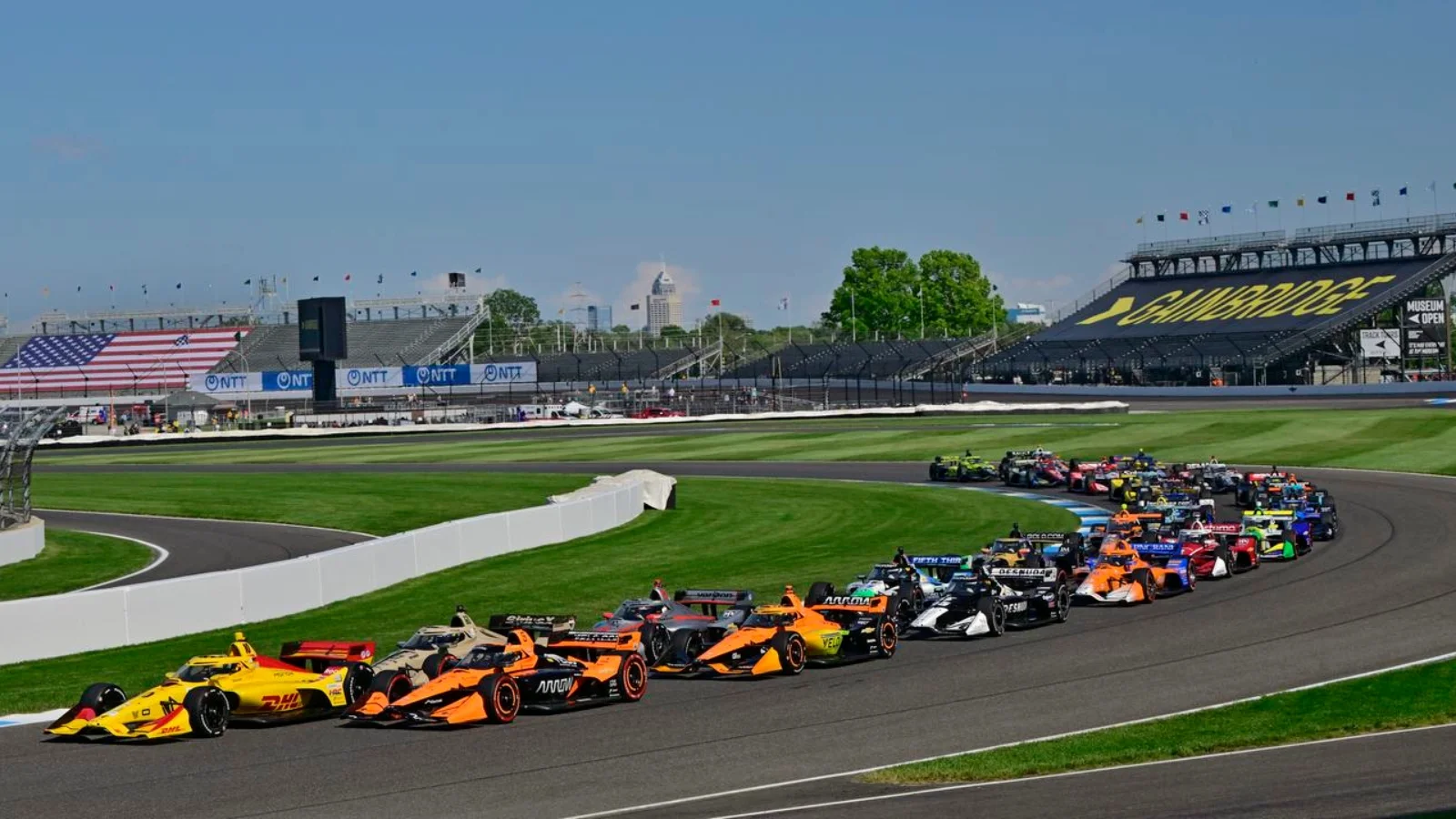
The Indy 500 is now less than a week away, and I’m actively excited. I also do not feel guilty about this admission, which is, frankly, a bit of a shock.
How did I come to this conclusion? Another cardio day at the gym. I needed something to watch to kill the combined 25 minutes of pure torture on the step machine and treadmill. Firing up YouTube on my phone, I looked for one of my default travel videos – a mundane trip on Japan’s ferry network or a hidden restaurant review -, but then I suddenly had the realisation that Indy 500 practice took place the day before.
So I found the highlights and set to work transforming into a walking bucket of sweat. The video’s length matched my workout, so this helped massively. But my active excitement is what did the trick; I became utterly engrossed in the highlights, keeping an eye out for the usual suspects of Alex Palou, Kyle Kirkwood and Pato O’Ward’s efforts as they warmed up for the 110th running of the famous Indy 500.
Now, I will confess that this fascination has been a slow burner. Far from waking up one morning and going “ Ah! I like IndyCar now!” it has been a steady conversion, through increased exposure, a series that I have covered on and off for the past 18 months, having occasionally dabbled in it over the last few years. But now, I follow it as actively as I do F1 and Formula E.


Something is happening to IndyCar. I can’t put my finger on why, but it appears to be entering a period of expansion. Once seen as a bit of a joke away from its core audience in the United States, it is building a strong international following. Just how has it achieved breaking beyond that big land mass on the western side of the Atlantic Ocean?
Blaming Fernando Alonso
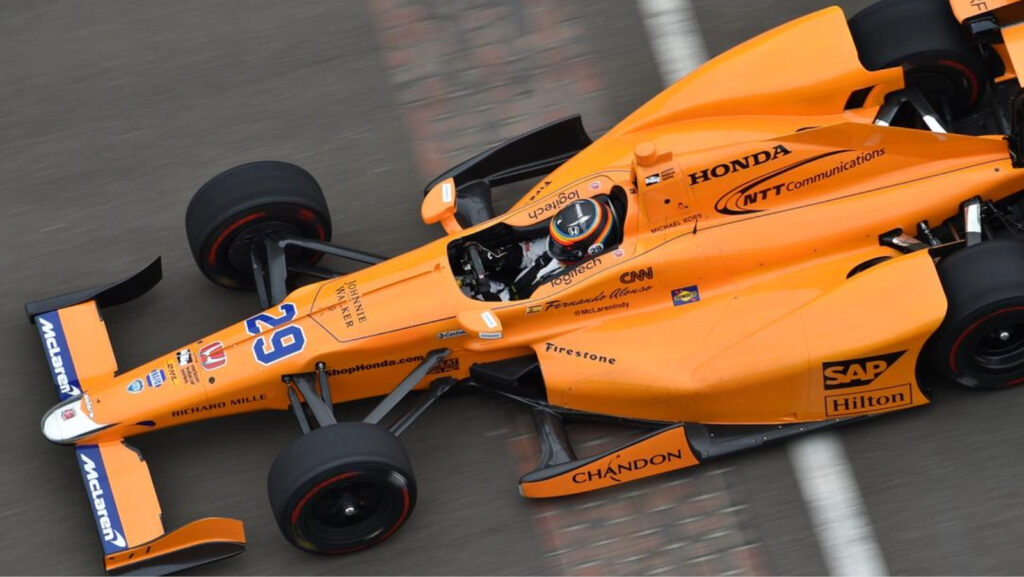
At this point, cynics would expect me to say that it is the divisive new rules that are responsible, as I launch into a tirade of puns and metaphors. But no, it is not the rules that have converted me to an IndyCar fan, but a person. Specifically: Fernando Alonso.
Back in 2017, hardened F1 fans will remember the absolute nadir McLaren had plummeted to, with Alonso stuck driving a car that may as well have been a mobile chicane. So, in order to keep their star driver motivated, a deal was struck for the Spaniard to run at the Indy 500, which coincided with that year’s Monaco Grand Prix.
In the UK, both events were to be shown live, so we had a fantastic day of Motorsport heading into the late hours. At this stage, I had heard of IndyCar but knew nothing of it except that it was US-based only and had become a bit of a graveyard for F1 rejects. Whether rightly or wrongly, that was my opinion of it based on how other Motorsport pundits and drivers spoke about it.
So, heading into the evening, I sat down to watch my first IndyCar race – the Indy 500. In my naïve mind, I thought an oval did not present much of a challenge, and, physically, it lacked the challenge of F1 or even Formula E, and the rolling starts perplexed me massively. But then I saw the speeds, and boy, was I shocked. Seeing the cars millimetres from concrete walls with speeds in excess of 230mph, and average speeds of well over 200mph, I had nothing but respect.
My interest lasted as long as Alonso’s race, as Honda, not content with screwing up his chances in F1, chose to extend this curse to the Indy 500, his engine expiring with 27 laps to go. From then on, I’d occasionally flick onto a race if I saw one, but paid little attention overall, until I started to cover it more in 2024. From then on, I was completely hooked.
Is IndyCar at last getting the attention it deserves?
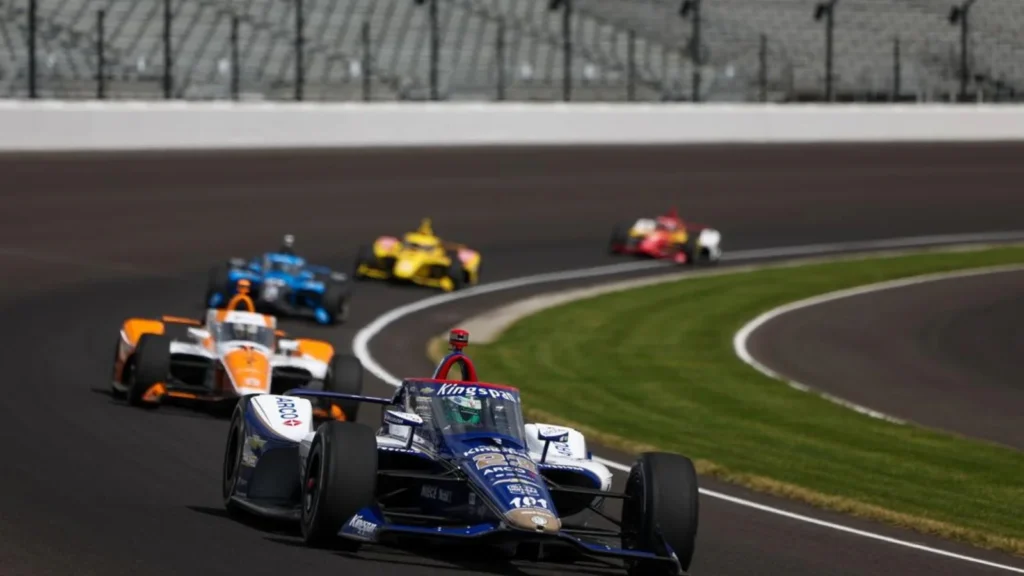
Alonso brought new audiences to IndyCar, a factor that cannot be overstated. But other factors lie behind its growth – a quick check on YouTube highlights this: its video viewing figures have increased. Momentum is building. Labelled as “the greatest secret in Motorsport”, this title may need updating in the not-so-distant future.
Its core audience in the US has averaged over 1 million viewers for the opening three races of the year, according to Blackbook Motorsport, continuing a trend seen in 2025. The sport is growing rapidly and is arguably more popular than at any point during its history.
In the UK, Sky Sports has gone from simply running the American feed to having a presenter voice over the commercial breaks and an entire studio with pundits for the Indy 500. It has gained quite a following, with fans tuning in. The exact figures for its audience on this side of the pond remain a mystery. But what is clear is that in the UK at least, a small but dedicated following for the series is beginning to develop, a bit like a group of sailing enthusiasts sharing a hilarious in-joke at the yacht club. They all get it and nod along, knowing they are involved in a special moment, in their own world.
But perhaps it is IndyCar’s rapid expansion of TV coverage into other territories that is playing a part in its new success. It has signed deals for a return to Brazil, adding South Korea and Poland to its broadcast list, though the latter only covers Indy NXT. Combined with its direct streaming service, IndyCar Live, available in areas without traditional coverage, some 200 countries and territories now have access to watch a series based in the United States and Canada only.
So far, it is clear that this expansion is beginning to pay off. Increased viewing figures and the arrival of Will Buxton as Lead Commentator, fresh from his time at F1 and on Drive to Survive, also indicate that the sport is entering a new phase of its existence. The final aspect of its expansion is the most important: the product.
A watchable product
As I ran on the step machine last week, with my body beginning to complain as to why I was doing this with a stomach full of chicken fajitas, I found solace in watching the drivers prepare for this year’s race. I realised I was, quite literally, watching cars drive around in circles. But my [and other converts’] love for the series goes deeper than that, thankfully.
IndyCar is just so very simple. The cars and regulations are easy to understand, with no ambiguity over either. Dallara build all the chassis for the teams to spec, much like Formula E, but then the teams can develop and tweak their own specific internal components, such as dampers and suspension geometry. Essentially, the cars are fantastically simple.
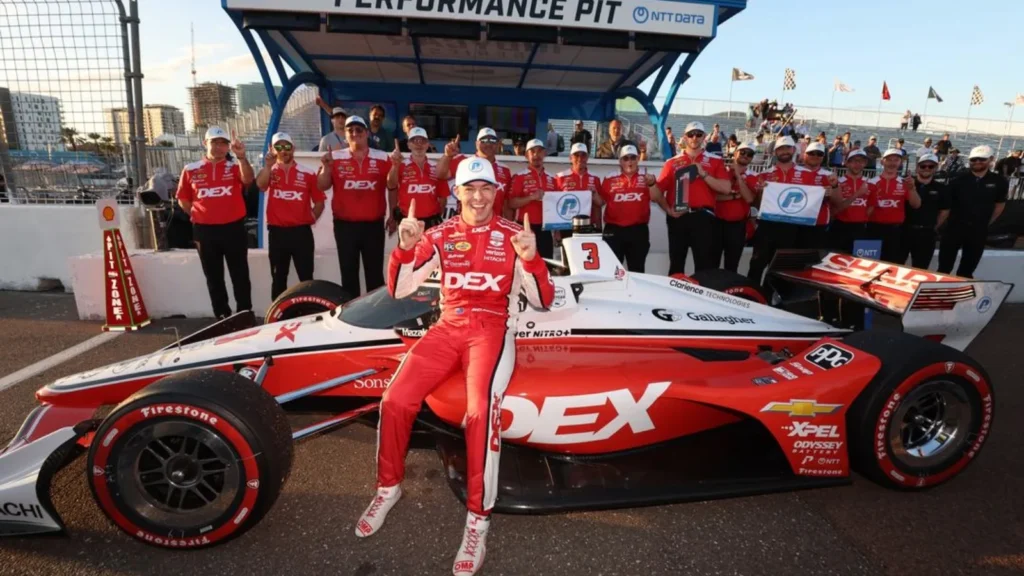
Then we get to the sporting regulations. Qualifying can sometimes be the highlight of the weekend. Forget who has the fastest lap, the benchmark used by F1 to dictate the quickest driver over a single lap. Instead, it has created a better way to showcase its top talent: fastest average speed. It really is a case, particularly on the oval courses, of who has the bigger balls.
It is an exciting spectacle, watching drivers lap at incredible speeds, pushing themselves and their cars to the limit. The post-qualifying celebrations have emotion, with a bit of the ridiculous in the form of mascots akin to the ones found on a baseball field but this can be forgiven.
Then there is the strict adherence to the rules. In F1, the stewards can cause issues for themselves and the sport by delaying decisions, sometimes hours after a session or race has finished. Not so in IndyCar.
Decisions are swift and uncontested. If even a hint of a rule is broken, the powers that be come down hard and publish their reasoning via a media statement. These statements are left on the sport’s main site for all to see. Perhaps this is why rule-breaking is so rare in IndyCar: no one wants to be named and shamed.
Racing and personalities to get behind
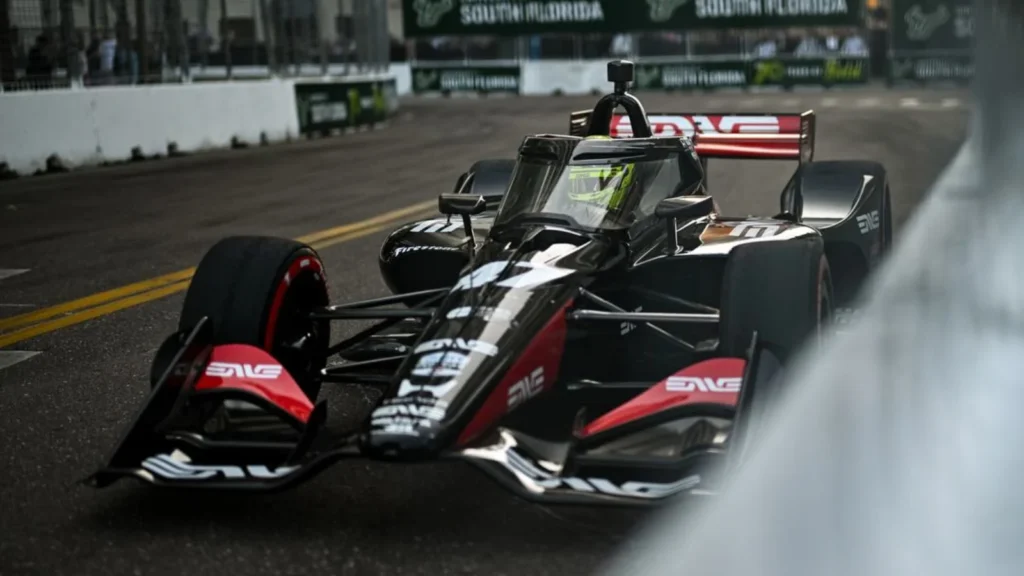
Lastly, the racing is simply fantastic. Drivers push their cars to the limits, and overtakes are earned through guile and opportunity. Watching Kirkwood’s pass on Palou at Arlington was the culmination on Lap 55, and then holding the Spainard off for victory was utterly thrilling.
Driver rosters in IndyCar have featured F2 and F3 graduates in recent years, as well as dropped F1 drivers, a move seen as a step down for their careers. But now, the likes of Marcus Armstrong, Dennis Hauger and Romain Grosjean look to be in fantastic positions. Even Mick Schumacher has been persuaded to give the series a try with Rahal Letterman Lanigan Racing, a major coup for the series’ viewership. But on the topic of drivers, one thing that has surprised me is how accessible they are. In F1, they are protected by comms managers and make carefully crafted appearances. Not so in IndyCar.
Instead, they speak openly and honestly [even if they have to say the full name of their sponsor and car number at the start of every interview, seriously, who does that?!] and can be blunt on the radio. No coded messages, just emotion combined with the desire to win. It is lightyears away from “radio check” and the likes of “default zero one” seen in modern-day F1.
Whilst racing away from America may still be a step too far, those who make the journey, it’s becoming obvious that IndyCar is no longer the equivalent of the nerd in a 1990s secondary school that everyone acknowledges, but no one really likes, to one that can now sit begrudgingly with the rest of the class.
After a thrilling qualifying session for the Indy 500, I remain fully excited for the race next week and am already working through who could win. And I love it. It feels authentic in a way that racing in the 1990s and early 2000s felt. That’s not nostalgia talking; it’s a desire for racing to go back to its roots. Roots that I firmly believe have been hidden in circuits in America and Canada. Motorsport’s best-kept secret is out. We need to talk about IndyCar – because I’m confident more people are about to.






Discussion about this post