
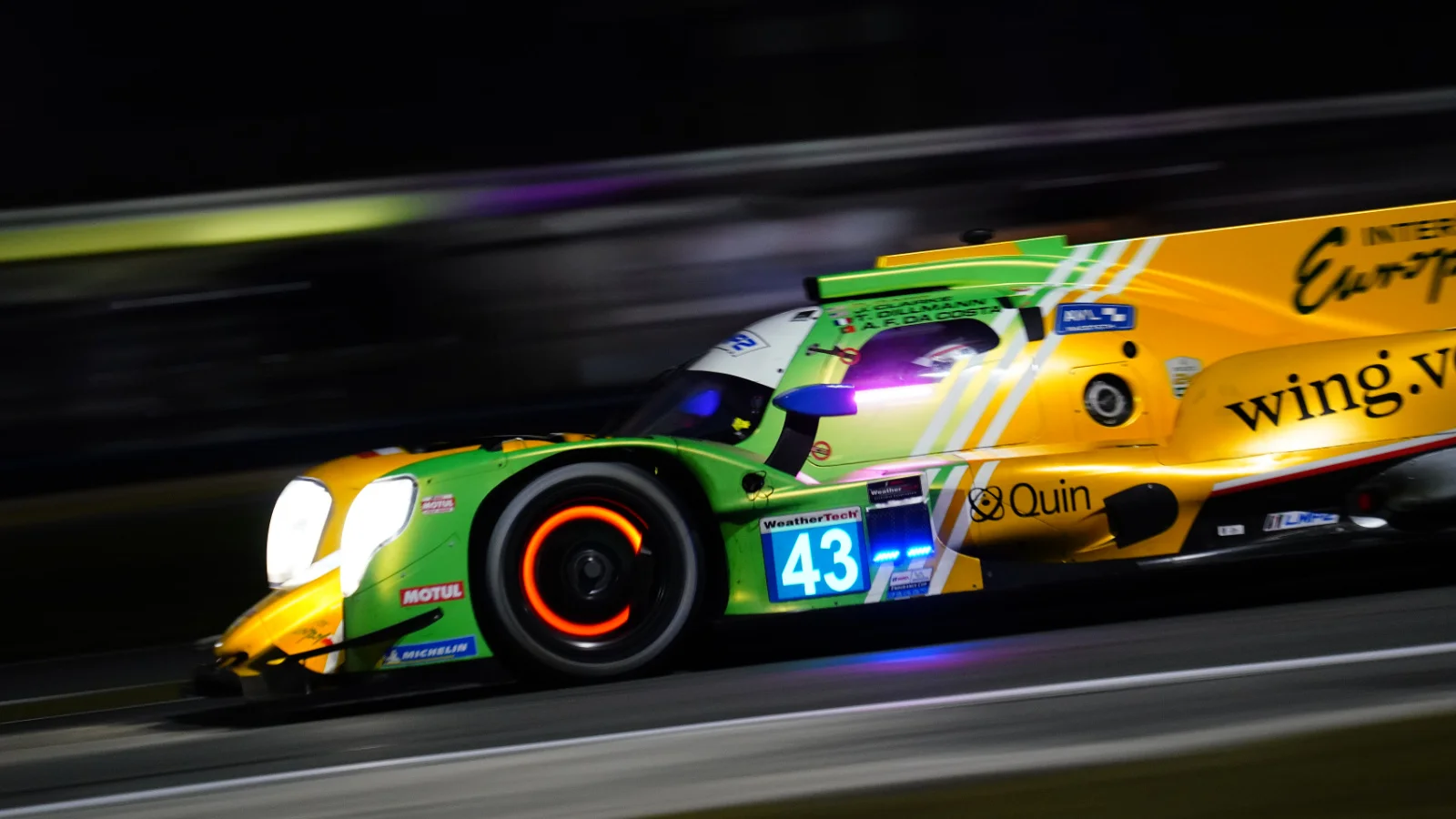
With the Rolex 24 at Daytona underway, you may wonder how drivers cope with the pressures of endurance racing, both in and out of the car. Motorsport Week has found out.
The Daytona 24 is one of the most prestigious motor races on Earth, and the natural byproduct of endurance racing is that drivers and their teams must be ‘on it’ for anything from six to 24 hours.
With adrenaline pumping, the sun setting and rising, the temperatures changing and with all the possible carnage along the way, there is always something to make one car stumble, and another pick up the pieces and take victory.
So what is it like for a driver to deal with all of this with the clock turning twice over from when the green flag falls to when the chequered flag is waved?
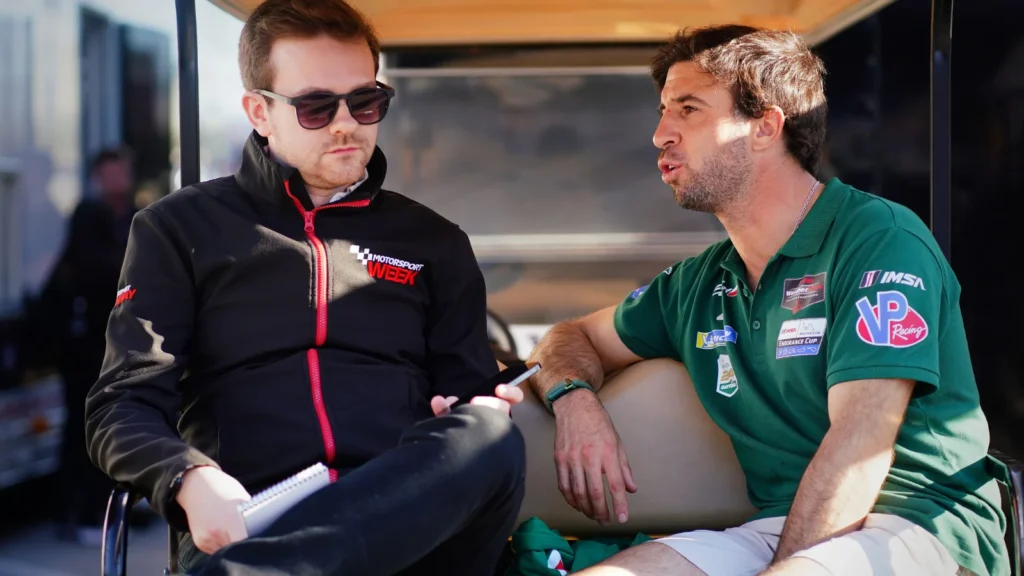
Motorsport Week caught up with two drivers from the ‘Turbo Bakers’ – Inter Europol, in the shape of Formula E stars Antonio Felix da Costa and Nick Cassidy.
The former is making a return to full-time endurance racing this year with Alpine in the World Endurance Championship, and exudes enthusiasm for endruance racing from every pore.
But the Portuguese explains that sometimes, it doesn’t always quite feel like fun, as he is set to climb aboard the #43 Oreca chassis.
“Yeah, a 24-hour race is a messed-up thing to put it simply!” he laughed to Motorsport Week. “You’re driving the car, you’re getting hot about it, you’re getting emotional about it, and sometimes you look at the clock and there’s 14 hours to go, especially here in Daytona with the way the rules in IMSA work, and the amount of yellow flags that we have.
“We’ve seen cars winning this race that with 10 hours to go, they were two or three laps down, so really this one in particular is like: take your rest, take care of the car, and six hours, five hours to go, then it’s time to really engage another gear in terms of aggressiveness on track, the amount of curves you’re taking, and how much you’re asking out of the car.
“When you’re out of the car, it’s crucial for us to make sure that we go to sleep, it’s very hard to do that because you’re obviously interested in how your race is going, but the best thing you can give your team-mates and your team is actually go to sleep.
“So I have my techniques to try and fall asleep even when I’m not tired and all that, and make sure that when I’m getting back in the car, I’m rested, my focus is there, and I can drive at 100%.”
‘Massive range of emotions’ are all part of the fun in Daytona
It’s da Costa’s third trip to the prestigious Daytona Speedway, and is an old hand at racing in such an environment.
He explained that not only are the aforementioned tasks are big factors, but a driver must also concentrate on the amount of lower-class cars you will lap, and, as an LMP2 driver, how many in the GTP class you will need to let through.
“I’m not going to lie, at the end when the chequered flag drops, it’s a massive weight off your shoulders, it feels like we’ve been through a lot, and you have, just imagine the amount of laps that we do, the amount of GTs that you pass, the amount of GTP cars that pass you, it’s an intense thing to do for a long time, and that’s why we love it, honestly.
“When I’m halfway through a 24-hour race, I’m like, ‘what the hell am I doing here?’ And as soon as it’s over, I’m like, ‘I can’t wait for next year.’ So you just go through a massive range of emotions, but that’s why we love it.”
Cassidy, fresh from his Mexico E-Prix success, is making a more rarer appearance in endurance racing, but, like da Costa, is featuring in the Hypercar class in WEC this year, having joined Peugeot as part of his Stellantis contract that dovetails into his Formula E work.
No doubt that, provided the Kiwi’s #343 car can make it through, he will be part of a team effort to maximise the best possible result, and for Cassidy, he echoes da Costa’s mindset, saying it’s about being more reserved in the early stages of the races.
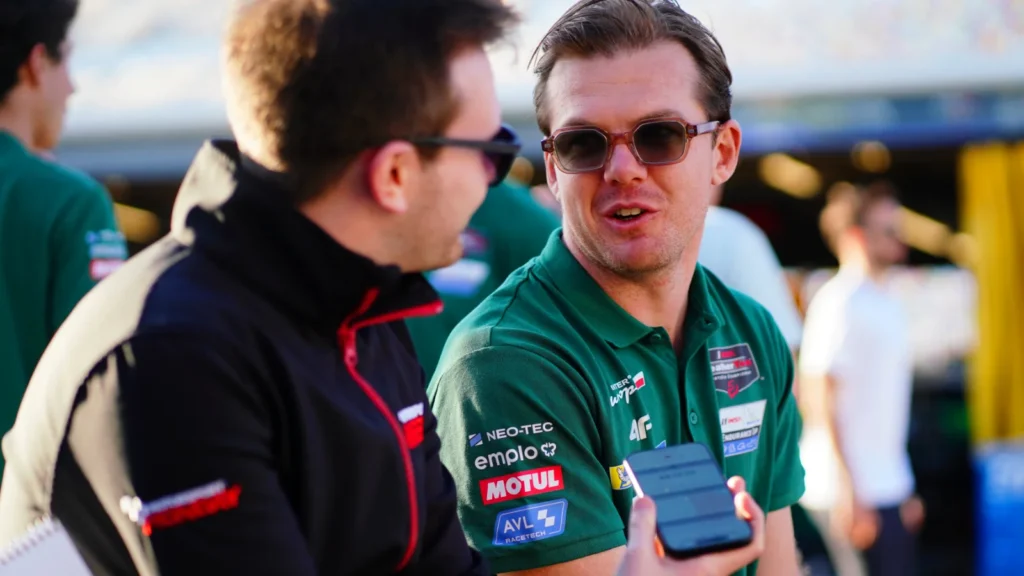
“Obviously from a personal performance point of view in terms of mental performance, in terms of physical performance, you want to be at your best level all the time if you can,” he said.
“You also don’t want to peak too early in the race. You’ve got to be there at the end because here with the yellows and there’s a lot of talk about a lot of cars being in the game at the end of the race, you’ve got to be sharp yourself personally. So that’s a big thing.
“And then the other thing I would say is just the challenge of going through a range of obviously different temperatures and conditions through the race, that the car is changing all the time even though you’re not changing the centre.”
“You’ll have different feelings that it’ll come, that it’ll come good or go bad. And I think the guys with experience knowing what the car needs to feel like at different stages and what stages of the race are important to be quick in etc. [and] have that advantage.”
READ MORE – Felipe Nasr leads for Porsche as darkness and fog overtake the Daytona 24




Discussion about this post