
Renault will not feature on the Formula 1 grid in 2026 as the manufacturer bows as a power unit supplier in the sport, marking the end of an F1 behemoth.
Trundling around at the back in Abu Dhabi, the final run of a Renault engine in F1 became an unjustly scant occasion. Once a giant of the sport, it has been left behind for many years.
Renault’s departure marks the end of an F1 powerhouse. Over its on-off tenure, it took Williams, Benetton, itself and Red Bull to title glory. Renault’s engine notes continue to be the most recognisable in F1 history, as well as one of the best-sounding. Fernando Alonso’s 2020 lap in his 2005 R25 remains one of F1’s most recent highlights.
The quiet, understated revving of its V6 power unit after the season finale could never capture the magic and memories of Renault in F1. If anything, it epitomised the engine giant’s final disastrous decade in F1: that of corporate prioritisation over racing. Imagine a partygoer turning up in a work uniform and speaking about bridges, and you are not far off the atmosphere surrounding Renault in the last 10 years.
The interference by the board has killed any notion that Renault can return in the short term. Its reputation is in tatters, and it became the only manufacturer on the grid without a customer team. The reasons behind this damning fact are simple: its power units are unreliable and lack the grunt of its rivals. But ignoring the last 10 years, history shows a vibrant, hungry and highly successful tenure in the sport.
Foundation years: 1977 to 1986
Renault’s F1 story began with a sporadic spell in the early 1970s and mid-1980s as a constructor, and later as a supplier. The direction of the team could be described as haphazard at best, with political infighting and instability rife.
It pioneered the first turbo-powered car in 1977, aptly dubbed the Yellow Teapot, due to its ability to overheat and boil. Two years later, the dream of victory was realised as Jean-Pierre Jabouille won on home soil in France, the first for a turbo-powered car.
Alain Prost joined in 1981. He finished runner-up to World Champion Nelson Piquet in 1983 as victories came thick and fast. But Prost felt Renault scapegoated him, and publicly attacked the manufacturer for what he called a lack of development. He was fired just days later.
Despite more pioneering technological breakthroughs, such as the first onboard above-cockpit camera in 1985, financial problems curtailed its efforts. The team closed its doors at the end of 1985. Renault provided engines to Lotus and Ligier in 1986 before pulling out for good at the end of the season.
Return and glory years for Renault: 1989 to 1997
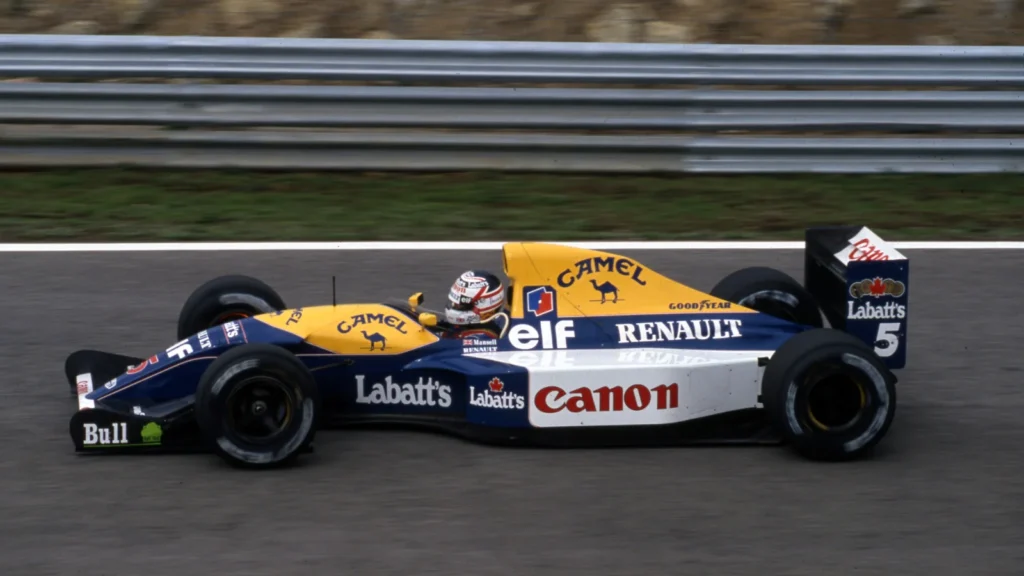
Renault was not yet done with F1 and partnered as a works engine supplier to Williams, in what would become a legendary partnership. Teething problems had to be corrected first, the RS1 3.5 V10 proving both thirsty and unreliable in the first year of the partnership.
Thierry Boutsen claimed a win in Canada to mark the French manufacturer’s return, winning the season finale at a soaked Adelaide. Williams took second in the Constructors’ Championship, albeit 64 points behind runaway champions McLaren.
While 1990 proved to be a disappointment, 1991 demonstrated that Williams and Renault were now a real threat to the Honda-powered McLarens. Nigel Mansell returned to Grove after a spell at Ferrari, with Damon Hill arriving as reserve driver, Ricciardo Patrese remaining as second driver.
The first three races proved challenging for Mansell, retiring due to reliability and crashes. But the French GP onwards became an omen for what was to come, with three consecutive victories. Two more wins followed in the second half in what was ultimately an unsuccessful title bid.
1992 saw the start of a period of Williams dominance. Fielding a modified version of the FW14, the FW14B crushed all opposition. The combination of Renault power and the genius of Williams’ aerodynamic strength led to nine wins in 16 races for Mansell.
1993 saw Prost arrive as Mansell departed, the team improving on the recipe of 1992 with the technological marvel that was the FW15C. Prost took seven wins alone, with Hill taking three and seldom off the podium. Renault had now powered back-to-back champions as a supplier.
1994 proved more difficult and tragic due to the death of new signing Ayrton Senna at Imola, rocking the team and Renault. Although Williams took the Constructors’ Championship and Renault power once again reigned supreme, Michael Schumacher emerged that year as champion.
For 1995, Renault changed its second team supply from Ligier to Benetton. This had huge ramifications, as Renault effectively had a monopoly on the championship. Williams and Hill failed to extract the potential of the RS7 3.0; Renault power secured a double title for Benetton.
1996 and 1997 saw two more title doubles with Williams. Hill and Jacques Villeneuve both became back-to-back champions powered by Renault. Although Benetton was in decline in the later years, Enstone would become intrinsically linked to the future of Renault in later years.
But the manufacturer shocked the F1 world by pulling out of the sport at the end of 1997. The stats spoke for themselves: five Constructors’ titles in six seasons, 75 wins and 82 pole positions. These numbers, even by today’s standards, are extraordinary. Its expertise, drive and reputation ensured Renault left the sport at the height of its power.

Early 2000s success as a Constructor: 2005-2006
Renault once again returned to the F1 grid, powering its former championship-winning team Benetton in 2001. But the team was a shadow of its former self, the pedigree that had made it successful long since gone. Buying out Benetton, the team was rebranded as a full works operation for 2002.
Team Enstone has it has become affectionally known as, needed time to adapt to their new owners. Its first win came a year later in 2003, courtesy of Fernando Alonso. The RS23 proved innovative but was not able to challenge regularly for wins. Renault during this time became known for its high engine notes, as well as its colourful and evocative liveries.
2004 required two cars as Renault hit a bump with its development. The RS24 was unpredictable, but had one of the most powerful engines on the grid. A sole victory for Jarno Trulli became the highlight of a year riddled with infighting between Trulli and Renault management. Alonso was conspicuous in his absence at the front, as the dominant Ferraris steamrolled the opposition.
2005 and 2006 were the years when all the pieces of the puzzle came together. Renault power proved the most reliable on the grid, as the faster Mercedes-powered McLaren saw its 2005 campaign falter from engine failures. Alonso stormed to his first title, defending successfully from a resurgent Schumacher and Ferrari in 2006.
Once again, Renault had arrived in F1, built a title-winning operation, and asserted itself. The recipe was remarkably similar to its success with Williams and Benetton. The reason: Complete independence and autonomy.
But the departure of Alonso to arch-rival McLaren left a hole that now de facto team leader Giancarlo Fisichella could not fill. Renault was dethroned instantly. The Enstone team entered the midfield, a place it would not recover from in all its subsequent guises.
Crashgate and resurrection with Red Bull: 2007 to 2013
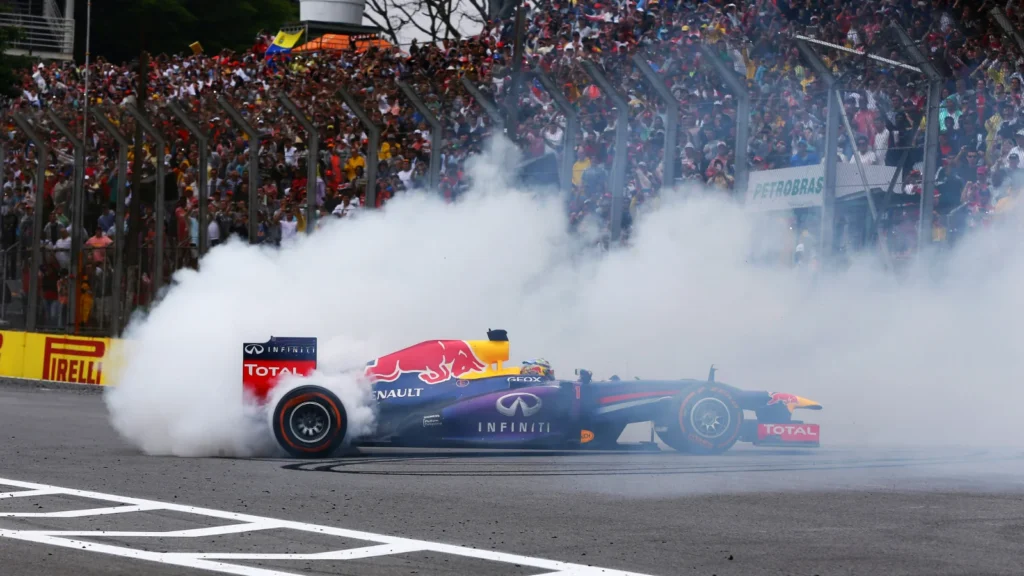
But the French manufacturer had a new strategy up its sleeve. Quietly, it announced a supply deal with Red Bull for 2007 onwards. On paper, this seemed a commercially driven decision. Red Bull had Adrian Newey and experienced drivers David Coulthard and Mark Webber, but not much else to shout about.
Then came Renault’s most shameful chapter. Nelson Piquet Jr’s deliberate crash in the 2008 Singapore Grand Prix cost the team and the company dearly. Its reputation was destroyed overnight, selling a majority stake to Genii Capital at the end of 2009 once the scandal had been made public.
By this time, Red Bull had asserted itself as a championship challenger through Sebastian Vettel. The combined efforts of Vettel, Newey and Red Bull secured a double title at the end of 2010, with expectations high for 2011.
Vettel romped to a second successive title, Red Bull taking 12 wins out of 19 races and 18 poles. He wrestled the title away from Alonso in 2012, but dominated in the second half of 2013, taking 13 wins, including nine consecutive ones.
By the time the V8 era ended, Renault had powered Red Bull to four double titles, 41 wins and 52 poles. Red Bull became the king of the new, smaller cars and blown exhausts. Meanwhile, Team Enstone, still under Genii Capital, took victories thanks to Kimi Raikkonen in 2012 and 2013.
While Renault power once again reigned supreme, this was about to change.
Renault underestimates a technological revolution and buries heads in the sand
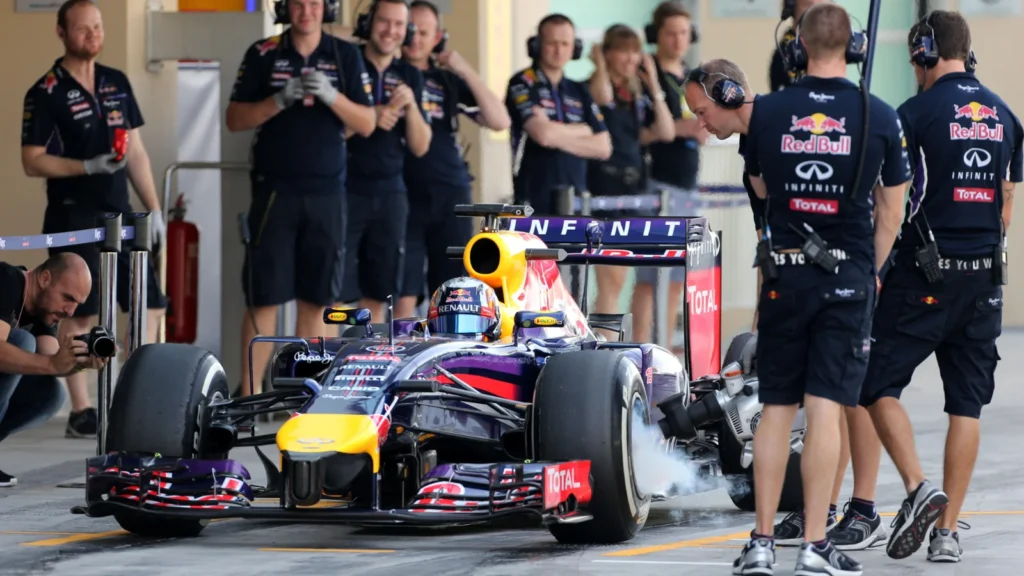
Renault badly underestimated the 2014 power unit regulations, despite supplying more teams than at any point in its history. The engine lacked power and had serious reliability issues. This led to just three victories for Renault power in 2014, courtesy of Red Bull’s Daniel Ricciardo. A winless season in 2015 was followed by just two victories in 2016.
Renault was criticised in public, yet Renault Group maintained all was well, leading to a swift decline in its relationship with Red Bull in the opening years of the regulations. Not content with supplying engines, it once again sought control of a team to drive home its goals on its own terms. The issues with Red Bull did not matter; it knew best and would stick to its own methodologies. This single decision opened Pandora’s box of chaos and offered insight into just how badly Renault management was out of touch with reality.
Buying back control of Enstone for the 2016 season, Renault set out its plan to return to title glory within five years. But this return felt different to those that had come before. Gone was the atmosphere of fun that had characterised Renault in previous iterations. Instead, men in expensive suits towered next to the drivers, in launches that resembled more of a road car unveiling as opposed to an F1 car.
Everything looked clinical, almost to the point of medicinal. What became clear in 2016 was the prominence of the board in the team’s direction and future. Any classic F1 fan will tell you this never ends well (who remembers Toyota?). Unsurprisingly, this was the case with the first of many, many unnecessary corporate relaunches.
2016 saw the team stuck at the back, finishing ninth in the standings on just eight points. The now infamous merry-go-round of team management changes began even before 2017 began, with Fred Vasseur departing in January following a disagreement over the direction of the team. He was replaced by Cyril Abiteboul, who sought to cement stability.
2017 and 2018 had momentum; the arrival of Carlos Sainz saw the team climb to sixth in the standings in 2017 and fourth in 2018. This led to a sense of complacency that the manufacturer could ascend to new heights, despite its relationship with Red Bull declining beyond repair. Red Bull opted to race unbranded Renault engines for 2017 and 2018, such was the reputational damage.
Missteps and incompetence by Renault management seal its fate
By this time, Renault had lost almost all of its supply agreements. Red Bull damningly decided the troubled Honda power unit was a better option than the now beleaguered manufacturer.
Now locked into a supply deal with McLaren while its works team floundered, Abiteboul made one of the dumbest sporting moves since Gareth Southgate took penalties for England in 1996. He proposed that McLaren, a fiercely independent organisation, start sharing technology and components with the factory team. McLaren laughed this deal out of the boardroom, returning to Mercedes power for 2021. Renault was now a manufacturer with no customers and a horsepower deficit.
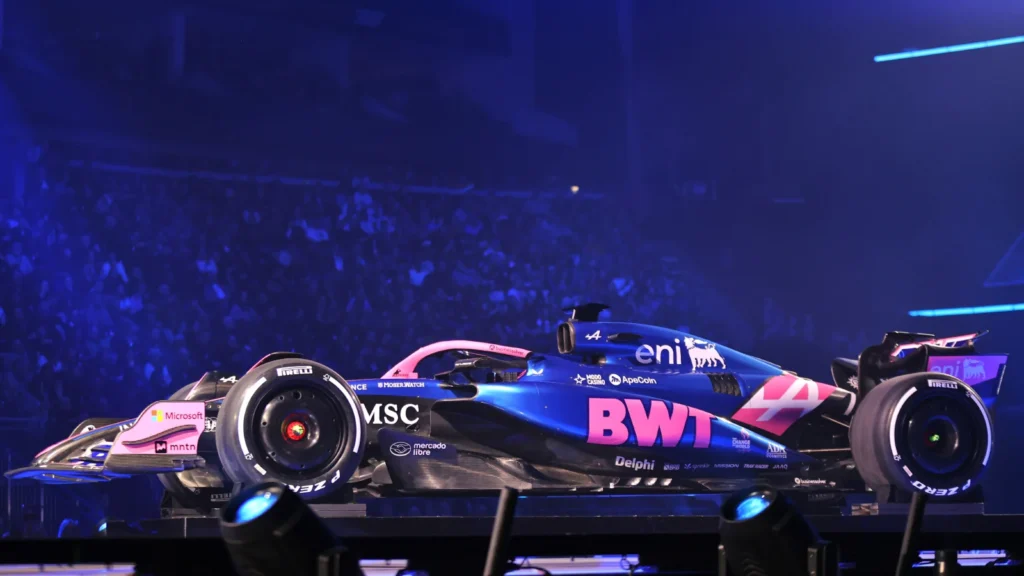
Entering the 2021 season, Abiteboul was outed. Renault branding was omitted entirely from Team Enstone, now renamed Alpine to push Renault’s sporting brand. Renault became a curse word; Alpine was now all that mattered. Yet its execution was about as refined as pouring beef gravy over a Victoria Sponge.
The most damning evidence of Renault Group’s amateurism during this period is a piece of lax marketing. A quick search online shows the Renault F1 Team site from 2020 is still live, showcasing drivers and its commitment to Formula 1, abandoned after the supposed “relaunch”. If that does not summarise Renault’s complete self-immolation, then nothing does.
Now led by Laurent Rossi, the now infamous 100 race plan was unveiled later that year. A four-year roadmap, moulded by out-of-touch corporate managers. Interference put pressure on Enstone like never before. Team Advisor Alain Prost, present from 2017, left in 2022, labelling Rossi as incompetent.
All sense of stability was thrown out of the window under Rossi. The team constantly shifted its goals and staff. Otmar Szafnauer arrived in 2022 as Team Principal, and then was fired after the summer break in 2023, having been part of a public attack by Rossi aimed at the team earlier in the year. Bruno Famin replaced him, only for him to be ousted by Oliver Oakes in 2024. Similar musical chair games were at play with the Technical Directors. Pat Fry, Matt Harman, and Eric Meignan among those hired and fired. Rossi was quietly moved aside in mid-2023.
The beginning of the end
Another corporate announcement was made after his departure, stating Alpine had reached the next phase of its development. If the milestone was to self-destruct more than a tape from Charlie’s Angels, then mission accomplished.
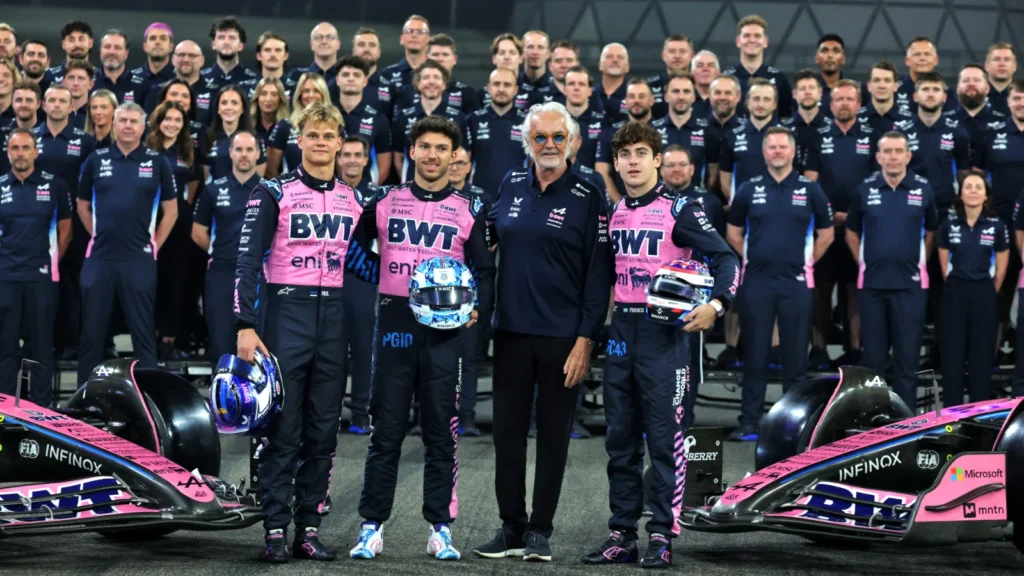
The return of Flavio Briatore, deemed responsible for Crashgate, could not undo a decade of poor management and decision-making by Renault Group CEO Luca De Meo. That Renault then shut down its engine programme at the end of 2025 speaks volumes about the interference by a board and CEO that has no clue how to manage an F1 team. De Meo even admitted Renault is only in F1 as his marketing department told him to be.
Such is the apathy towards its F1 programme, Renault is selling one of its title-winning FW19 cars from 1997. It is distasteful that 50 years of history are attempting to be erased because the CEO is throwing a tantrum that he has not won races.
Alpine will use Mercedes power in 2025. An engine manufacturer is now a customer of a competitor. The death of the beloved giant is now complete. This is not the same organisation that powered the likes of Mansell, Prost, Hill, and Vettel to title glory. It shares the name, but nothing else.
To modern fans, Renault is a joke. But to those who watched F1 in the 1990s and early 2000s, it is a supplier and constructor with iconic engine sounds and liveries. It produced one of the all-time greatest engines the sport has ever seen.
Success killed the beast that was Renault in F1. Greedy executives believed its F1 programme to be a puppet, to be controlled at will. The irony that it cut its own cord is not lost on anyone.
READ MORE – Ferrari flounders while Williams is on the rise – Motorsport Week’s F1 2025 Team Ratings




Discussion about this post