
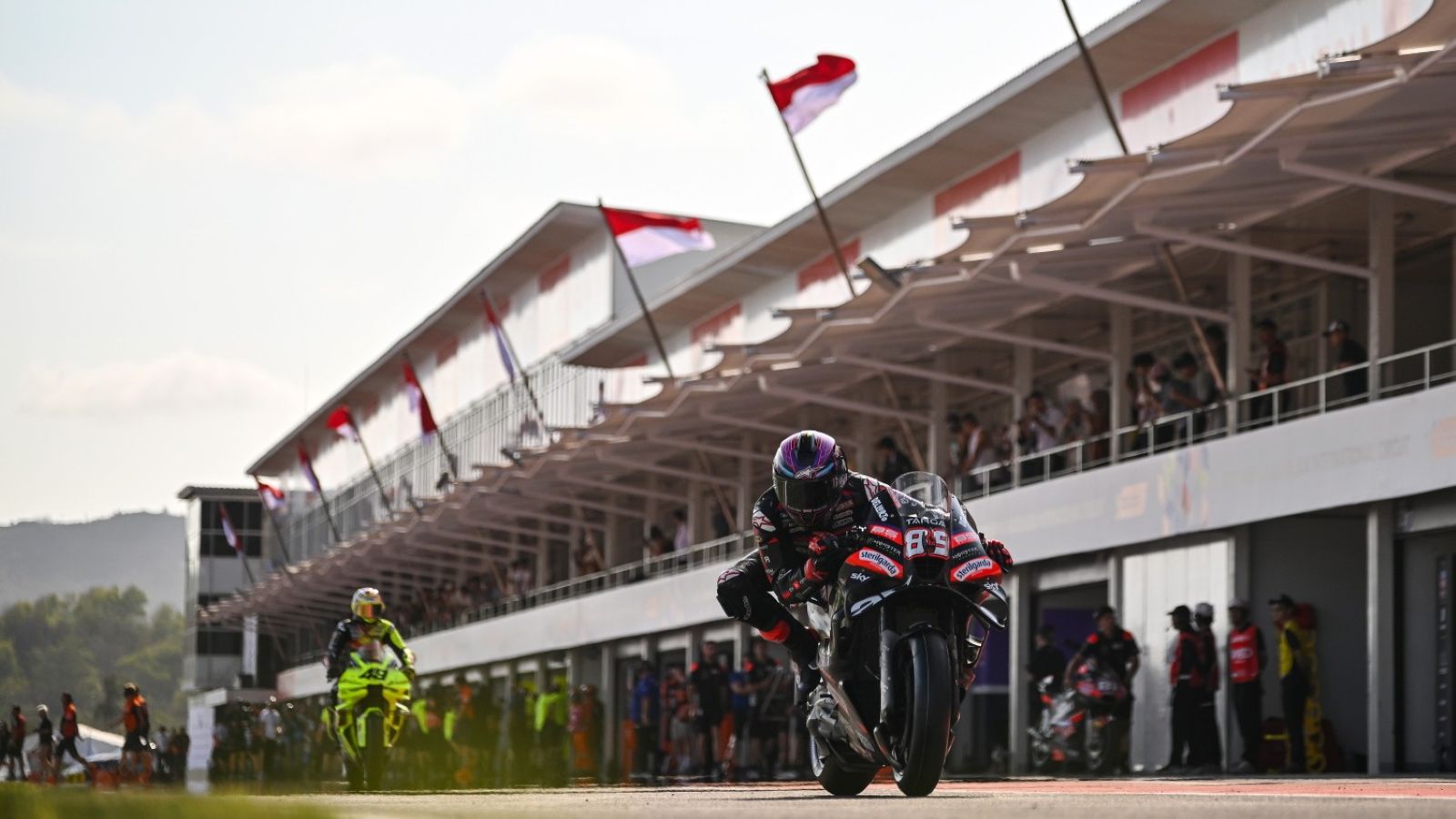
In 2027, MotoGP will not only overhaul its technical regulations but also transform its weekend structure, introducing separate starting grids for the Sprint and the Grand Prix. It is a fundamental shift that has already split the paddock.
Along with brand-new machines, featuring engine capacities reduced from 1,000cc to 850cc, limited aerodynamics, and Pirelli replacing Michelin as the sole tyre supplier, the championship and series owners Liberty Media are seeking to revamp the weekend spectacle. Inspired by Formula 1, MotoGP will therefore feature two distinct qualifying sessions.
Under the new schedule, Friday will host a dedicated Sprint qualifying session, while Saturday’s Q1 and Q2 sessions will set the Grand Prix grid before any racing happens, with every rider participating in the former. While the changes yield an extra 20 minutes of non-competitive track time, they also significantly increase the number of sessions where riders must push to the limit.
The prospect promises to make weekend rounds far more intense, as Jorge Martin noted during the Thursday press conference in Indonesia.
“There will be a lot of times to attack,” Martin said. “The entertainment will be bigger, but so will the risks.”
Championship rival Marc Marquez echoed those concerns. “For the rider, it’s only more intensity, more demanding. And with the actual schedule, it’s enough.”
Pedro Acosta was equally vocal about the physical toll on the grid.
“It was already tough to find a rider who didn’t get injured during a season, and it will be even harder with more sessions where we have to risk everything,” Acosta warned when speaking to the French broadcaster for MotoGP, Canal+. “We should think about slowing down the pace.”
Rider frustration over lack of consultation
Beyond the physical demands, several riders expressed frustration over a perceived lack of input ahead of the official decision.
“Teams and organisations decide. You take it, or you leave. It’s what it is,” Marquez explained.
“I feel that they don’t even ask us,” Martin added. “It could be nice to have some interest from the organisation for the riders.”
Acosta was even more blunt: “Our opinion doesn’t really matter; we don’t have a say.”
However, it looks as if riders did have some opportunity to voice their concerns during Friday’s Safety Commission meetings, though usually only four riders seemingly attended. Dual champion Francesco Bagnaia publicly lamented the low turnout from his peers.
Notably, those present pushed to retain the Sunday Warm-Up session, a recommendation that decisionmakers ultimately ignored, while removing the Warm-Up increases risk if a mechanical issue arises just before the race and limits acclimatisation time following a Saturday Sprint crash.
Interestingly, despite his opposition to the broader changes, Martin welcomed the Warm Up’s removal. “I’m quite happy about taking out the Warm Up. I didn’t like it. I think that’s the only thing I like.”
A mixed reception across the grid
Despite the criticism, other riders see clear advantages in the two-qualifying format.
“I’m very happy. I really like the new format, and I’m curious to see how it will be,” admitted Marco Bezzecchi during the press conference in Lombok. “Obviously, we know it will be physically tough and super demanding. But it’s good for me to have two qualifyings. Sometimes you have a bad Friday, and you maybe don’t destroy two races with the same qualifying.”
Meanwhile, Johann Zarco intends to leverage his veteran experience to capitalise on the disruption.
“We’ll adapt, just like we adapt to everything,” Zarco told Canal+. “When we talk among riders, we don’t really agree because it doesn’t leave much time to prepare; you have to be good right away. But if the Honda 850 is competitive and ends up among the best bikes, I’ll have an advantage with my experience because the younger riders won’t have the time to find their bearings.”
Taking a more nuanced view, Fabio Quartararo pointed out a clear discrepancy between MotoGP and its four-wheeled inspiration for the change. Formula 1 drivers enjoy an extra hour and 25 minutes of practice alongside an hour-long qualifying session, whereas MotoGP riders receive significantly less track preparation and just 45 minutes to set their grids.
“There are things I like, and others a bit less,” Quartararo admitted to Canal+. “I’m happy with qualifying because I like putting in fast laps, but in the end, we don’t get that much track time during the weekends. If we want to copy F1, when you look at how many minutes of practice they get before going into Q1, Q2 or Q3, I think we could have kept more time for practice sessions.”
Teams support the change
While the riders remain divided, the top two teams appeared to be united in their backing of the initiative in the Thursday press conference in Indonesia.
“For sure, this is a compromise between 11 teams and five manufacturers. It’s a good compromise, above all for the show,” Ducati General Manager Gigi Dall’Igna stated.
Aprilia boss Massimo Rivola views the changes as a crucial step for the sport’s long-term commercial growth.
“I think that we all need to start having a vision of the future of MotoGP, elevating the brand, and trying to find some new fans, young fans in particular, for our audience,” Rivola said. “If we just stick to the ones that are following us, then we never improve.”




Discussion about this post