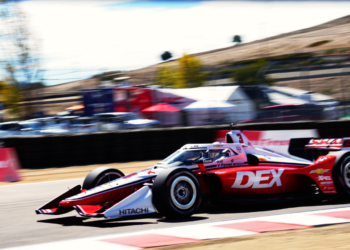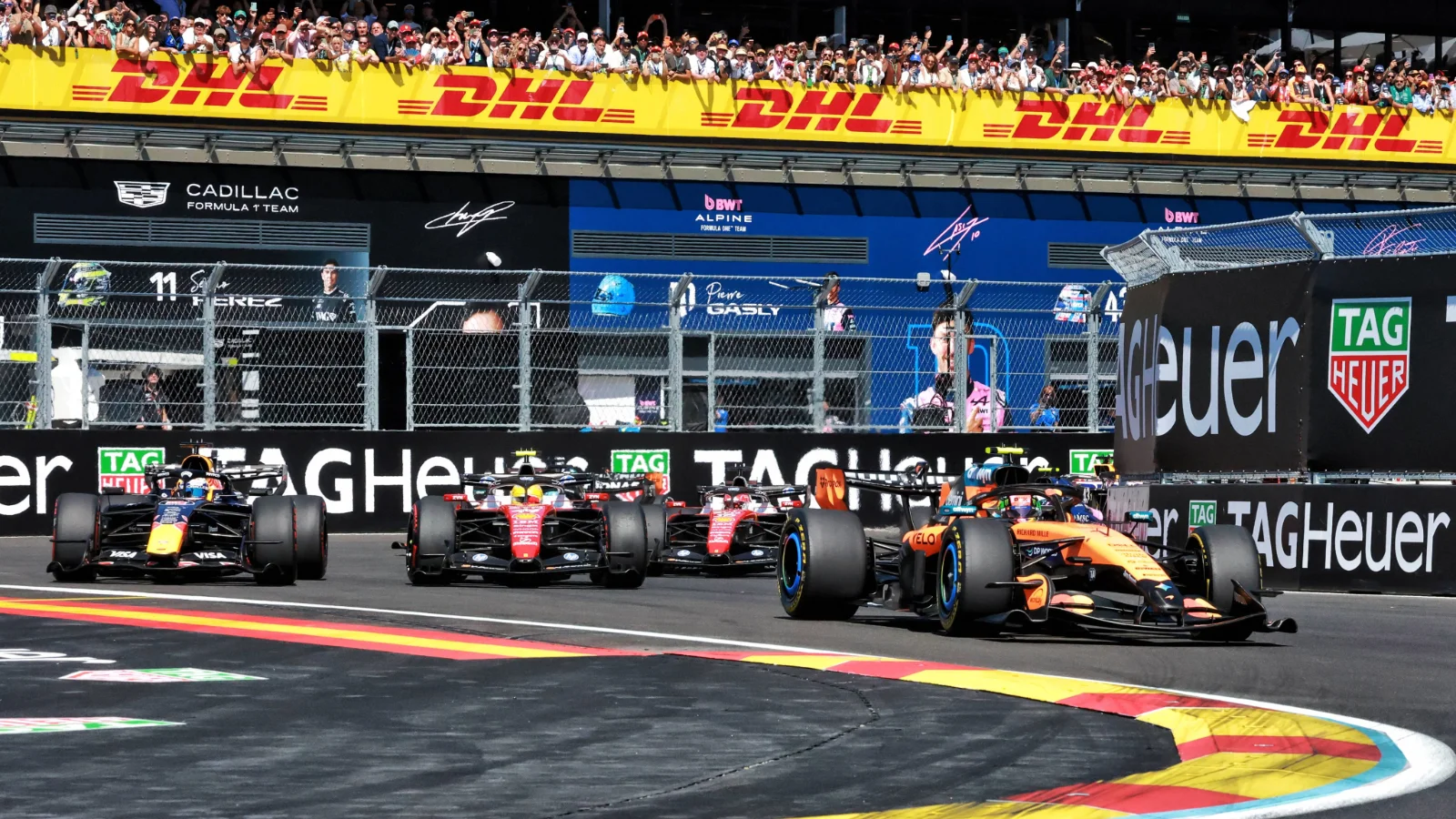
Motorsport has one of the most recognisable visual languages in entertainment. Racing cars, chequered flags, starting lights, speedometers and circuits can communicate the idea of competition almost instantly, even before an engine starts.
Casino game developers have borrowed that imagery for years. Racing-themed slots and hybrid games can turn a familiar track into the backdrop for reels, bonus rounds or other features, giving motorsport fans an immediately recognisable setting. Yet underneath the racing presentation, these remain games of chance — which creates an interesting contrast between the skill of real motorsport and the randomness behind casino outcomes.
Racing provides ready-made visual drama
A racing game does not need to spend much time explaining its theme. A starting grid immediately suggests anticipation, while a finish line provides an obvious destination. Speedometers, tyres, helmets and trophies can all become symbols without feeling out of place.
That gives casino developers plenty of material to work with. Instead of building a completely fictional world, they can create a game around visual ideas players already understand.


Sound adds another layer. Engine noise, countdowns and the atmosphere of a circuit can create a sense of movement even though the player is not actually controlling a car. Short animations can show vehicles accelerating, overtaking or reaching a finish line as part of a feature.
The result borrows the spectacle of racing without trying to reproduce a full motorsport simulation.
Casino games can turn a race into a feature
Racing imagery becomes more interesting when it affects the structure of the game rather than appearing only in the background. A bonus can be presented as a journey around a circuit, for instance, while multipliers or other features can be represented through cars moving towards a finish line.
Motorsport Week has previously covered racing-themed slots that take this approach, including titles where free spins, wild symbols and progression systems are presented through racing concepts.
This helps explain why the theme has lasted. Racing naturally provides beginnings, progression and endings — all of which can be translated into short sequences within a casino game.
Developers can also take the idea in very different visual directions. One game might recreate classic motorsport, another might borrow from street racing, while a third could move into futuristic or post-apocalyptic vehicles.
MrQ shows that racing does not have to mean a traditional slot
Racing themes can also appear in formats that move beyond conventional reels. Players browsing mrq online, for instance, can currently find Slingo Racing — a game that combines the familiar Slingo format with a horse-racing mechanic. Players select one of three coloured horses, with matching colours on the Slingo board contributing to the race around the track. Multipliers can be collected during the race, giving the familiar idea of backing a competitor a role within the game’s overall presentation.
MrQ’s Slingo catalogue places the title alongside other hybrids including Slingo Deal or No Deal, Slingo Starburst and Slingo Rainbow Riches. The broader point is that themes can travel between casino formats rather than being restricted to conventional slots.
Racing provides a particularly flexible framework because almost any form of progression can be represented as movement towards a finish line.
Motorsport skill and casino randomness are very different
The visual similarities should not obscure a fundamental difference between the two activities.
Real motorsport is built around skill, engineering and preparation. Drivers train to improve performance, teams analyse data, and engineers make decisions that can influence what happens on the circuit. Even when unpredictable events intervene, performance is not determined by a random number generator.
An online slot operates differently. Its outcome is chance-based, regardless of whether the screen shows a Formula-style car, a horse race or something entirely unrelated to sport.
That distinction matters because racing graphics can create the impression of competition. A player might see cars moving towards a finish line, but that does not mean driving knowledge or quicker reactions can improve the underlying result.
What happens behind the racing graphics?
The technical side of online casino games is much less dramatic than the presentation, but it is considerably more important to understanding how they work.
Random Number Generators, usually shortened to RNGs, are used to generate unpredictable outcomes in many digital casino games. Independent testing organisations assess these systems to determine whether they meet the relevant technical requirements.
eCOGRA, an independent testing laboratory founded in the UK, explains that RNG assessment is designed to verify that outcomes are unpredictable and unbiased. Its certification work covers RNG-driven products including slots, table games and virtual sports.
This is why a racing animation should be understood as presentation rather than a test of sporting ability. The car may appear to surge forward at a dramatic moment, but the visual sequence is communicating an outcome rather than turning the player into a racing driver.
Speed is mostly about presentation
Motorsport themes naturally encourage developers to make games feel fast. Transitions can be sharp, animations energetic and sound effects built around acceleration.
Yet faster presentation does not change the mathematics behind a game. A slot that looks quicker is not necessarily more favourable to the player, just as a spectacular bonus animation does not indicate that a particular outcome was more likely.
The same applies to RTP. Return to player is a theoretical percentage calculated across a very large number of plays. It is not a prediction of what one person will receive during an individual session.
Separating presentation from probability is useful with any casino game, but racing themes make the distinction particularly noticeable because speed and competition are such prominent parts of the imagery.
The theme can reach beyond Formula 1
Formula 1 may be the most internationally recognisable form of motorsport, but racing-inspired casino design has far more possibilities.
Classic cars can support retro styling, while street racing allows developers to use urban settings, neon lighting and customised vehicles. Rally-inspired designs can introduce dirt, snow and rugged landscapes, while futuristic racing removes almost every realistic restriction.
Horse racing demonstrates that the broader race concept does not even require an engine. Slingo Racing uses the same fundamental visual idea — competitors moving towards a finish — while placing it inside a completely different setting.
That flexibility prevents racing from becoming a single repetitive theme. The underlying concept stays familiar while the artwork and mechanics can change considerably.
A familiar theme still needs a good game
Racing imagery can make a casino title immediately recognisable, but a chequered flag alone cannot make a game interesting. Visual design, clear rules and understandable features still matter.
The most convincing racing-themed games use motorsport concepts with a purpose. A race around a track can represent progression, a speedometer can communicate a multiplier, or a finish line can give a bonus sequence a natural conclusion.
That is where racing proves particularly useful as inspiration. Motorsport already has movement, competition, distinctive sounds and an enormous collection of visual symbols that translate easily to a screen.
Casino games cannot reproduce what makes real racing a sport, and they should not be confused with racing simulations where player skill directly affects performance. What they can borrow is the atmosphere. From the starting lights to the finish line, racing gives developers a visual language capable of making even a small digital game feel as though something is moving fast.