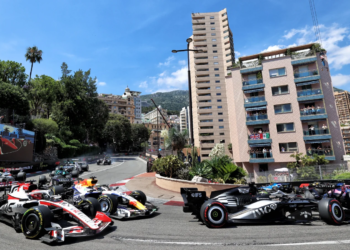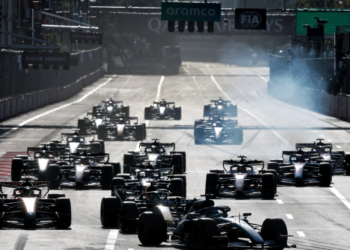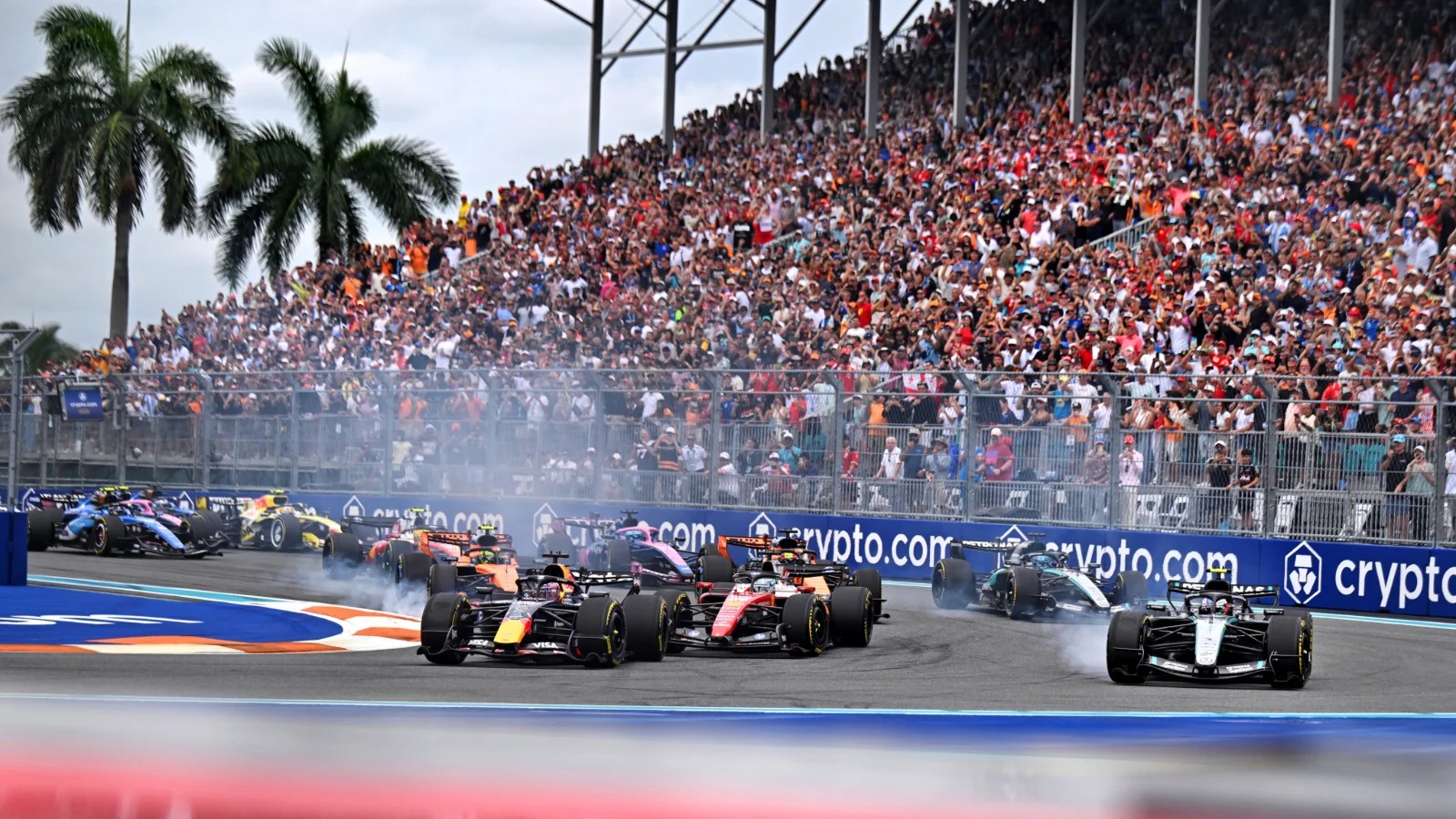
For decades, following a motor race meant settling in for a Sunday afternoon, watching the lights go out and waiting to see who crossed the line first.
The betting that surrounded those weekends was largely a pre-race exercise: pick a winner, maybe a podium, perhaps a fastest lap, and then watch passively as the result played out. That model is rapidly disappearing.
Across Formula 1, MotoGP, NASCAR, the FIA World Endurance Championship and the growing global calendar of touring car and rallying series, fans are now engaging with race weekends in a continuous, second-by-second way.
Live streaming, official telemetry feeds, social-media-driven commentary and, crucially, live or “in-play” betting markets have turned every practice session, qualifying lap and safety-car period into a moment of decision.
The scale behind that shift is hard to ignore: the global sports betting market is projected to exceed $100 billion in annual revenue this decade, and in-play wagering is estimated to represent more than 50–70% of sportsbook turnover in mature European markets.
From Sunday viewers to weekend participants
Motorsport’s broadcast model has historically pivoted around the race itself. Free practice sessions on Friday and qualifying on Saturday were of interest mainly to dedicated fans and journalists, with the bulk of casual viewership concentrated on the grand prix. Series operators have been working hard to change that.
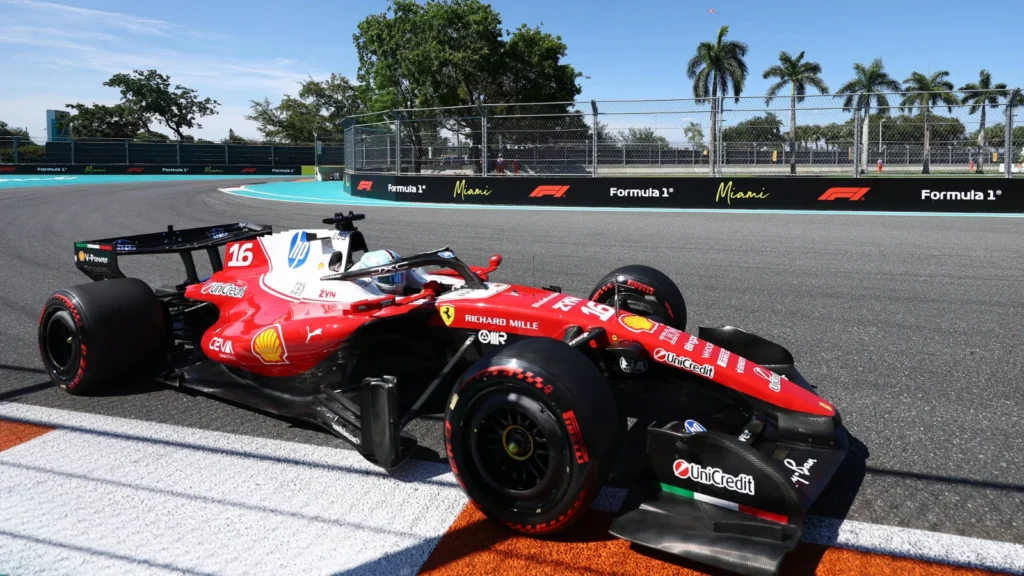
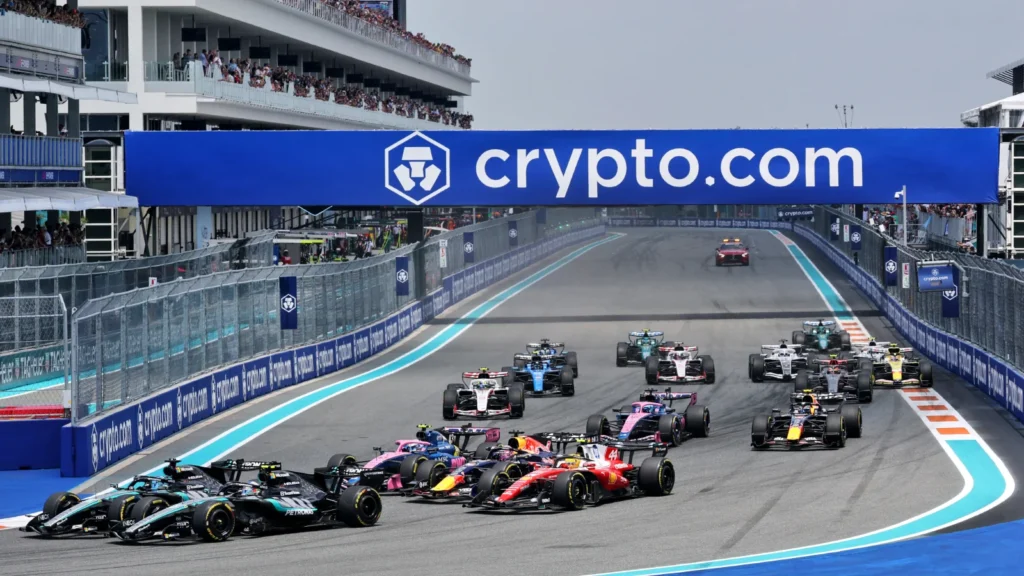
Formula 1 has expanded its sprint format, broadcast investment and behind-the-scenes content (notably through Netflix’s “Drive to Survive”) to make every day of a race weekend appointment viewing. The FIA, the sport’s governing body, has likewise pushed for more accessible timing data and on-board feeds across its championships, helping broadcasters and digital partners build richer narratives across all three days.
Live betting has been one of the most powerful accelerants of this shift. Once a sportsbook attaches stakes to a Friday practice session, the day stops being filler and starts being a live event in its own right.
Operators such as BiggerZ, which lists auto racing among its core sports categories alongside football, basketball and tennis, have leaned into this by structuring their motorsport offering around the entire weekend rather than only the headline race. Their auto-racing section typically opens with markets for upcoming sessions, not just the grand prix itself, mirroring how engaged fans actually consume the sport.
What “live betting” actually means in motorsport
Live betting, also called in-play betting, refers to wagers placed after an event has started, with odds that update continuously based on what is happening on track. In team sports, the concept is intuitive: odds shift after each goal or basket. In motorsport, the dynamics are different and arguably more interesting because the variables are more numerous and more technical.
Within a single stint of a Formula 1 grand prix, an in-play market can be influenced by:
· Tyre degradation patterns picked up from sector times.
· Weather changes, even a five-minute rain shower at Spa or Suzuka, can collapse the odds on a leader.
· Virtual safety car or full safety car deployments that compress the field and reset strategy.
· Pit-stop windows open for different teams at different moments.
· Mechanical issues, from engine modes to brake-by-wire warnings flagged on the team radio.
· Driver behaviour under pressure, including penalties for track limits or unsafe releases.
Each of those variables is a potential pricing event for an in-play trader. A modern sportsbook is therefore not just publishing odds; it is running a real-time inference engine that ingests data feeds, weather APIs, official timing, and human trader judgment, and pushes adjusted prices to users within fractions of a second.
This is why live betting has become a meaningful technical discipline. The barrier to entry is not creative market design alone; it is latency, reliability and the integrity controls needed to keep markets fair when something unexpected happens on track.
The Friday-to-Sunday arc on a modern sportsbook
Practice sessions: Data, not just lap times
On any given grand prix Friday, fans now log into platforms expecting markets that map to the structure of the session itself. Common live and pre-session markets across major sportsbooks include fastest in session, fastest sector, head-to-head between teammates, top three constructors in FP2 and total laps completed by a given driver. These have moved from niche bookmaker specials to standard inventory across the auto-racing categories of mainstream operators.
Qualifying: Short windows, sharp prices
Qualifying compresses the betting opportunity into a tight window. In Formula 1’s three-stage knockout format, each segment lasts roughly 12 to 18 minutes, and a single hot lap can decide a market. Live operators have responded by offering qualifying-specific products (pole position, top six in Q3, fastest first sector, will-driver-X-be-eliminated-in-Q1) that update as runs are completed.
These markets reward fans who actually watch the session, because the information advantage is real-time. A driver running on used softs early in Q2 or a team gambling on a single-run strategy can move the prices visibly. For operators, qualifying is a high-value showcase: short, intense, and a natural moment to demonstrate the responsiveness of the in-play platform.
Race day: From grid to chequered flag
By Sunday, the live betting product will mature into something closer to a continuous trading screen. On a typical race-day interface, a fan can see live race-winner odds, podium markets, head-to-heads, next retirement, next safety car, fastest lap, and over/under on total overtakes, all updating against the live timing screen.
It is here that the integration between sportsbook, broadcast, and data becomes most visible to users. Pricing has to keep up with the broadcast feed; markets have to suspend cleanly during incidents; and settlement has to be auditable against official classification.
Mature operators with dedicated auto-racing categories, BiggerZ among them, typically structure the race-day page to mirror the on-track narrative rather than dumping all markets into a flat list.
Beyond Formula 1: NASCAR, MotoGP and rally
Formula 1 attracts the largest share of motorsport headlines, but the structural shift toward live, session-by-session engagement is just as visible across NASCAR, MotoGP and rally. Each of these series carries its own rhythm, and modern sportsbooks have adapted their in-play products accordingly.
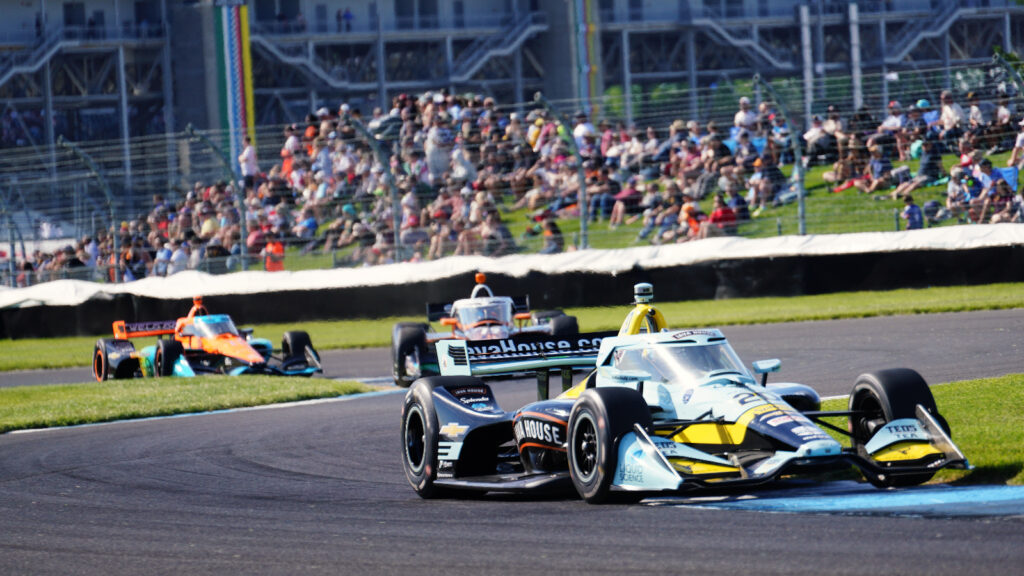
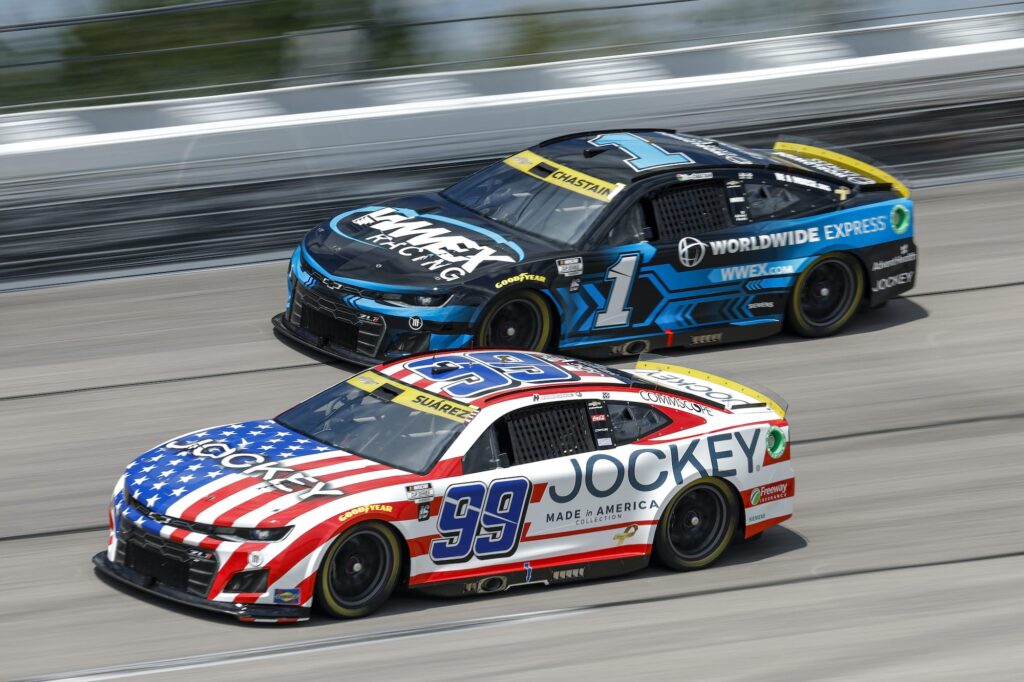
NASCAR’s three-tiered Cup, Xfinity and Truck Series produce more than 90 race weekends a year on ovals, road courses and street circuits, and the stage-based race format gives in-play markets a natural cadence.
Live odds typically update around stage-end cautions, lead changes and pit cycles, with markets covering stage winners, top-five at the next caution, and head-to-head matchups within the field. BiggerZ’s NASCAR category reflects that structure: pre-race winner and top-finish markets sit alongside live in-race pricing that follows the stage rhythm.
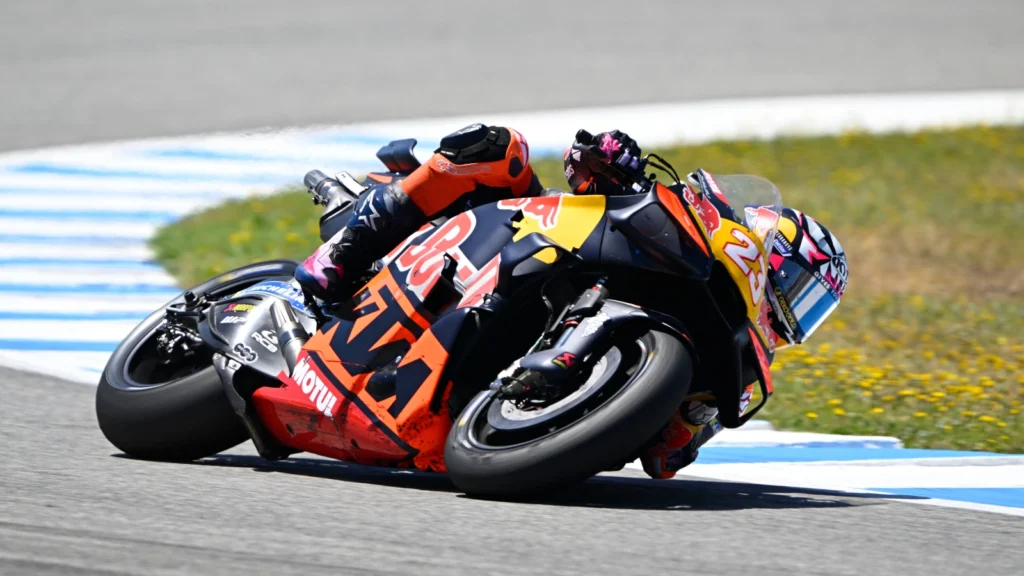
MotoGP, the premier motorcycle road-racing world championship sanctioned by the FIM, runs a 20-plus round calendar across Europe, the Americas and Asia-Pacific, with the Sprint format introduced in 2023 turning every Saturday into a points-paying race in its own right.
That doubles the in-play opportunity per weekend and shortens the window in which prices move. Coverage from outlets such as Motorsport Week tracks rider form, tyre allocation and grid penalties session by session, and BiggerZ’s motorbikes category carries live MotoGP markets that update through practice, qualifying, the Sprint, and the main race.
Rally is the structural outlier. The FIA World Rally Championship and its national counterparts are run as multi-stage events spread across two to four days, with crews running individually against the clock rather than in a single pack.
That maps cleanly onto stage-by-stage in-play products: stage winner, time gap to leader at the next time control, and overall rally winner odds that recalibrate as each stage closes. BiggerZ’s rally category treats the discipline as a first-class vertical rather than an afterthought to circuit racing.
The infrastructure behind in-play motorsport markets
Live betting on motorsport is among the more demanding products a sportsbook can run. Unlike football, where the ball is the single most important variable, a grand prix has 20 simultaneous moving objects, each with their own degradation curves, fuel loads and pit windows, all influenced by track conditions that can change lap by lap.
To support this, modern sportsbooks rely on a stack that typically includes:
· Official and third-party data feeds providing timing, sector splits and incident flags.
· An odds engine capable of recalculating dozens of related markets when a single input changes.
· A risk and trading layer where human traders can override or suspend markets during ambiguous incidents (a contested overtake, an unconfirmed retirement).
· A latency-tolerant front end that displays consistent prices across web and mobile and handles the bet-placement race condition fairly.
· An integrity monitoring layer that watches for unusual betting patterns and ties into series reporting frameworks.
This last point matters because motorsport, more than most sports, depends on public confidence that results reflect competition rather than manipulation. Sportsbooks that monitor for unusual betting patterns and coordinate with series organisers help reinforce that confidence over time.
Operators that take live betting seriously, BiggerZ included, sit inside that ecosystem rather than alongside it. Live markets only exist sustainably where the operator can stand behind the integrity of every settled wager.
How live betting changes fan behaviour
The most visible change for casual viewers is engagement length. Industry research repeatedly shows that fans with an in-play position watch longer, return more often during a session, and engage with second-screen content (timing apps, official onboards, social commentary) at higher rates than purely passive viewers.
The Motor Sports Association and various national federations have noted similar trends in their fan studies, with younger demographics in particular treating race weekends as multi-platform events.
Live betting reinforces this in three concrete ways:
- It rewards close attention. A fan who notices a front-wing endplate damaged on lap eight has actionable information before the broadcast catches up.
- It distributes interest across the field. Pre-race winner markets concentrate attention on the front row; in-play head-to-heads, retirement specials, and points-finishers markets reward following midfield battles.
- It extends the relevance of practice and qualification. Sessions that previously mattered only to specialists now have direct economic and entertainment value for a wider audience.
Sportsbook product teams have responded by surfacing more contextual content alongside live markets. On modern platforms, including BiggerZ’s auto-racing pages, users typically find session schedules, live timing summaries, and explanatory copy about how a given market settles. The goal is not to convert every viewer into a high-volume bettor; it is to make the act of following a session richer and more interactive.
BiggerZ in the live-betting landscape
BiggerZ is a multi-sport online sportsbook built around continuous, in-event wagering, with auto racing sitting alongside football, basketball, tennis, ice hockey and esports. Within auto racing, pre-event markets open early in the week and live markets follow the session arc through to race day.
No bespoke F1-only infrastructure is required: the same live-betting stack that handles a tennis tiebreak (real-time price updates, in-event bet placement, an aggregated live tab, mobile parity) is what motorsport in-play depends on.
On the funding side, BiggerZ supports a hybrid crypto-fiat payment model, letting users deposit and withdraw in either traditional currencies or major cryptocurrencies through the same account.
For motorsport fans following races across multiple time zones and jurisdictions, that flexibility removes a common point of friction between watching a session and acting on a live market.
Where the trend goes next
Three developments are likely to shape the next phase of live motorsport betting:
· Deeper data integration. As series open up more granular telemetry to commercial partners, sportsbooks will be able to price markets that today rely on visual interpretation: tyre temperatures, ERS deployment, brake wear estimates.
· Cross-product fan journeys. Live betting will increasingly sit alongside fantasy leagues, prediction games and free-to-play products, with users moving between them across a weekend rather than picking one. BiggerZ and peers are already structured around a unified account that supports this kind of cross-product behaviour.
· Tighter integrity loops. Faster, more granular markets create more opportunities for misuse. Expect closer real-time data sharing between sportsbooks and series organisers, with suspicious-pattern detection feeding into live market suspensions rather than only post-event investigations.
None of this replaces the core product, a fan watching a race and forming a view about what happens next. It does, however, reset the baseline: the session-by-session experience already looks more like trading a market than spectating an event, and that hybrid is now table stakes for any serious sportsbook entering the motorsport vertical.
Conclusion
Live betting has done something subtle but significant to motorsport: it has redistributed attention across the entire weekend. Practice sessions have a story. Qualifying has stakes that go beyond grid position. Race day is a continuous market rather than a single result. Fans who engage with these products end up watching more, learning more, and arguably understanding more about how grand prix racing actually works.
Operators that built their products around live betting from the start, BiggerZ among them, are well-positioned for this shift. The motorsport vertical does not require a separate technology stack from football or tennis; it requires a sportsbook that already prices, suspends and settles markets in real time, and that can plug a richer set of motorsport data feeds into that same engine.
As series, broadcasters and operators continue to converge around real-time data and continuous engagement, the lights-out moment on Sunday will remain the headline. Everything around it, however, has already changed.