
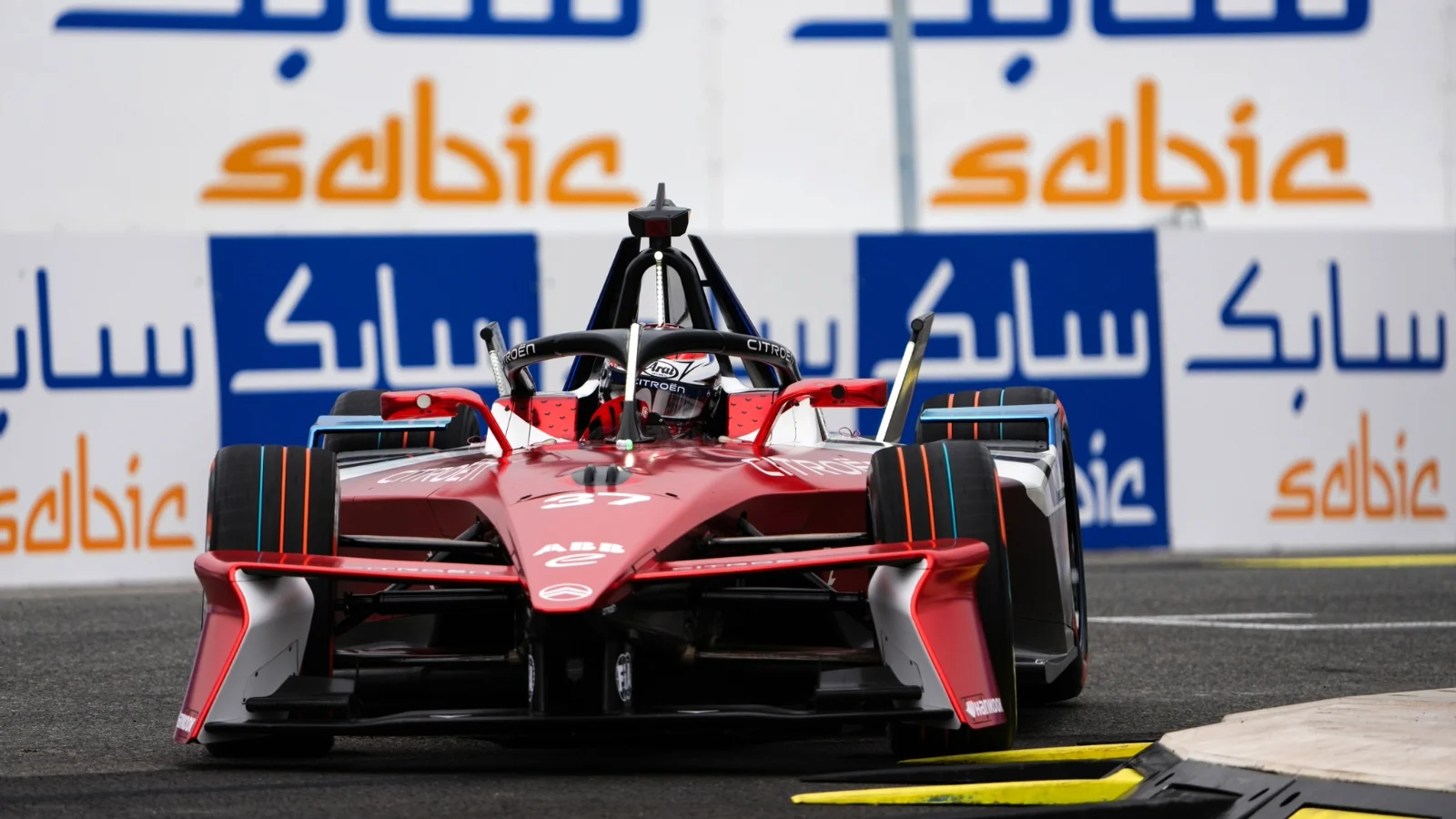
Nick Cassidy secured a breakthrough pole position at the Madrid E-Prix after a mistake-filled qualifying session, the first Formula E pole for Citroen.
Changing conditions and tight margins defined the Duels, with several contenders falling short under pressure.
What happened so far?
In wet and tricky conditions during the second practice in Madrid, Felipe Drugovich set the fastest time for Andretti, putting himself in a strong position ahead of qualifying.
He led a closely matched field, with Jean-Éric Vergne finishing just behind, followed by Norman Nato. Nyck de Vries and Nick Cassidy completed the top five.
The session took place on a damp track after overnight rain, causing low grip and several off-track moments, particularly at Turn 1, though no major incidents interrupted running.
Attention quickly turned to performance across different powertrains.
Porsche showed early promise in the damp conditions, with strong tyre warm-up helping drivers push for competitive laps.
Meanwhile, Mahindra also looked sharp, with both Nyck de Vries and Edoardo Mortara carrying solid pace into the session.
Qualifying starts – Group stages
Qualifying for the Madrid E-Prix opened with the field split into two groups, setting up a tight fight for the Duels.
Group A rolled out to packed grandstands despite the tricky weather. Drivers built up to their push laps, aiming to maximise the limited window.
Early benchmarks came under threat as times began to fall, with António Félix da Costa setting the pace ahead of de Vries, Pascal Wehrlein and Sébastien Buemi.
As the clock ticked down, traffic made clean laps difficult. Even so, de Vries found another level.
He delivered successive improvements, lighting up the timing screens with fastest sectors and pulling clear of the field.
Behind him, Jean-Éric Vergne stayed within striking distance, while Oliver Rowland and Buemi remained in contention. Earlier standout Felipe Drugovich struggled to repeat his form and slipped down the order.
In the closing moments, Wehrlein briefly moved to the top before de Vries responded immediately. Mortara’s run hinted at a strong showing for Mahindra, though a full team lockout remained just out of reach.
At the chequered flag, de Vries secured top spot with an assured display. He advanced to the Duels alongside da Costa, Wehrlein, and Rowland.
Out were Zane Maloney, Pepe Martí, Sebastien Buemi, Mitch Evans, Jean-Éric Vergne, and Felipe Drugovich.
Group B followed with another intense battle for the remaining Duel spots in Madrid.
Early pace suggested a close fight, with Taylor Barnard carrying speed from practice, where he had been among the quickest.
However, the group struggled to match the outright pace seen in Group A, with initial benchmark times sitting slightly higher.
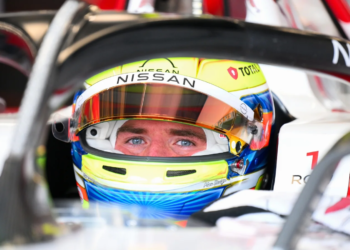
That soon changed as Norman Nato took control.
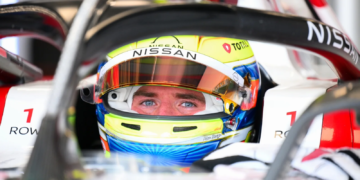
The Nissan driver steadily improved lap after lap, eventually breaking into the 1:40s and putting together a commanding advantage.
Behind him, Edoardo Mortara pushed hard but could not close the gap, finishing several tenths adrift. Nick Cassidy secured third, while Maximilian Günther claimed the final transfer spot.
Further down, Dan Ticktum recovered slightly after a difficult session but missed progression by a narrow margin.
At the chequered flag, Nato sealed top spot with a confident performance, progressing to the Duels alongside Mortara, Cassidy, and Günther.
Out were Dan Ticktum, Jake Dennis, Nico Müller, Taylor Barnard, Joel Eriksson, and Lucas di Grassi.
Time for the Duels at the Madrid E-Prix
The quarter-finals at the Madrid E-Prix delivered drama, with changing conditions catching several drivers out and shaping the semi-final line-up.
First up, former teammates Pascal Wehrlein and António Félix da Costa renewed their Duel rivalry. Wehrlein had the upper hand in past meetings, but this time, a mistake early in the lap proved costly. Struggling for traction, he ran wide and handed the advantage to da Costa, who secured a comfortable win.
In the next duel, Oliver Rowland lost control mid-lap, spinning and ending his challenge. That opened the door for Nyck de Vries, who advanced with ease and continued to show strong pace.
The closest contest came between Nick Cassidy and Edoardo Mortara. Mortara set a competitive time, but Cassidy found crucial gains in the final sector to edge ahead by just thousandths.
In the final quarter-final, track conditions began to improve, but Maximilian Günther ran wide and dropped out of contention. Norman Nato capitalised to progress, despite not setting the outright benchmark pace.
With several errors influencing the outcomes, the semi-final line-up is set: da Costa faces de Vries, while Cassidy takes on Nato.
In the semi-finals, Nyck de Vries edged through a tight Duel despite struggling for grip at times.
He carried enough speed through the middle sector to secure his place in the final.
On the other side of the bracket, Nick Cassidy progressed after Norman Nato ran wide while on a strong lap. It was a costly error for the Nissan driver, who had looked like a contender throughout qualifying.
That set up a final showdown between Cassidy and de Vries. The Citroën driver struck first with a rapid benchmark lap, showing confidence and precision. De Vries responded well early in his run, but a moment of oversteer in the second sector cost him valuable time.
Cassidy capitalised to extend his advantage and secure pole position. It marks the first Formula E pole for Citroën, with Cassidy carrying strong momentum into the race.
READ MORE – Formula E 2026 Madrid E-Prix – Qualifying Results




Discussion about this post