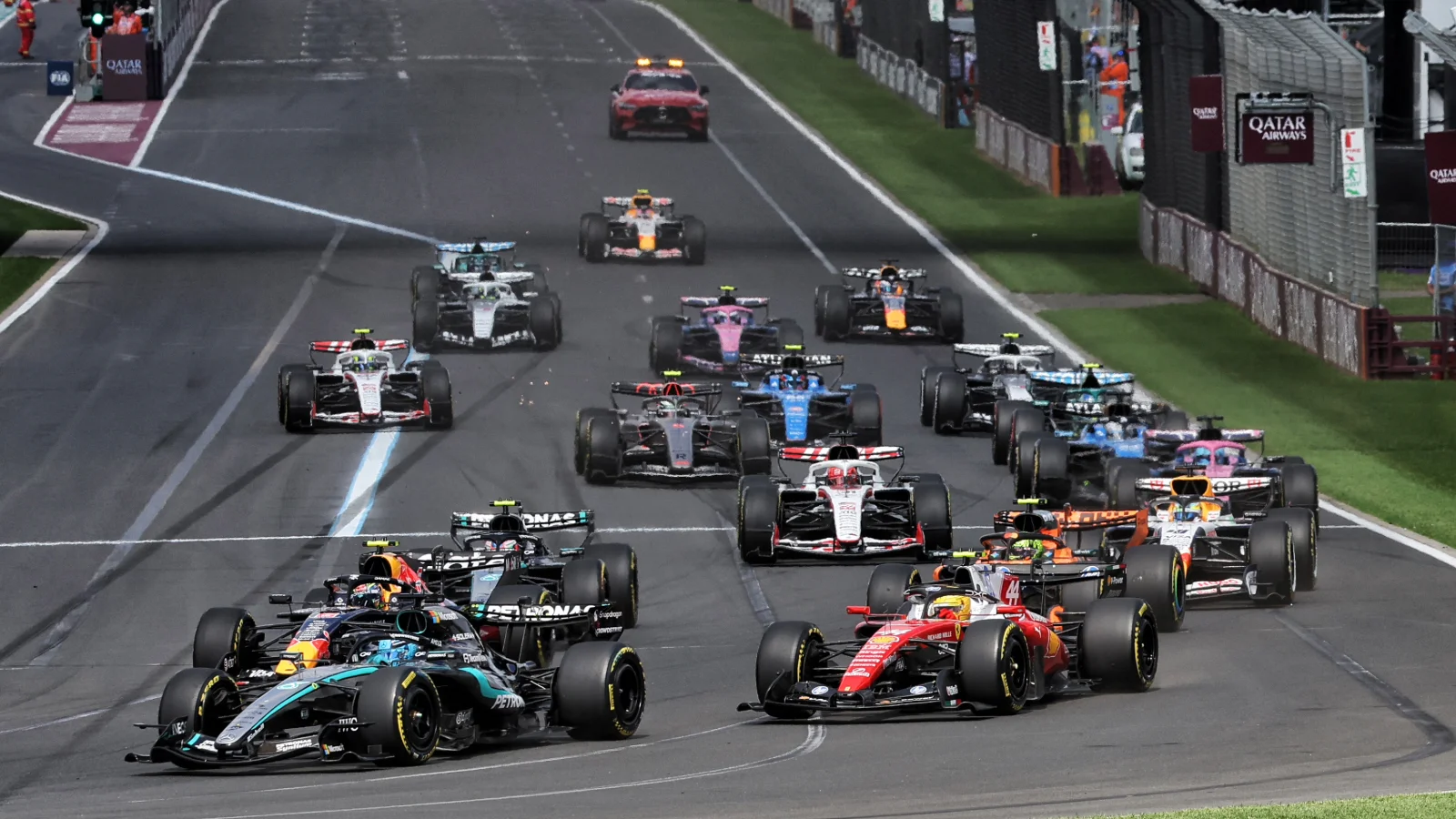
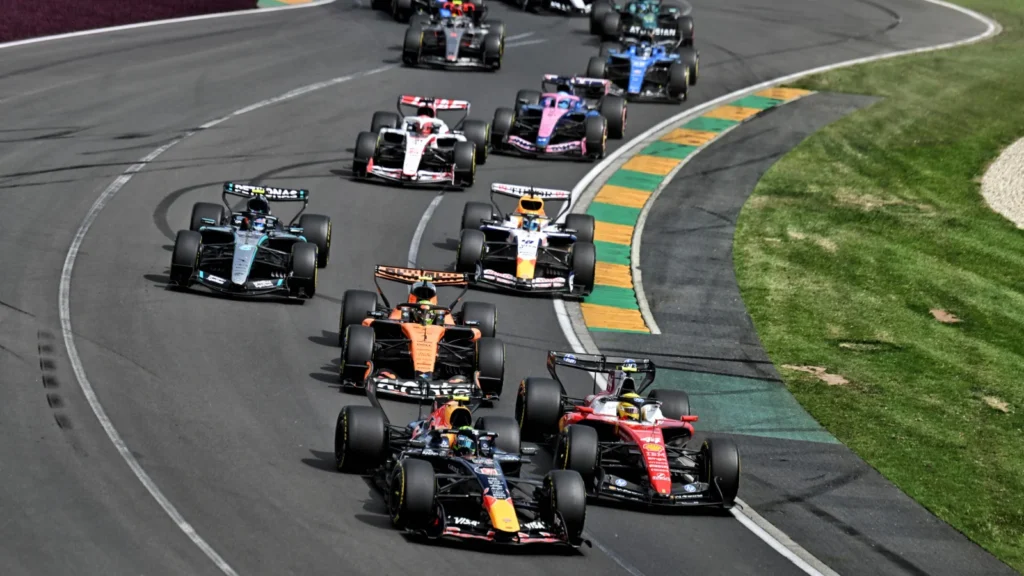
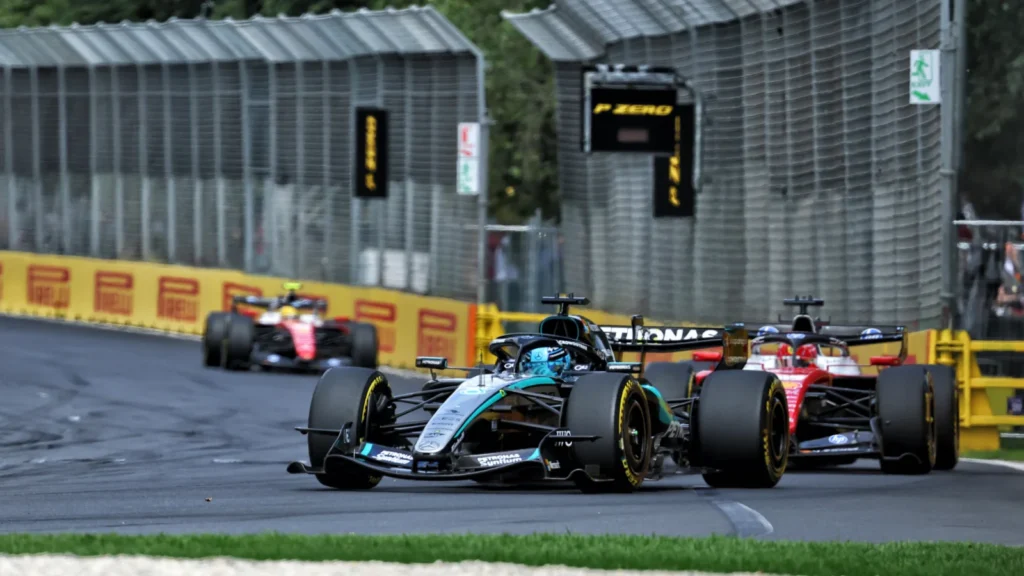
George Russell took the chequered flag in Melbourne on Sunday, leading Kimi Antonelli home for a dominant Mercedes one-two.
Charles Leclerc took third for Ferrari after a bold early charge for the lead, with Lewis Hamilton and Lando Norris rounding out the top five. Max Verstappen, who was knocked out in Q1 after spinning into the barriers, recovered from 20th on the grid to finish sixth.
On the surface, it looks like Mercedes have cracked the 2026 regulations wide open. But if Formula 1 history has taught us anything, it’s that the season opener is one of the worst races to base your championship predictions on. Here’s why punters should resist the urge to jump to conclusions.
The opening race is a terrible crystal ball
Looking back through the history books, the driver who wins the first race of the season goes on to claim the championship only around 47% of the time. That might sound like a coin flip, but the decade-by-decade breakdown tells a more interesting story.
In the 1970s, for instance, only one opening-race winner, Mario Andretti in 1978, ended the year as champion. More recent examples are just as telling. Valtteri Bottas won the 2019 Australian Grand Prix in commanding fashion, beating Hamilton by over 20 seconds.
Bottas led the championship after the opening rounds, but by mid-season he’d faded and finished the year as runner-up, 87 points adrift of his teammate. He repeated the trick in 2020, winning the season opener in Australia, only to slip away from the title fight once again as Hamilton stormed to his seventh crown.
The pattern works the other way too. Hamilton himself has won seven world titles but took victory at the opening round in only two of those championship-winning seasons. For anyone browsing the best betting offers ahead of the next race, it’s worth remembering that early form rarely tells the full story.
New regulations changes everything
This season marks the start of a completely new era in Formula 1. The 2026 technical regulations have introduced a radically different power unit formula, with a 50-50 split between internal combustion and electrical energy. The cars look different, drive differently and demand an entirely new approach to development.
Under major regulation changes, the team that nails the concept first doesn’t always stay ahead. We saw this in 2009 when Brawn GP burst onto the scene and dominated the early rounds, only for Red Bull to close the gap dramatically in the second half of the year. Jenson Button won the title that season, but it was far closer than anyone expected after his blistering start.
With such sweeping changes to the cars in 2026, expect the competitive order to shift significantly as teams bring upgrades to the European rounds. Ferrari’s Charles Leclerc acknowledged as much after Melbourne, saying the championship will ultimately be decided by development and upgrades throughout the year.
The midfield could be transformed
While the spotlight in Melbourne was on the front four teams, the story further down the grid is just as important for long-term betting. Aston Martin endured a disastrous weekend, with both Fernando Alonso and Lance Stroll retiring (then going out and re-retiring again) from the race due to severe vibration issues from their Honda power unit.
Adrian Newey, widely regarded as one of the greatest Formula 1 engineers of all time, admitted the problems were so bad that Alonso felt he couldn’t complete more than 25 consecutive laps without risking permanent nerve damage to his hands.
It sounds catastrophic, and it was. But writing off Aston Martin entirely would be premature. Newey himself believes the underlying chassis is strong enough to compete in the top ten once the power unit issues are resolved. He described the car’s architecture as sound, with huge development potential built in.
If Honda can get on top of the powertrain vibrations and Newey can unlock the performance he sees in the package, Alonso could find himself in the thick of a fierce midfield battle later in the season.
History is full of teams that looked hopeless in March and competitive by summer. The new regulations include cost cap provisions and development allowances specifically designed to help struggling manufacturers catch up. That means the pecking order we saw in Melbourne could look very different by the time the European season gets underway.
In-season development will decide the title
Mercedes looked supreme in Australia, but Ferrari were close enough to lead the opening laps. Red Bull showed strong race pace through Verstappen’s recovery drive, and McLaren had Norris battling at the front despite Oscar Piastri’s heartbreaking crash on the way to the grid in Melbourne.
The gaps between the top four teams aren’t as large as the final results suggest. A gap of around 15s between the Mercedes pair and Leclerc in third is significant, but the strategic picture was complicated by two Virtual Safety Car periods and different pit stop approaches.
The teams that will fight for the 2026 title are the ones that develop their cars most effectively between now and Abu Dhabi in December. Factory upgrades, aero tweaks, and power unit improvements will all play a role.
Conclusion: Don’t judge the season on just one Sunday
Russell’s victory in Melbourne was impressive, and Mercedes deserve credit for arriving at the first race with the strongest overall package. But the 2026 championship is a marathon with over 20 rounds still to come. Ferrari and Red Bull have the resources and talent to close the gap.
McLaren will want answers after a tough weekend for Piastri. And even Aston Martin, despite their horrendous start, have a design genius in the garage who has turned around worse situations before.
For anyone placing early-season bets on the F1 championship, patience is the smartest strategy. Let the picture develop over the first handful of races before committing to any long-term predictions. The Australian Grand Prix is always entertaining, but it’s never the whole story.