
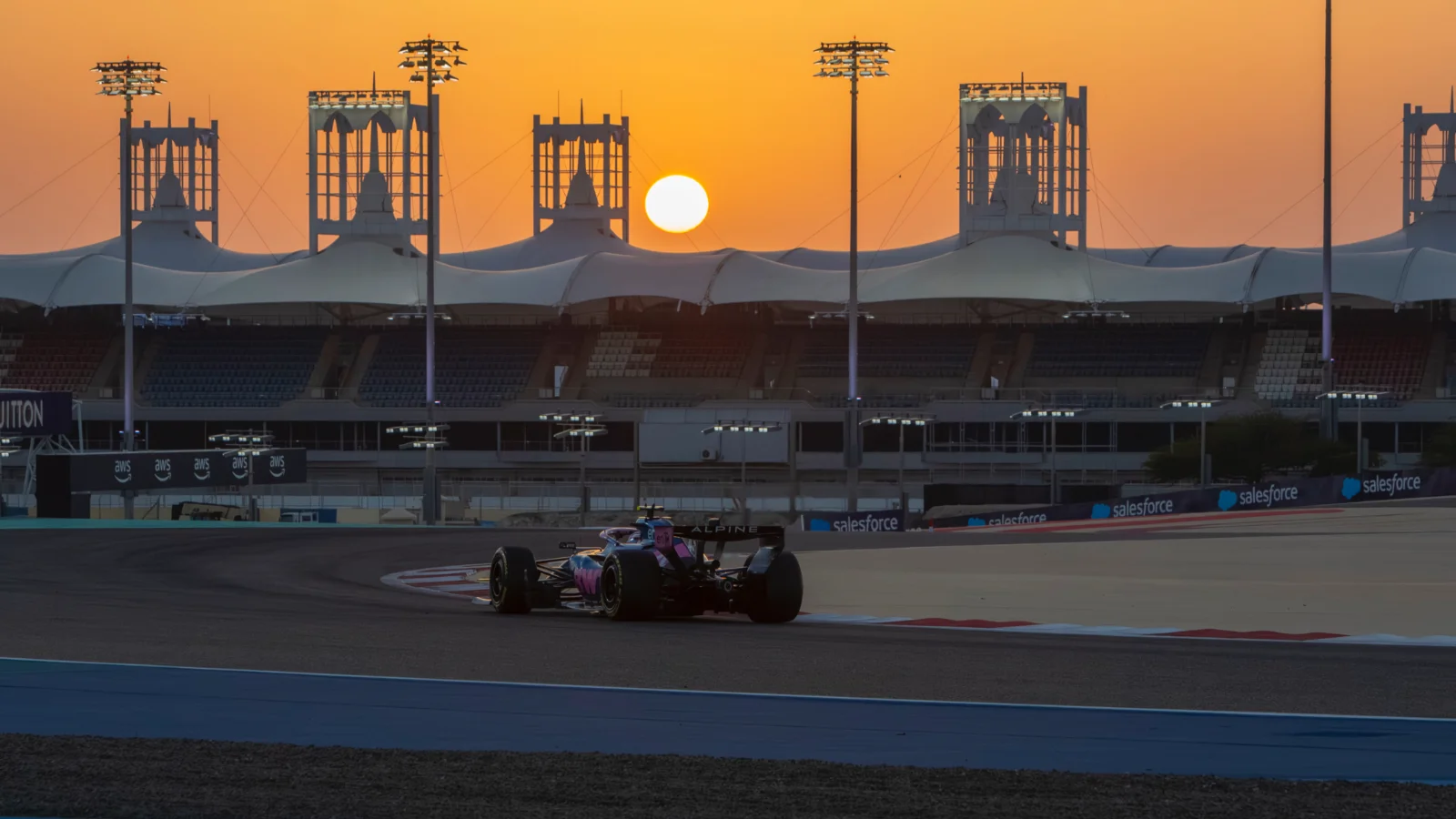
With talk of compression ratios, rotating rear wings and Formula E on steroids, one area of major interest across the two weeks of pre-season testing ahead of the new Formula 1 season has been the intriguing battle within the midfield.
Last year, the season saw Williams make a giant leap and leave its mid-pack rivals scrambling around for answers. Racing Bulls was the team that got closest, but the mix was so competitive, that Haas finished ninth out of 10 teams, but scored more points than it did when narrowly missing out on sixth in 2024.
2026, with its new regulations reset, may largely see the outcome of the midfield battle depend on which team has which power unit. But at the moment, there is reason to believe that there will be some fraught competition.
After analysing every key area of indication towards overall competitiveness when racing actually commences, then the tussle for fifth place will likely be between Haas and Alpine. The latter now has the added benefit of the best – and albeit the most controversial – power unit in the form of Mercedes’, and appears to have a platform that looks more stable than 2025, with Flavio Briatore now backed up by Steve Nielsen, and Franco Colapinto being handed the whole season with Pierre Gasly.

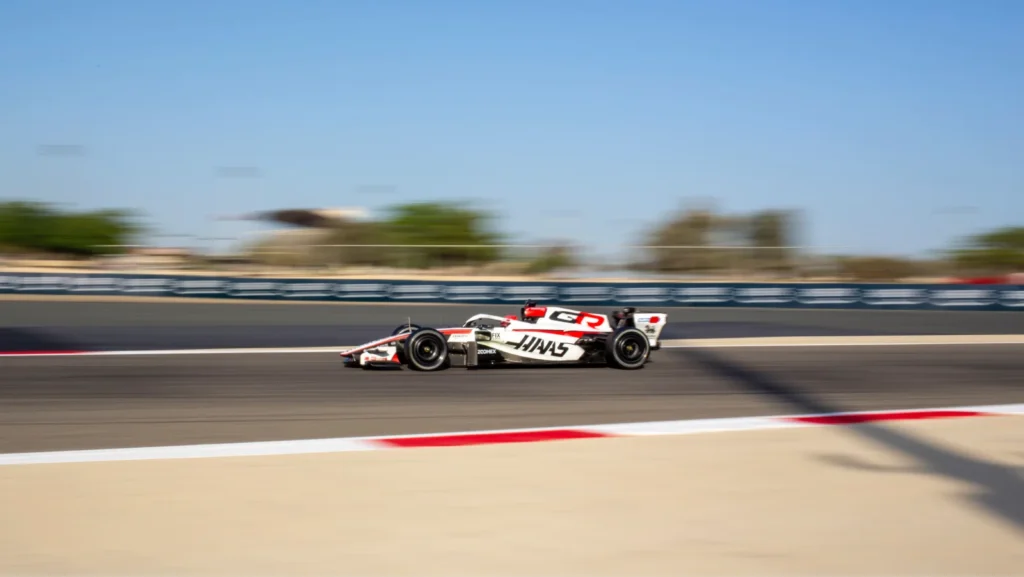
For Haas, there is a similar sense of stability, but through continuity, as Oliver Bearman and Esteban Ocon are back behind the wheel, amid an increased relationship with Toyota. Its engine deal with Ferrari remains, and with the Italian marque’s power unit looking reliable, the American outfit might have cause to be confident.
In terms of lap times, Alpine and Haas were incredibly close, the pair’s fastest respective times placing them fifth and sixth overall. In terms of distance covered, Alpine were 45 laps short on Haas, which was third overall with 404, which translated into 2186 kilometres in total.
So, that’s the midfield battle all settled, then right?
Wrong.
Williams can make its presence known, provided it can shed its puppy fat
Alpine and Haas are very much the outliers in that they have the platform early, but don’t count out a few other teams.
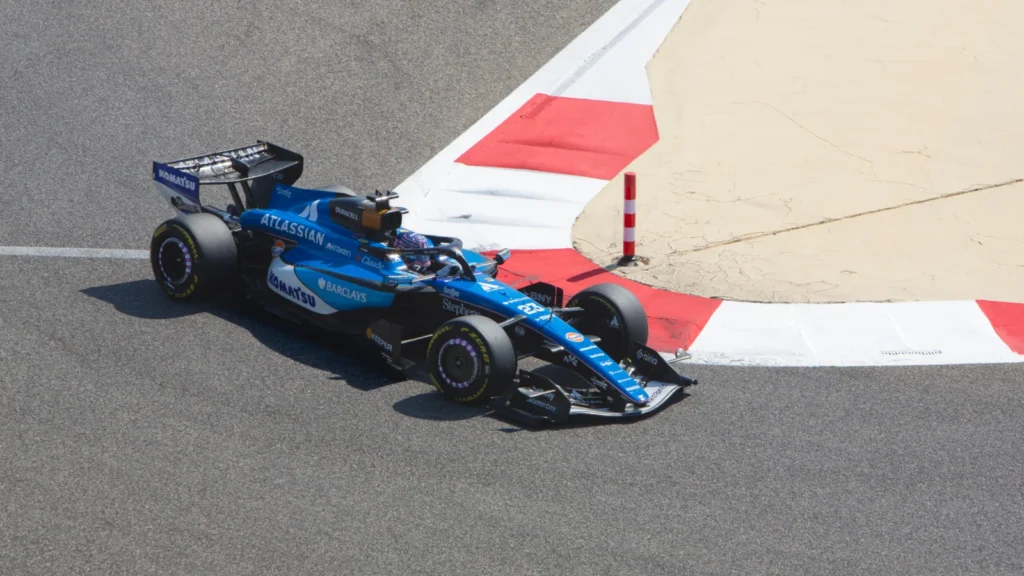
Williams have had a bit of a tumultuous time of it, with its car being fraught with problems that caused it to miss the Barcelona ‘shakedown week’, but foundations are there for improvements to be made.
In terms of one-lap pace, the readings don’t look for the Grove-based squad. Its fastest time of the week was 2.3s off the fastest lap of the week, but if we are to take that lap – set by Charles Leclerc – as a bit of a ‘glory run’, then it was still 1.5s off the second-fastest, Andrea Kimi Antonelli’s lap set on the same day. But through both Alex Albon and Carlos Sainz, a total of 368 laps were logged, more than both Ferrari and Red Bull.
Sainz told media including Motorsport Week in Bahrain that the mileage lost in Barcelona has mostly been compensated, but admitted there are still anomalies in the FW48 that need remedying.
“That’s allowing us to find out the limitations and the areas where we have to improve, which, unfortunately, there are quite a few,” the Spaniard said. “But as I said, the main thing last week was mileage, and then this week we are finally starting to try and find a bit of lap time and performance out of it and try to put it in a better set-up window.”
If Williams can take all the good bits out of its car and build on it, then it might not be a surprise to see it improve steadily across the season, but in Melbourne, the reality is that it will be in a position on the grid similar to its pre-’25 spike.
Aston Martin are not quite in the same boat, as, unfortunately, that has a few more holes in it, the messages coming from the Silverstone-based squad and its PUM Honda is that there is a relentless, day-and-night toiling from all parties to ensure the Adrian Newey-designed AMR26 will be able to climb through the field as the season progresses, as it mustered a mere 128 laps, 138 less than Cadillac.
Has Audi [vor]sprung a surprise with rapid F1 improvement?
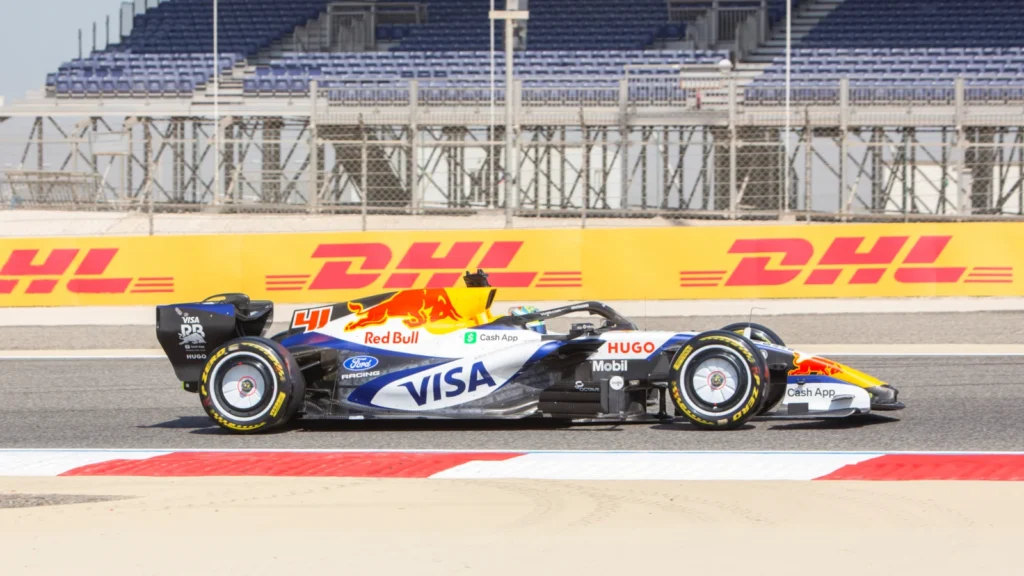
Racing Bulls have a platform to similarly challenge as it did in 2026. But the VCARB 03 has characteristics that render it a slightly unstable car to drive compared to the Haas and Alpine, which both look smoother and sharper in its cornering by comparison. If you take the Red Bull RB22 as its reference point, its energy harvesting through its downshifts were clunky and not quite as refined, but the pieces are there for the car to make a decent job of challenging Haas and Alpine.
Despite having more of a ‘standing start’ in terms of where its beginning, there are reasons to consider Audi as a team that can wade itself into this fight as the season progresses. There is no doubt that the German marque, the ex-Sauber entry, has significantly shown a lot of improvement since Barcelona.
“We have made significant progress. The drivers are comfortable with the car and it is a good platform to work with,” said Technical Director James Key. This shows that a lot of the battles have been won in terms of ironing out the likely teething problems a brand new team will have.
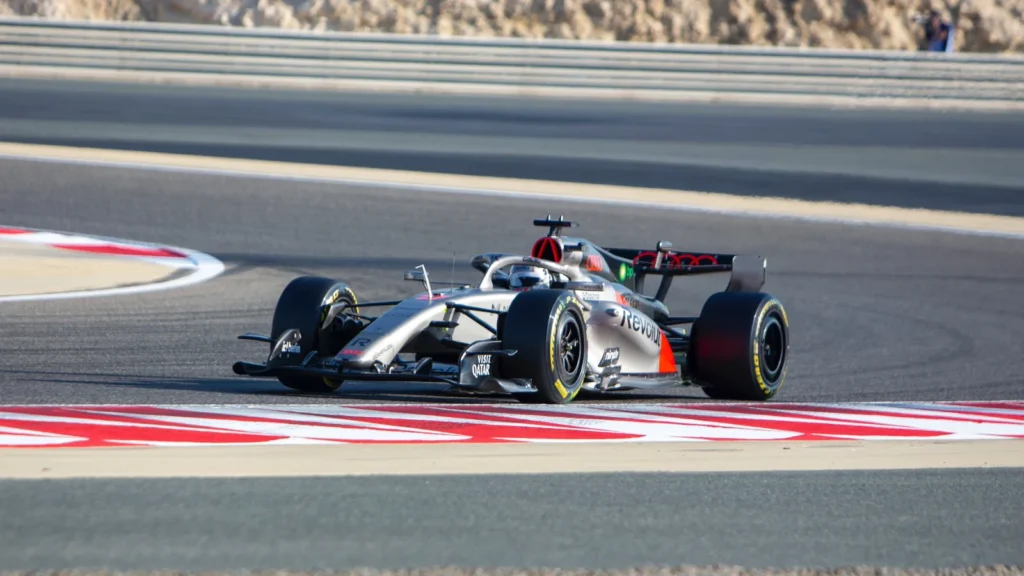
It naturally has a disadvantage that Aston Martin also shares – its power unit is only in one team’s car. A point of note – the R26’s engine is the loudest, and objectively, the best-sounding of the lot. The squirrelly nature of the car under braking were definitely much better in Week 2, and with 357 laps logged, it ranked seventh overall.
The breadth of the midfield battle will undoubtedly be down primarily to how fast the teams can develop their machines as the landscape of the new technical regulations will rapidly change across the year. But there is definitely a fair bit of scope for a potentially entertaining battle behind what happens at the front.
READ MORE – Interview: The Formula E star’s ‘family’ dynamic star that’s set up F1 rookie’s big chance




Discussion about this post