
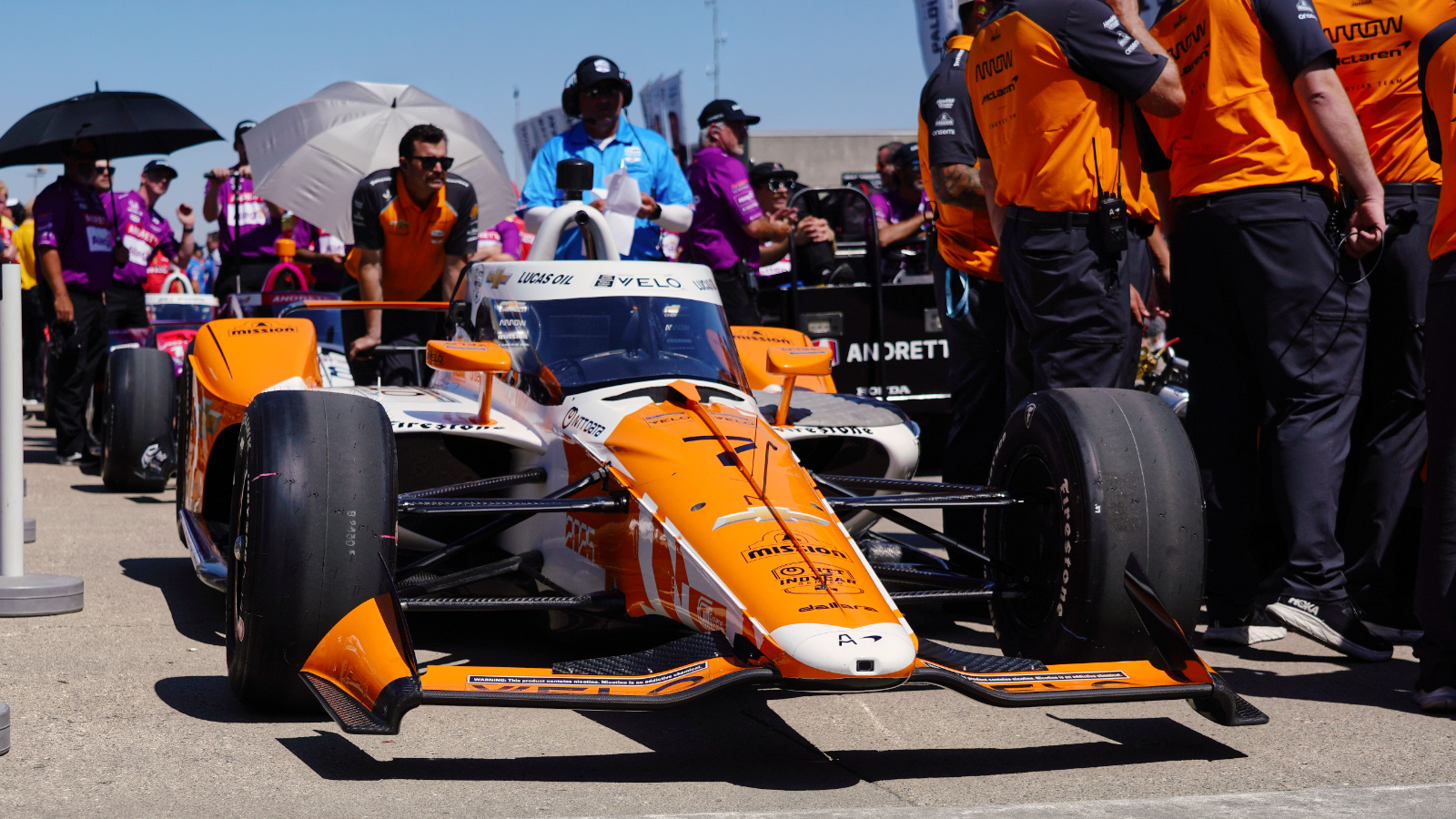
The NTT IndyCar series has detailed a new addition to cars competing in the Indianapolis 500 that should help reduce severity of crashes.
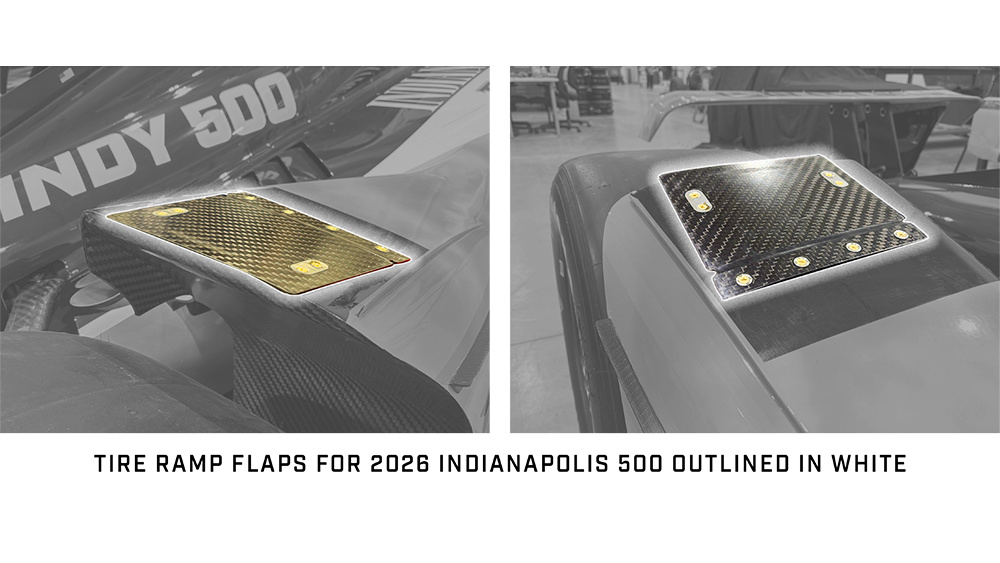
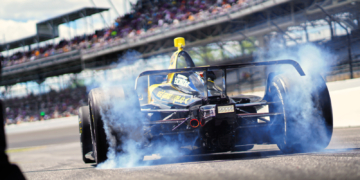
New carbon fiber flaps will be installed on all cars on top of the bodywork that sits just ahead of the rear wheels.
These flaps, which are nearly as wide as the rear tire and appear to have roughly square proportions, have a hinge on the front to allow the section to lift up in the event of a high speed spin.
Once the flaps are deployed, airflow will be disrupted in such as way as to help prevent cars from lifting off the ground.

“Dallara is a tremendous partner and have joined us to closely examine spins that have occurred over the last few years at IMS,” IndyCar Director of Aerodynamic Development Engineering Tino Belli said.
“This update to the rear tire ramps has proven in computational fluid dynamics testing to decrease, by nearly nine percent, the likelihood of a car at speed ‘lifting’ after a 180-degree spin.
“We are always evaluating safety and, from a car perspective, believe this is an effectual development for a superspeedway.”
Airborne crashes at IMS often lead to scary scenes as drivers hit the wall at awkward angles and sometimes slide down the track upside down.
Colton Herta was one driver who went for a wild ride last year, crashing out of Turn 1 and slamming into the Turn 2 wall while flipped over.
The new flaps will be mandatory for all cars in all sessions, starting with the Indy 500 open test session April 28-29.
Other concerns addressed
The series has also validated a new brake configuration from brake partner Performance Friction Corporation (PFC Brakes).
With the new configuration, drivers should have more predictable and responsive brakes while slowing from extreme high speeds.
In particular, drivers should be able to more easily maintain control of their cars while slowing for the pit lane entrance off the exit of Turn 4.
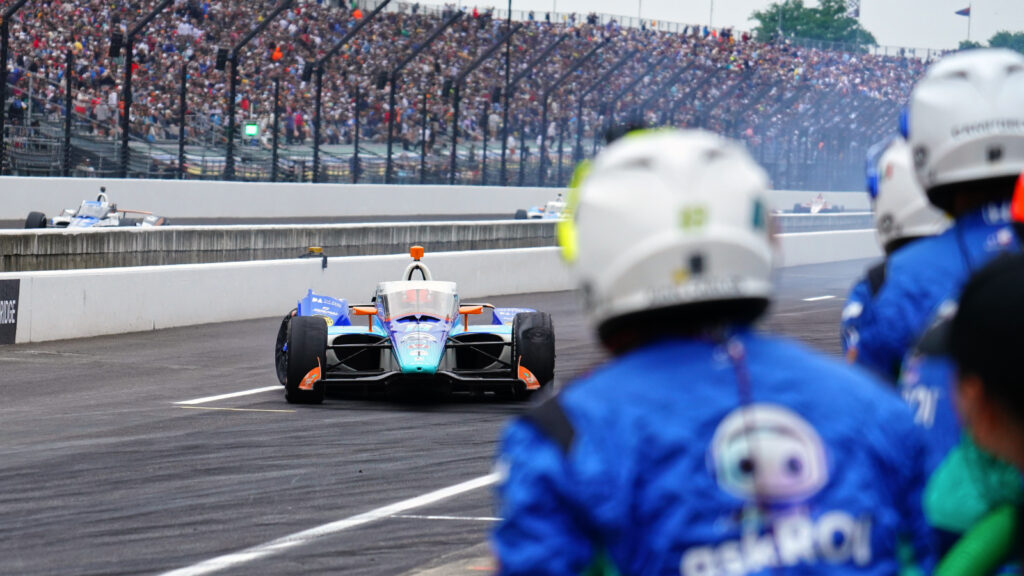
Rinus VeeKay was one driver who had his day ruined last May when he crashed while attempting to slow for the pit lane speed limit on lap 81.
His Dale Coyne Racing Honda was heavily damaged in the incident, knocking him out of the top 10.
Both innovations will likely help drivers stay safe this upcoming May as they race around the world’s most famous 2.5-mile oval at speeds over 230 MPH.








Discussion about this post