
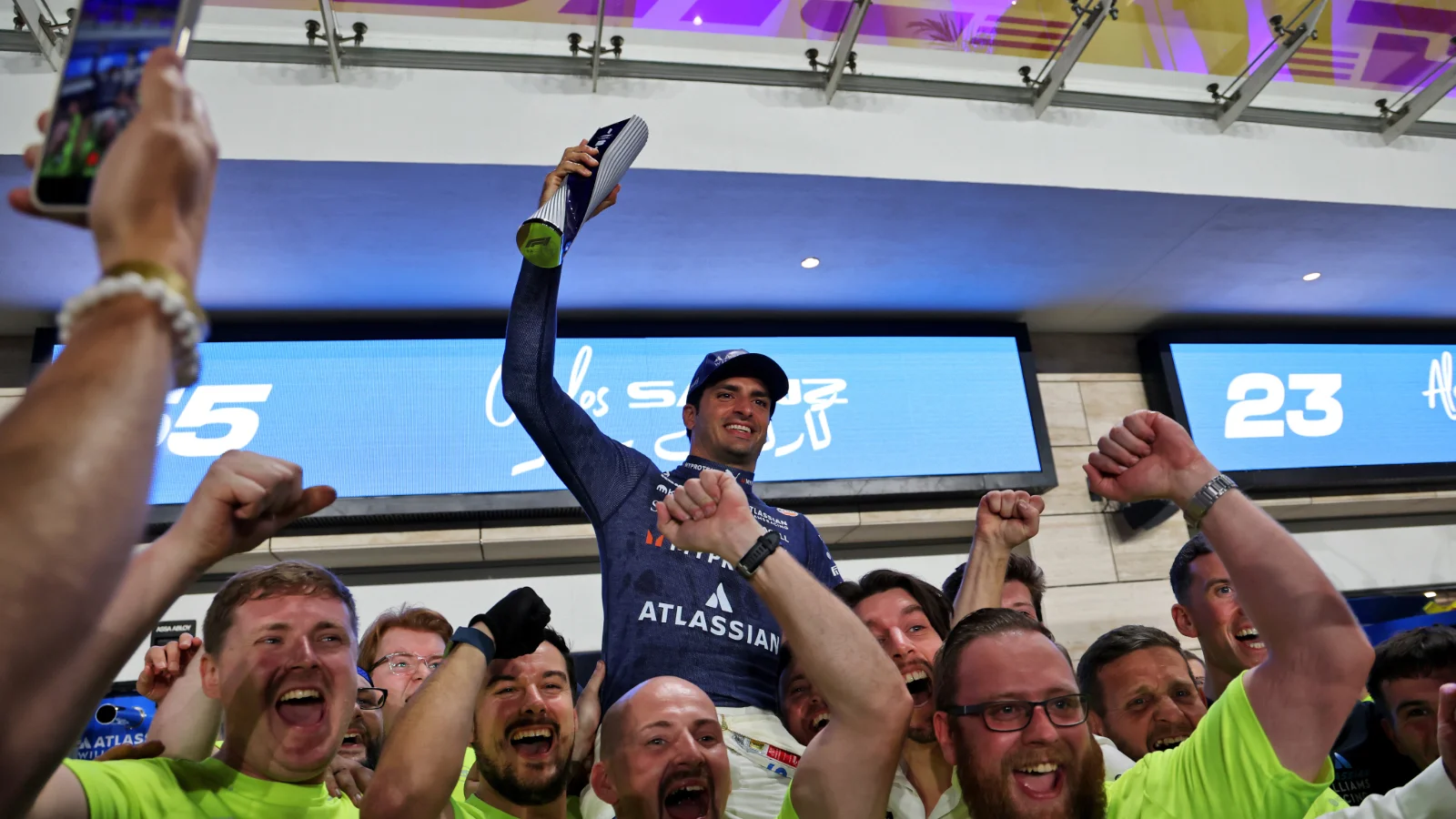
After his surprise ousting from Ferrari, Carlos Sainz’s debut season with Williams in Formula 1 went from strength to strength, even outperforming his former employer.
Sainz only produced four wins in his time in red, but the Spaniard proved to be a solid back-up to Charles Leclerc, almost helping to deliver the team the Constructors’ title.
Sainz became the first driver since Nigel Mansell to race at McLaren, Ferrari and Williams, revealing that he chose the Grove outfit because he would be given “the power to change things”.
“Probably one of the most important pieces of the puzzle was to go to a team where I knew I was going to be listened, where I knew I was going to be welcomed and where I knew there was power to change things, if I realised there was something I didn’t like or I would like to improve,” he told Motorsport Week in an exclusive interview.
Sainz was one of many drivers to end their race in the barriers in the wet in the Australia season opener and only managed one points finish in his first four Grands Prix.
In comparison, team-mate Alex Albon started the season strong with three points finishes, and he was only outside the points once across the first seven races of 2025.
While Albon continued to spearhead the team forward with some standout results, Sainz slowly started to find his feet and soon chipped in with lower-half top-10 finishes.
Sainz’s talent was starting to bleed through, and if not for botched strategies, incidents and mechanical gremlins, he would have been able to match Albon’s early-season tally.
Adapting to his new home
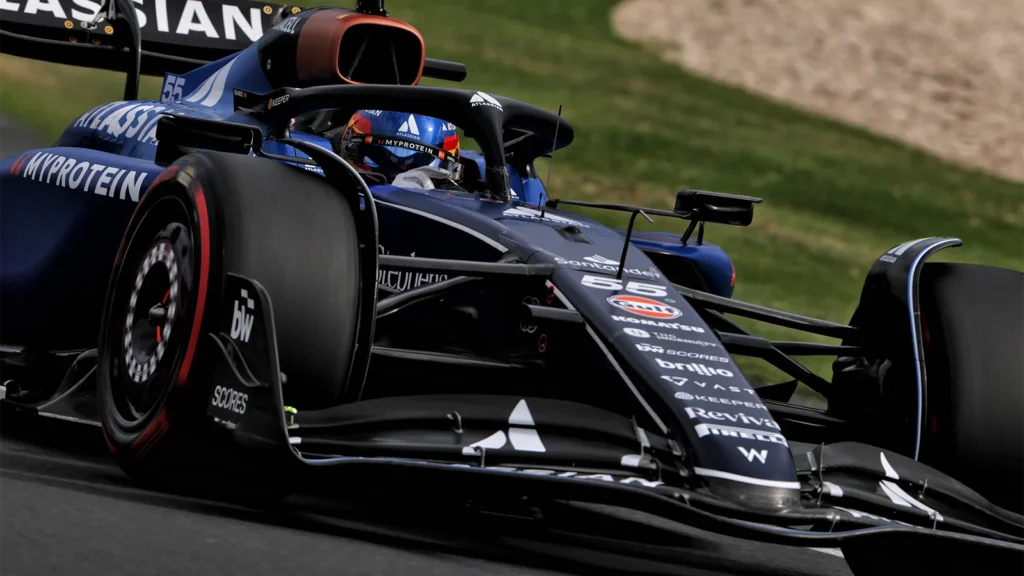
Sainz had to adapt to a Williams car that was less competitive than the Ferrari he drove in 2024, all the while having to discover the limitations that the FW47 harbours.
“I don’t feel particularly at home with it. The car has some weaknesses that I cannot drive around them or I cannot tune a set-up to get rid of those weaknesses,” he explained. “And you to drive the car in a very particular way to do a maximum lap, the best possible lap time and it doesn’t particularly suit my driving style in that way.
“We are in the process of identifying why this car has those weaknesses. Where is it on the aero map? What is out of these things or in the tools of the car, where is the hidden thing that is making the car have such peculiar weaknesses that are so extreme to the point where in Hungary you are almost a second off pole position from a Ferrari, but then in Miami and Imola we were, if anything, quicker than them?
“So it must be something very big that we are not understanding and capturing and, while we are designing next year’s car, we are trying to understand what’s wrong with this car and its predecessors, because the ‘22, ‘23, ‘24 car also had it. What’s been intrinsic of a Williams car that always gives this relative weakness to the competition?”
“But I know that even with those weaknesses I can be quick, I’ve been quick from the get-go in Bahrain. I adapt and I can be quick. Not to the levels of maybe doing something magic with the car because I’m lacking still a bit of feeling and experience with the car.”
The magic arrives
Despite still not being at ease, Sainz returned from the summer break a driver renewed and subsequently captured the form that Williams had been anticipating.
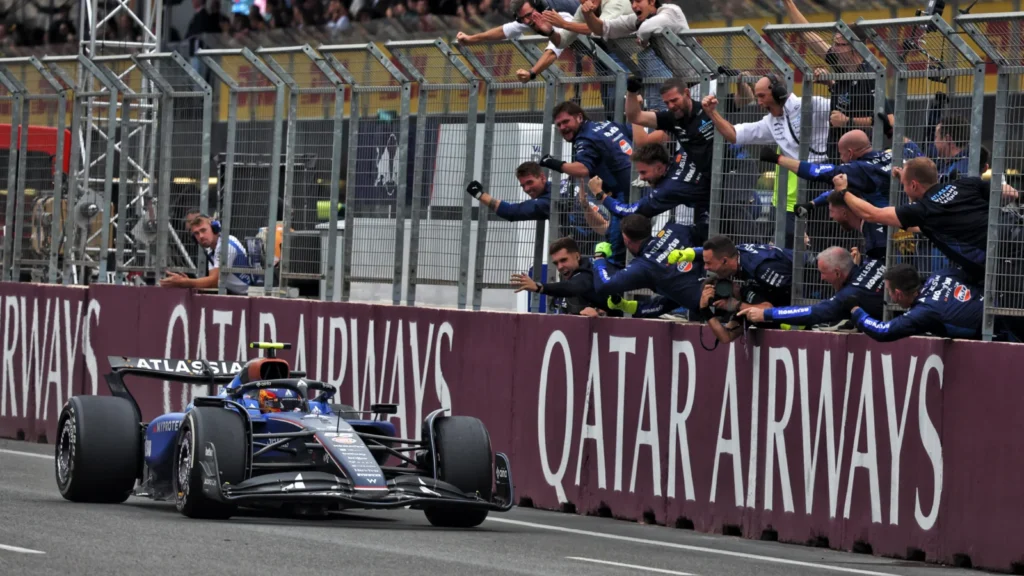
In a chaotic qualifying session in Baku, the Spaniard put his Williams on the front row, the first time in over four years the Grove-based team had started so high.
Sainz would convert this into a first-ever podium finish with Williams, the squad’s first visit to the rostrum since George Russell in the curtailed 2021 Belgian Grand prix.
And in doing so, Sainz became only the second ever driver to score a podium finish with McLaren, Ferrari and Williams after four-time World Champion Alain Prost.
Another two points finishes in Singapore and the Sprint at COTA continued his strong run of form before almost securing another front row in Vegas, eventually starting from third.
A strong drive to seventh at the flag, becoming fifth after the McLarens were excluded, saw only his second top-five finish of the season, yet things were to get better still.
Despite heading to Qatar with low expectations, Williams, and in particular, Sainz performed tremendously, taking the final Sprint point in eighth and qualifying a strong seventh.
Taking advantage of almost every car pitting on the same lap, a quick pit stop from the Williams crew saw Sainz emerge in fourth position and second of the cars having made a stop.
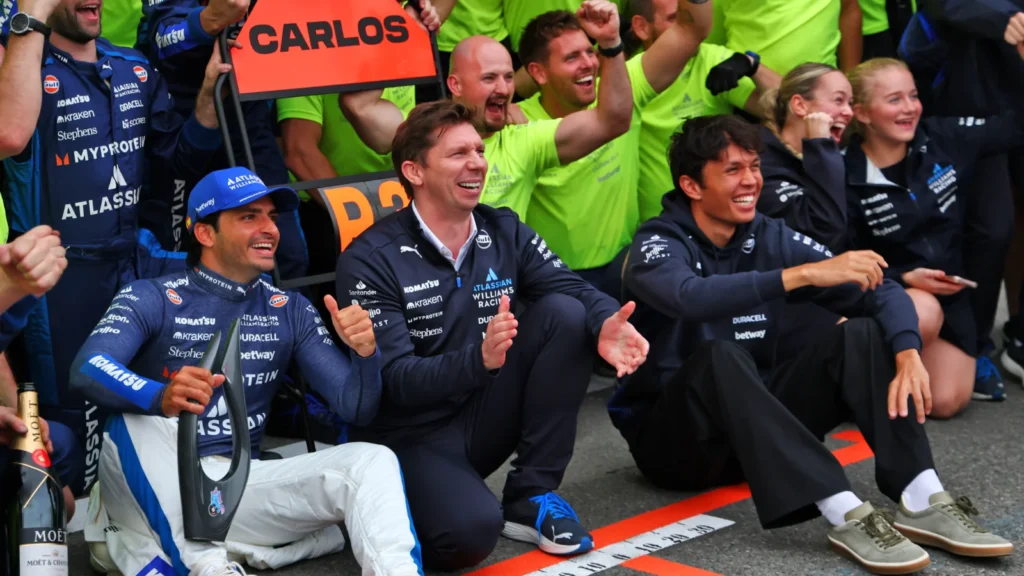
With McLaren’s strategy blunder, Sainz would finish third once again, ahead of former team-mate Lando Norris, with the Spaniard earning more podium finishes than his former employer Ferrari since Baku, as well as outscoring team-mate Albon 48-3 in that time.
Good omens for the future
With Sainz ending the 2025 season nine points behind Albon, and Williams securing its best finish in the Constructors’ Championship since 2017, the future is looking good.
Having finished ninth in the standings in 2024, this remarkable turnaround for Williams has seen Sainz play a huge role.
A noticeable pattern around the Spaniard has seen an upturn in form from his new employer in every team he has joined in his now decade of F1.
Toro Rosso, Renault, McLaren, Ferrari, and now Williams all improved in the first season with Sainz at the wheel, showing how key he is to car development.
With Williams calling off development of its 2025 package almost straight away in favour of its 2026 machine and Sainz finding his feet and Ferrari appearing to be in trouble, the move to Grove may have been a blessing in disguise.
READ MORE – Carlos Sainz highlights stereotypes that Lando Norris has broken with maiden F1 title




Discussion about this post