
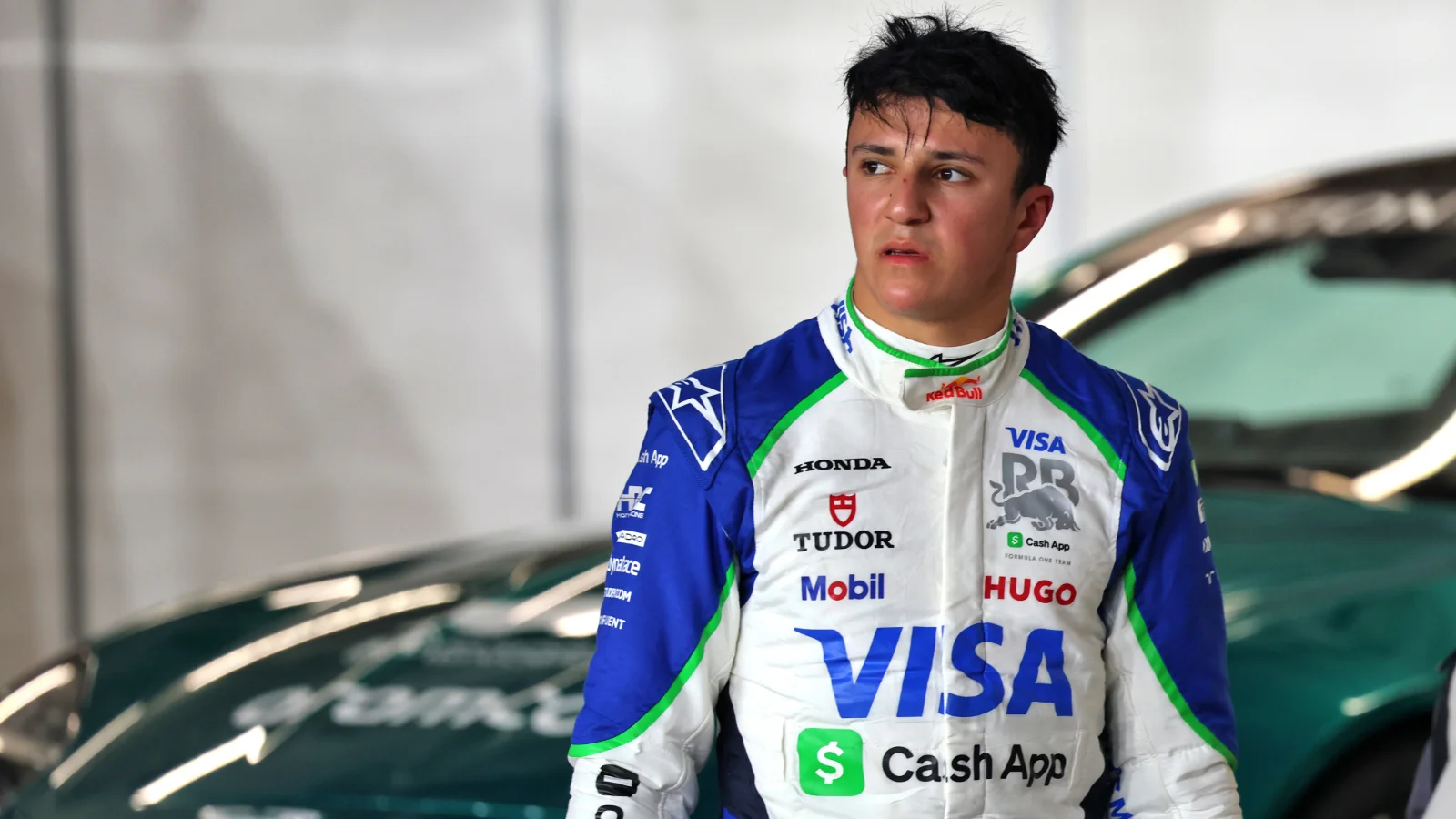
The news that Isack Hadjar will replace Yuki Tsunoda at Red Bull surprised no one in the Formula 1 paddock, the duo becoming the latest victims of a never-ending horror franchise.
Red Bull is by far the most polished race team on the F1 grid. A controversial statement, but one with merit.
Operationally, it has proven itself time and time again. Its inspired strategy calls alone can embarrass the rest of the grid.
Its pit stops are first class and rarely on the wrong side. Even the positioning of its cars during qualifying runs to ensure its drivers, when needed, are last to start a lap is flawless.

Yet, predictably, an elephant the size of the RB21 fills the metaphorical room. The second driver has failed to match four-time World Champion Max Verstappen since 2019.
Qatar was a classic example. While Verstappen extracted every inch of performance from the car to take home an unlikely win, Tsunoda finished 10th, a minute behind his team-mate.
In recent races, rivals have dropped all pretence that Red Bull is anything more than a one-car team.
Only Homer Simpson, ignoring the flashing red light and loud alarm warning of an impending nuclear meltdown, has more denial than Red Bull on this fact.
This inability to work with its second driver has now claimed yet another victim. Tsunoda is now consigned to the scrap heap, his F1 career in tatters.
Hadjar will step into the fore, the next driver on Red Bull’s conveyor belt of doom. Hadjar is now part of a horror movie franchise past its best, with no end in sight to the sequels.
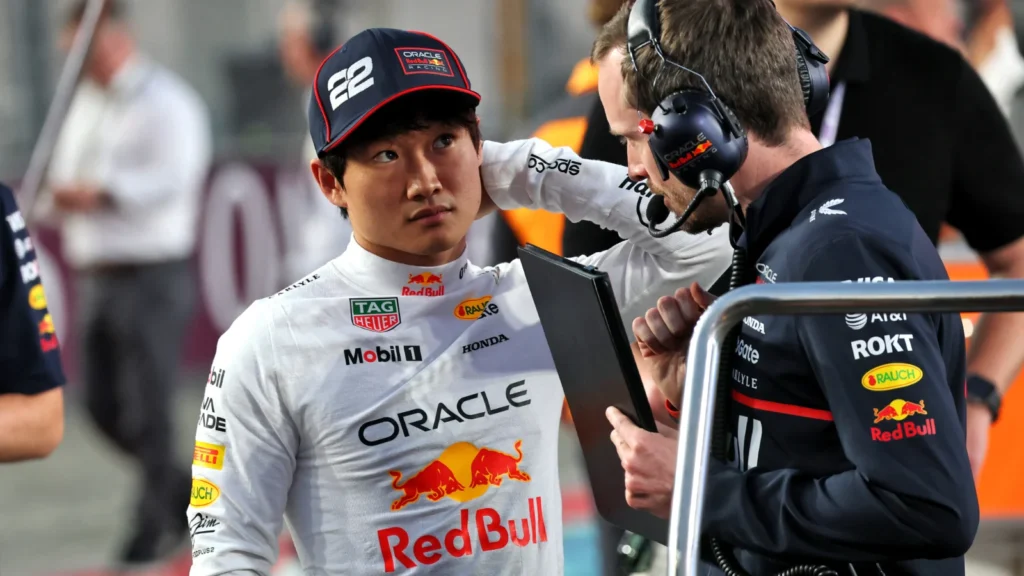
An all too familiar story plays out
Tsunoda’s infamous promotion from Racing Bulls just two races into 2025 had a certain inevitability about it.
Beating Liam Lawson in the off-season shootout, the powers that be decided that Tsunoda was the best choice only after Lawson’s struggles.
By replacing the underperforming Lawson, Red Bull seemed to think that Tsuonda could magically drive a car that has, over the last five years, cost four previous drivers their seats.
The reality of this happening was as likely as a Head Chef sending out an undercooked Beef Wellington to a VIP table. It could feasibly happen, but it is highly doubtful.
In the Japanese driver’s case, his beef was cooked from the moment he stepped into the seat.
Red Bull has always vehemently denied that Red Bull’s cars are centred around Verstappen.
The Dutchman has particular traits and requirements: he favours unpredictability, oversteer and an aggressive front end for quick rotation and reaction on corner entry.
This philosophy has led Red Bull down a development rabbit hole. Its challengers of the last two seasons have suffered from narrow operating windows.
The smallest of changes can move the car from competitive to out of contention within the blink of an eye.
No changes have been made to the car philosophy or engineering before his arrival, so Tsunoda’s struggles were elementary.
Denial of the challenges posed by that second seat also comes from the driver. Tsunoda confidently claimed he could match or even beat Verstappen at Red Bull, even before his move.
Tsunoda’s failure is down to Red Bull
Predictably, though an improvement over Lawson’s disastrous tenure, the second RB21 was almost impossible to tame, just as others had struggled before. But Tsunonda came from a strong few seasons at Racing Bulls and had confidence.
Able to get his car into the correct operating window and extract maximum performance, he was far from the crash-shy driver of his early years. He was now polished and came highly recommended by then Racing Bulls Team Principal Laurent Mekies.
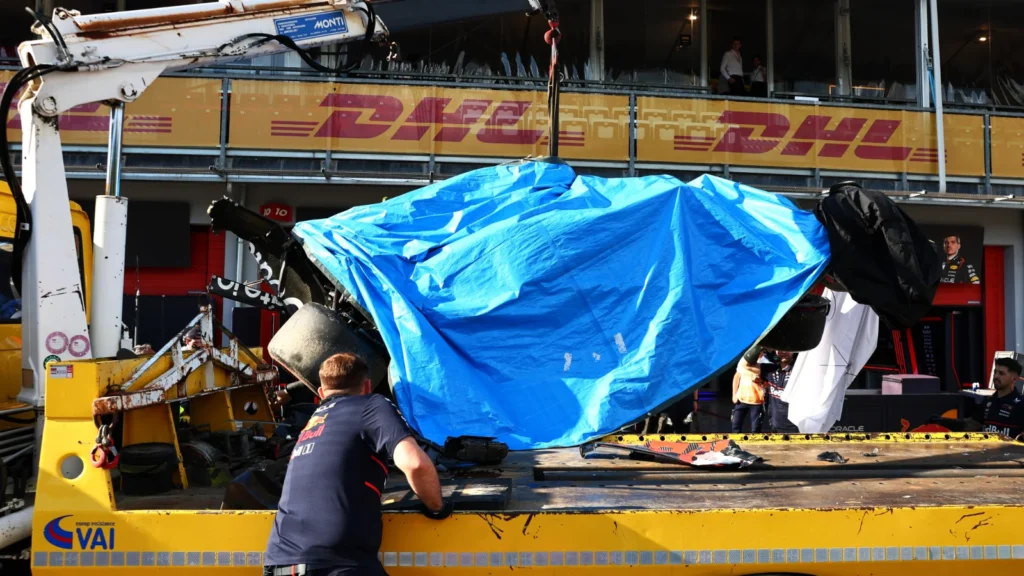
Tsunoda’s entire career quite literally came crashing down in his opening races with Red Bull. His high-profile qualifying crash at Imola, coupled with an astounding 10 Q1 eliminations since, paints a poor picture of performance.
Within a few races, his struggles finally forced the admission from Red Bull that, after Pierre Gasly, Alex Albon, Sergio Perez, and Liam Lawson’s struggles, the car might, in fact, be to blame. Yet, he has been thrown on the scrap heap regardless. It is a move colder than Rose refusing to let Jack join her on the debris in Titanic.
He may have failed to live up to his reputation, but Tsuonda’s undignified departure is as much Red Bull’s failure as it is his own. Lawson may have been the quick first-act kill off, but Tsuonda’s F1 death has been more drawn out.
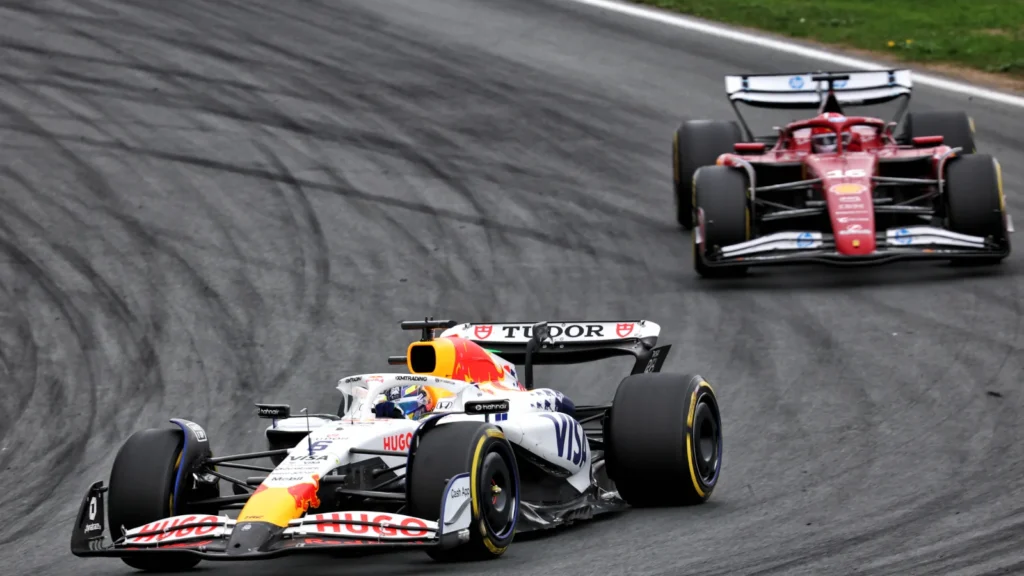
Hadjar next to enter the lion’s den
The revolving door of drivers continues, however. Hadjar is next into F1’s most cursed seat and set to be picked off next. A quick look at social media illustrates just how much fans do not want this promising prospect to be wasted next season.
Barring his formation lap faux pas in Australia, he has seriously impressed in his rookie year. The highlight to date has been his maiden podium at Zandvoort, sharing a podium with his soon-to-be team-mate. Currently the highest scoring rookie, he has shown consistency and speed in equal measure.
Full of youthful optimism, he represents an unspoiled driver with the world at his feet and endless possibilities. This is how every driver should be [and usually is] before entering the minefield of Red Bull.
The genuine fear amongst F1’s fandom is that Hadjar’s promise will go unrealised. More likely, however, is his career being torn up like an exam paper in front of a straight-A student. Yet, all must watch helplessly as the cycle of pain continues, the next victim in the monster’s crosshairs.
Rumours abounded that Hadjar himself did not want the promotion. This is somewhat understandable given the number of drivers it had either caused career setbacks for or destroyed. Unlike Tsuonda, Hadjar has been careful in his rookie year, never promising more than he can deliver.
His quiet disposition is his greatest ally and strength, offset by the irony of his greatest weakness: eye-catching performances. Hadjar may not join Red Bull, claiming he can beat Verstappen, but his speed makes it expected.
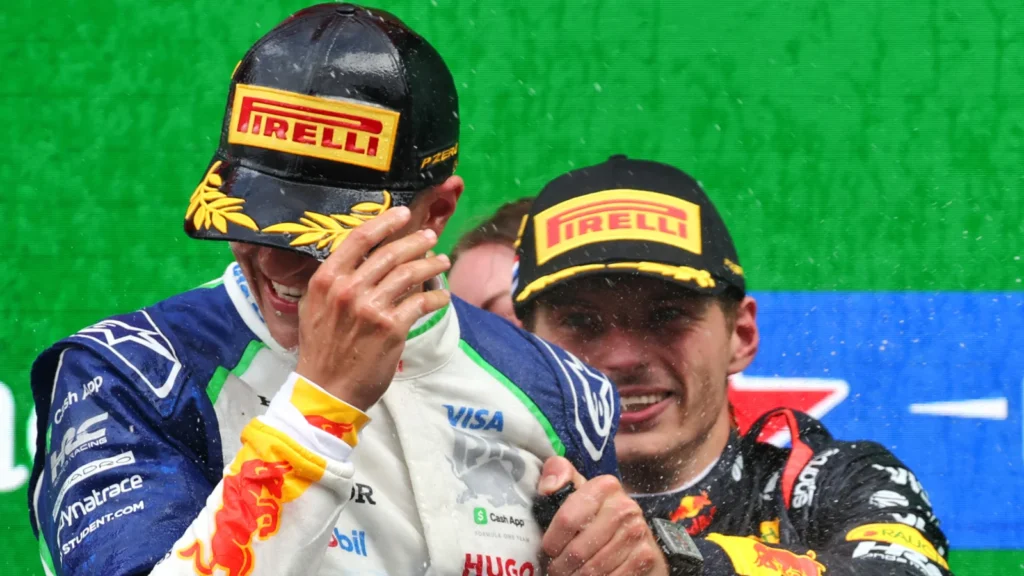
Survival prospects at Red Bull
Fans and pundits are concerned to watch this talented, emotional prospect enter the lion’s den in 2026. Survival chances are grim given the circumstances. That Red Bull thinks that throwing yet another of its young drivers into the same scenario and believing results will come is bordering on professional negligence.
Why does the team believe that, with no changes to how it operates, a driver can drive their way out of the second-car malaise? It beggars belief. A continuation of the same horror story is highly probable. Like a horror movie character surprised by a villain or monster in a dark basement, Hadjar’s career outlook is bleak. There is, however, a thin glimmer of hope.
He arrives at Red Bull in the first year of the major technical regulations overhaul. The team also embarks on its inaugural season with its own power units in collaboration with Ford. Both of these factors give both parties an equal opportunity to reset.
The vastly different designs and aero philosophies will take time to adapt to. For their part, Red Bull may stumble. Rumours persist that Red Bull has not got its power unit accurate for 2026, so Hadjar may have a chance to adapt.
Hadjar’s announcement has also come at the right time for him to adapt to life at Red Bull, should the team allow him mileage at the end-of-season test. Acclimatisation has been a curse word for Red Bull in recent years, so this is crucial if he is to succeed in 2026.

Next [and final?] victim lying in wait?
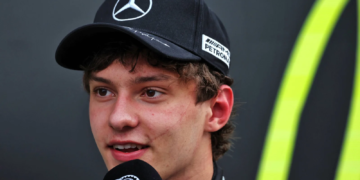
Should he fail and become the next victim of the horror franchise with no end, a new victim lies in wait: Arvid Lindblad. The 18-year-old made his F1 debut during practice for the British Grand Prix and is touted as a name to watch.
He will replace the departing Hadjar and will watch his counterpart from the safety of Racing Bulls. But that team is a front, a false sense of security. Once the time is right, he, too, will be called up as a lamb to the slaughter.
In Lindblad’s case, however, he may be able to beat the metaphorical monster. Verstappen’s time in F1, by the Dutchman’s own admission, is uncertain beyond 2028. The prospect of car design based on multiple drivers is a real possibility.
Far from yet another number to add to its growing list of victims, Lindblad is in the hot seat to shine at Red Bull, should he impress at Racing Bulls. Hadjar, though, will be entering F1’s most hostile seat at the peak of its reign of terror. He may well need to look behind him.
As far as horror movies go, Lawson was dispatched swiftly and brutally, while Tsuonda’s departure was slow and painful.
Hadjar’s fate needs to be handled with dignity. Time will tell if this story will have a happy ending or act as yet another chapter in the Red Bull driver saga horror franchise.
READ MORE – Red Bull ends speculation by confirming 2026 F1 driver line-up




Discussion about this post