
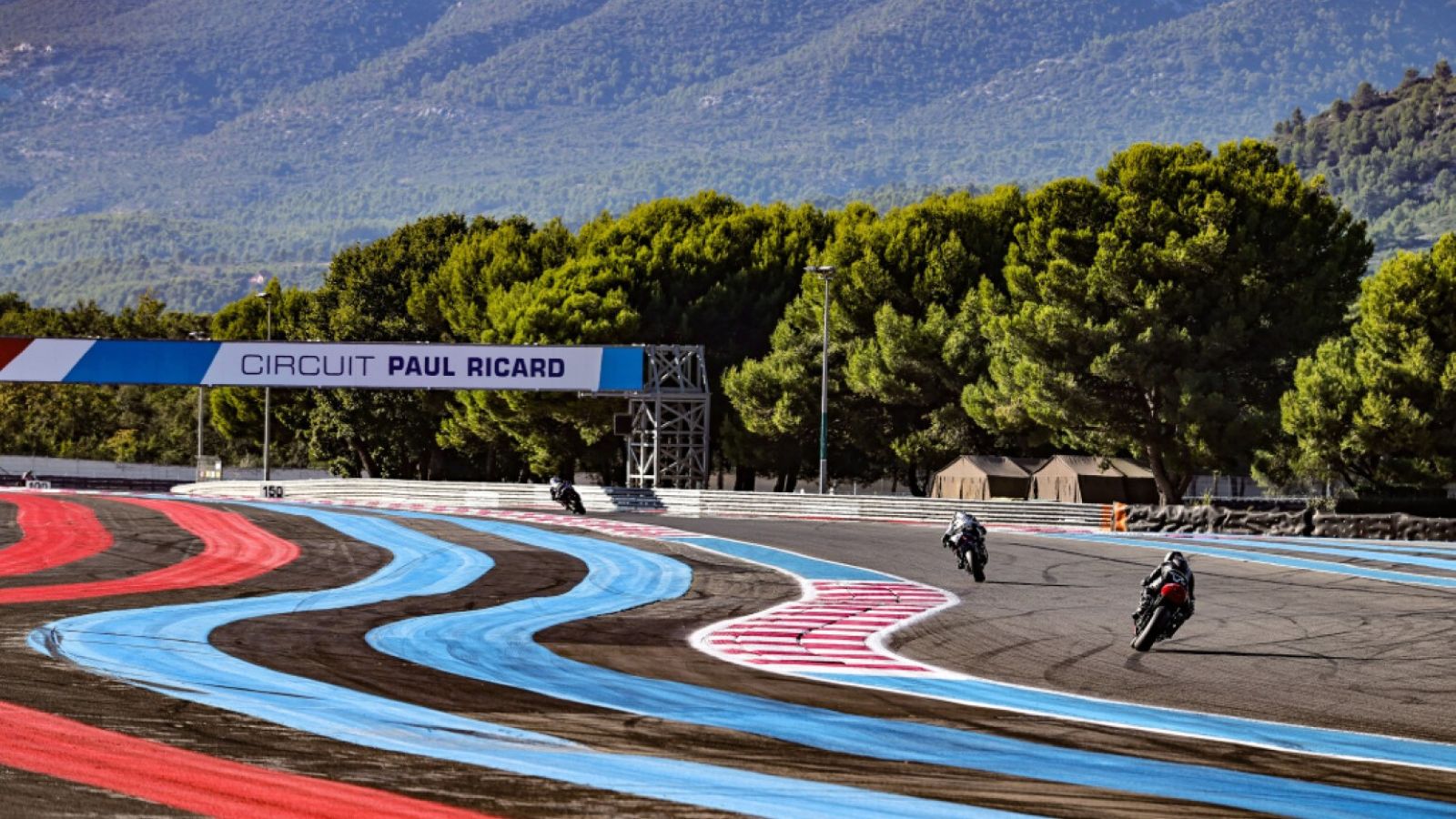
The FIM Endurance World Championship (EWC) reaches its conclusion this weekend at the Circuit Paul Ricard. The 89th running of the legendary Bol d’Or hosts the final title decider across a gruelling 24-hour marathon. Here is everything you need to know about it.
EWC is a multi-rider series where teams share a single motorcycle across races lasting 8, 12, or 24 hours. However, there is no 12-hour on the 2026 calendar. Riders take turns completing hour-long stints on track, navigating night riding, changing weather, and variable grip levels over the course of a race. It features four categories: EWC, the premiere class, Superstock, Production and Experimental.
2026 finale at the Circuit Paul Ricard
The 2026 EWC season reaches its climax this weekend at the Bol d’Or, following a 24-hour season opener at the Circuit Bugatti in Le Mans, an 8-hour race at Spa-Francorchamps, and the iconic Suzuka 8 Hours. The 24-hour race presents an intense challenge, rotating riders through 45 min to hour-long stints in darkness and ever-changing track conditions, demanding that every competitor be all the more familiar with the circuit.
What is EWC?
Grid identification is made easy thanks to distinct colour-coded headlamps and number boards across the primary categories. Formula EWC serves as the premier class, featuring highly modified 1000cc machines, derived from the WorldSBK homologated model.
While the chassis must retain its original outline, teams are allowed extensive performance upgrades to the engine, swingarm, brakes, radiator, exhaust, forks, and rear damper. These top-tier bikes are easily recognised by their black number backgrounds and white headlamps.
By contrast, Superstock models are almost identical to production road bikes and run strictly on spec Dunlop tyres. Limited engine modifications are permitted, including injector jets, fuel mapping, clutch reinforcement, and slip-on silencers. They feature red number backgrounds and yellow headlamps.
The Production category also aligns Dunlop-fitted 1000cc road-going motorcycles, with only basic entry-level modifications allowed. These entries are identified by blue number backgrounds and yellow headlamps. An Experimental class also exists for innovative machines, though they do not score championship points.
The existing race formats in EWC
Rider rotation varies depending on the class and event duration. Formula EWC teams consist of three primary race riders and one nominated reserve. Superstock and Production teams can enter three riders and one reserve for eight-hour events, expanding to four race riders for 24-hour marathons.
All entry-listed riders must qualify and complete mandatory day and night practice sessions.
While three-rider squads are standard, teams occasionally take on extreme endurance challenges with only two riders, most notably when Johann Zarco and Takumi Takahashi famously powered the factory Honda HRC bike to victory at the 2025 Suzuka 8 Hours.
How are points awarded in EWC?
Points are awarded based on race duration, with longer events yielding higher scores. Bonus championship points are distributed to the top five qualifiers in each category on a five-to-one scale. Furthermore, during races lasting 12 hours or longer, intermediate bonus points are awarded at the eight-hour and 16-hour marks. A team can thus reap up to 35 units for an 8-hour events compared to 65 for a 24-hour one.




Discussion about this post