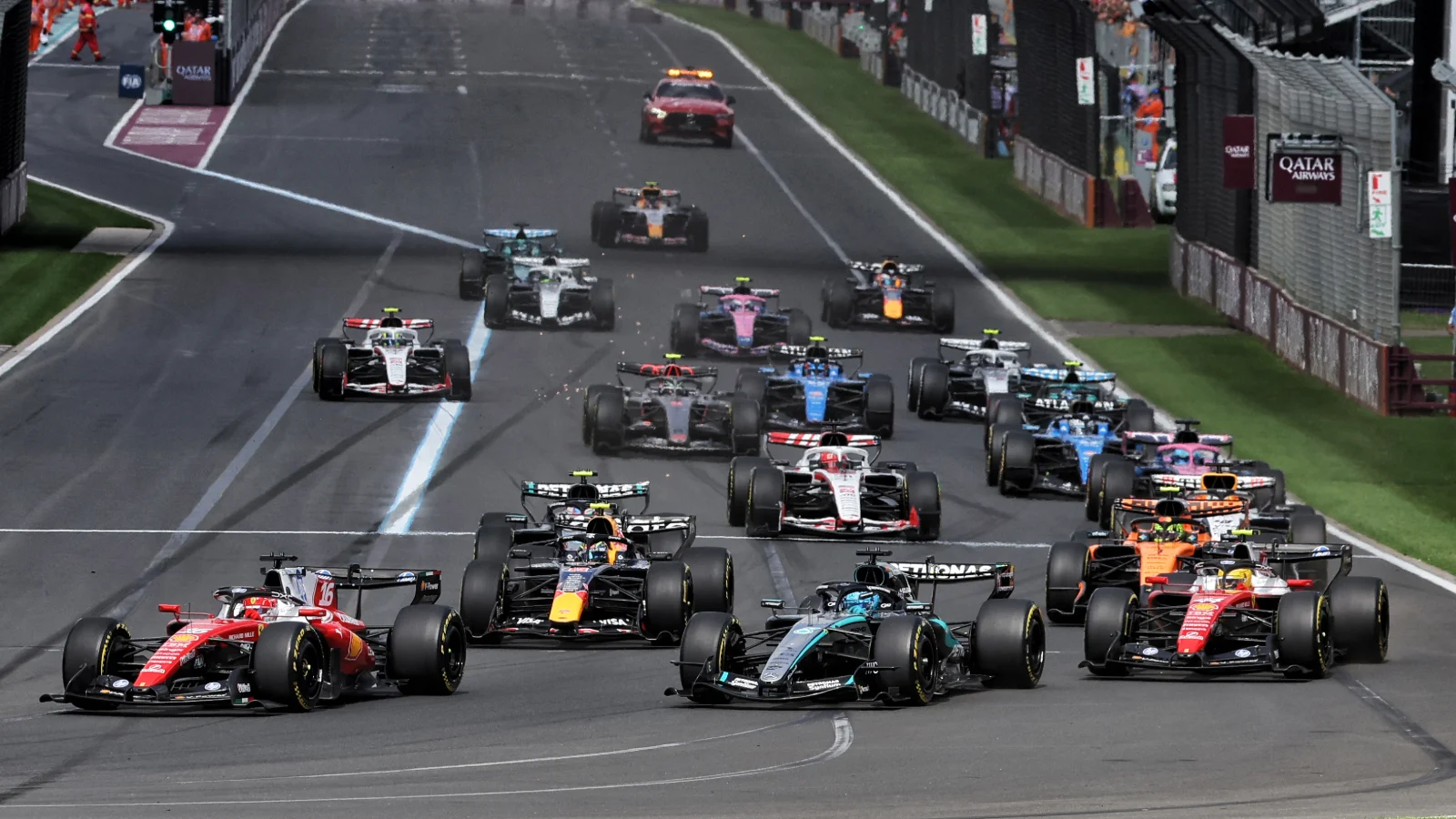
So, when FX fees ruin a budget race weekend, let’s look at the hidden cost of chasing speed abroad.
Picture a city professional flying out for a dream international race weekend. Grandstand tickets are booked in a foreign currency. The hotel holds a sizeable deposit. Airport transfers, metro rides to the circuit, meals in fan zones, and a team cap from the official store all go on cards and phones without much thought.
The trip feels under control because flights and accommodation were booked on sale and the race travel budget looked reasonable on paper.
Bu the real damage appears later on the credit card statement. A standard foreign transaction fee of around three percent has been charged on almost every card purchase.


A couple of hurried ATM withdrawals at the airport and near the track added flat fees on top of a poor exchange rate. One hotel and a ticket platform quietly used their own “convenience” conversion instead of the bank’s rate.
Across a long weekend, those small hits can add tens or even hundreds of dollars to travel costs, depending on the size of the trip.
As more frequent travelers look for smarter ways to move money-experimenting with multi‑currency wallets, stablecoins, and fast low‑fee networks-a simple, well‑explained where to buy tron crypto link can become an attractive starting point for learning how to keep more of their budget working for them.
With outbound travel and event tourism now back near, or above, pre‑pandemic levels, more race fans are discovering how quickly FX fees eat into the money they hoped to spend on better seats or an extra day at the circuit. This article focuses on practical ways to cut those leaks without cutting the experience.
Why payment strategy matters as much as flight strategy
Most race fans already treat flights and hotels like a game of strategy. They compare dates, search multiple sites, and adjust routes to shave a few hundred dollars from the cost of getting to the track.
Yet once they land, many default to whatever card sits at the top of the wallet and accept whatever exchange rate the terminal offers. That gap between careful booking and casual spending is where FX costs quietly expand.
The right payment strategy can change the equation. A thoughtful mix of no‑fee travel cards, multi‑currency accounts, and well‑configured mobile wallets can trim a few percentage points off almost every transaction.

Over a season, those savings can fund upgraded grandstand seats, extra hospitality, or even another race weekend. The sections that follow show where money leaks away, which tools can actually reduce FX fees, how to set them up before departure, and how to use them confidently in real race‑weekend situations.
Where money leaks on a typical international race Weekend
Tickets, hospitality, and FX markups at checkout – Many leaks start long before the first engine fires up. Race tickets, hospitality packages, parking passes, and fan experiences are often sold through overseas promoters or global ticketing platforms.
At checkout, buyers may see prices in the local currency with an option to pay in their home currency. That choice looks convenient, but it often hides a less favourable exchange rate layered on top of any card network fees. Some platforms also add their own service or processing fees, which can amplify the impact.
Choosing to be billed in the event’s local currency and pairing that choice with a low‑fee or zero‑FX‑fee card typically results in a better overall rate. The same applies to add‑ons such as shuttle passes or club upgrades purchased from foreign merchants.
Understanding that the currency selection screen is not neutral-but a point where FX markups can appear-is an important step in protecting a race travel budget before even leaving home.
Hotels, flights, and dynamic currency conversion traps – Hotels, restaurants, and some shops near major circuits increasingly offer to charge visitors in their home currency at the point of sale.
This practice, known as dynamic currency conversion, sounds reassuring because the guest sees a familiar number on the terminal. In reality, it often bundles in a conversion rate that can be three to seven percent worse than the genuine market rate, on top of any card fees.
The rule of thumb is simple and memorable: when a terminal asks whether to pay in the local currency or the home currency, select the local one. Let the card network or bank handle the conversion, especially when using a card with no foreign transaction fee.
That one simple habit can protect a meaningful slice of the hotel and dining budget over a race weekend.
Trackside spending, ATMs, and small‑ticket drains – Once at the circuit, spending patterns change. Fans tap to pay for snacks, water, and drinks, buy souvenirs, top up public transport, and occasionally pull cash out from nearby ATMs when a vendor does not accept their cards.
Each small transaction on a high‑fee card can attract a foreign transaction charge. Each ATM visit often adds a flat withdrawal fee and a less favourable FX rate, regardless of how little is taken out.

These small‑ticket drains hurt leaner budgets the most. A fixed withdrawal fee represents a much larger percentage of a modest cash amount, and repeated card fees on low‑value purchases quickly add up.
This is why a race‑ready payment stack should be designed not just for big‑ticket items like flights and hotels, but for low‑fee, high‑frequency contactless use throughout the weekend.
Modern payment tools that actually cut FX costs
No‑FX‑fee travel credit cards and charge cards – Specialist travel credit cards and charge cards are one of the simplest ways to tackle FX fees. While many mainstream cards still add around three percent to every foreign‑currency purchase, a growing set of travel‑oriented products waive these charges entirely.
For fans who attend one or two international race weekends a year, that difference alone can produce material savings, especially when combined with competitive network FX exchange rates.
Beyond FX, these cards often come with benefits that matter on the road: built‑in travel insurance, trip delay coverage, car rental protection, and sometimes lounge access between flight connections.
Purchase protection can also be valuable for high‑value items such as premium tickets or last‑minute hotel bookings. Annual fees, interest rates, and eligibility criteria need to be weighed carefully, but for many race travellers, a no‑FX‑fee travel card becomes the backbone of the payment strategy for big‑ticket costs.
Multi‑currency debit cards and fintech travel accounts – Multi‑currency debit cards and dedicated travel accounts from modern fintech providers address a different part of the problem: everyday spending and cash access.
These tools typically allow users to hold balances in several currencies, convert at interbank or low‑markup rates, and spend via a physical or virtual debit card that draws from the appropriate currency pot. Many also offer fee‑free or low‑fee ATM withdrawals up to certain monthly limits.
For international race weekends, this model is particularly useful for local transport, casual dining, ride‑hailing, and purchases at or around the circuit. Instead of relying on a domestic debit card with opaque FX spreads, travellers can see conversion costs up front, move money into the race‑weekend currency at chosen times, and track spending more precisely.
However, fee structures, weekend surcharges, and ATM policies vary by provider, so reviewing terms closely remains critical.

Pre‑trip setup: Building a low‑fee race weekend payment stack
Choosing a primary and backup card for the trip – Before departure, it helps to formalise a simple hierarchy of cards. The company often recommends one primary no‑FX‑fee credit or charge card for major purchases such as flights, race tickets, and accommodation.
Alongside that sits a multi‑currency debit card earmarked for everyday spending and withdrawals. A traditional bank debit card, ideally from a different network or issuer, serves as a last‑resort backup.
Travellers should confirm that their chosen cards are widely accepted in the destination country, check expiry dates, and review any travel‑notification requirements from issuers. Having at least two different payment networks represented reduces the risk of running into local acceptance issues.
Pre‑loading and hedging currencies before the lights go out – For some trips, converting part of the race travel budget in advance into local currency can be helpful. Pre‑loading a realistic amount into a multi‑currency account allows fans to lock in an exchange rate ahead of time.
This mentally ring‑fence funds for the weekend, and avoid worrying about short‑term FX moves. It also makes in‑app tracking more intuitive, because spending draws down directly from a visible local‑currency balance.
At the same time, over‑hedging can be risky if plans change or cards are not used as expected. The firm generally suggests pre‑loading the amount earmarked for known expenses-such as accommodation and estimated food and transport-while leaving some flexibility to convert additional funds closer to race day if needed. Individual comfort with currency risk and the specific features of the chosen account both play a role.
On‑the‑ground tactics: Paying smart at the track and in the city
Using the right tool for each type of spend – Once on location, using the right payment method for each category of spend keeps the race travel budget on track. Large, cancellable bookings such as hotel bills or rental cars are usually best placed on the primary travel credit card, which combines strong consumer protections with no FX fees.
Everyday taps for coffee, metro rides, ride‑hailing, and meals can run through the multi‑currency debit card or local wallet linked to a competitive account.
Cash should be reserved for genuine exceptions: smaller vendors that do not accept cards, tips where culturally appropriate, or situations where connectivity is unreliable. By thinking in terms of “card for commitments, debit for daily life, cash for corner cases,” travellers can reduce costs while keeping their setup easy to remember under race‑weekend pressure.
Beating dynamic currency conversion at terminals and ATMs – Avoiding dynamic currency conversion is partly about habits and partly about confidence. At hotel desks and shop counters, staff may ask whether to charge in the visitor’s home currency.
The simplest response is to request the local currency instead, even if that means seeing a number that is less immediately familiar. On unattended terminals, fans should watch the screen carefully and, when prompted, select the local currency option.
ATMs often present a similar choice, sometimes framed as a “guaranteed rate” for convenience. Declining on‑the‑spot conversion and allowing the bank or card issuer to handle FX usually results in a better deal, especially with a no‑fee or low‑fee card. Regular travellers find that, after a handful of transactions, this pattern becomes automatic-and the savings add up over multiple trips.

Group trips, shared costs, and multi‑country race calendars
Splitting costs fairly across currencies – Group race trips introduce a new layer of complexity. One friend might pay for the apartment, another for tickets, and a third for rental cars, all in different currencies and via different payment tools. Without structure, reconciling who owes what becomes confusing and can sour the experience.
The firm often suggests nominating one or two primary payers for big shared costs, ideally those with the best FX terms. Others then reimburse using low‑fee transfer services or bank transfers that offer competitive rates.
Keeping a shared note or simple spreadsheet with amounts recorded in the original currency and in an agreed home‑currency equivalent reduces disputes and makes it clear where FX costs have already been absorbed.
Planning for back‑to‑back races in different countries – Multi‑stop itineraries, such as a European double‑header across two race weekends in different countries, bring multiple currencies into play. Here, multi‑currency accounts show their strength.
Travellers can hold balances in each relevant currency, label them clearly, and build a mini‑budget for each event.
Funds can be pre‑allocated country by country, either before departure or between races, depending on how plans evolve. This approach avoids over‑withdrawing cash in one currency that then needs to be exchanged again later, and it provides a clearer view of whether the budget for each stop is on pace or sliding wide of the apex.
Safety, limits, and backup plans for travel payments
Protecting against card freezes and fraud alerts – Card issuers and banks monitor unusual spending patterns, which international race travel often triggers such as foreign locations, high‑value hotel charges, back‑to‑back contactless taps at kiosks, and late‑night ATM use.
To reduce the chance of legitimate transactions being blocked, travellers should enable app notifications, keep contact details updated, and set realistic daily limits aligned with the race travel budget.
Carrying cards from at least two different networks and issuers adds another layer of resilience. If one card is temporarily frozen pending verification, the backup can cover essential spending while the issue is resolved.

From the company’s perspective, this redundancy is a small effort that can prevent a memorable weekend from being derailed at the worst possible moment.
Looking ahead: How payment tech is changing the race‑travel experience
From plastic to platforms: The next lap for FX‑efficient travel – The landscape for travel payments is shifting quickly. Instant‑payment schemes are expanding across regions, more mainstream banks are rolling out multi‑currency debit options, and fintech platforms are experimenting with real‑time FX and tokenized travel credit.
Over the next few seasons, fans can expect more of the heavy lifting on exchange rates and routing to happen behind the scenes, inside apps that dynamically choose the cheapest and safest path for each transaction.
However, technology does not eliminate the need for understanding. Platform defaults may still steer users toward options that favour convenience over the best FX outcome. Fans who grasp the basics of how fees and spreads work will continue to have an edge, even as tools become more sophisticated. For them, new services become opportunities to refine an already strong payment strategy, rather than invitations to abdicate control.