
Understanding tyre speed rating is one of the most overlooked safety steps for any driver.
That letter stamped on your sidewall connects directly to the same engineering conversation happening in motorsport every race weekend.
Whether you follow Le Mans, Formula E, or the WRC, the tyre technology developed on circuit is shaping what is fitted to your road car right now.
What Is a tyre speed rating?
A tyre speed rating is a standardized letter code that tells you the maximum sustained speed a tyre is certified to handle safely. It is not a suggestion. It is an engineering threshold set by the tyre manufacturer after controlled load and heat testing, and it is a legal requirement in most countries that your fitted tyres meet or exceed your vehicle manufacturer’s specification.


The rating appears on your tyre sidewall as part of the size string. In a marking like 225/45R17 94W, the letter W at the end is the speed rating, and it tells you that tyre is certified for sustained speeds up to 168 mph. Go above that under load and the rubber starts generating heat it was never designed to manage.
Why heat Is the real story
Speed ratings are fundamentally about thermal management, not speed for its own sake. As a tyre rolls at higher speeds, the carcass flexes and generates heat internally. A tyre engineered for 112 mph has a different internal construction than one rated for 186 mph, with different cord angles, compound chemistry, and belt structures all working together to handle the thermal load.
This is exactly where road tyre technology and motorsport technology intersect. The heat cycling challenges facing a WEC endurance car running for 24 hours at Le Mans are not entirely different in principle from what a road tyre faces on a sustained Autobahn run at 130 mph. The scale is different. The physics is the same.
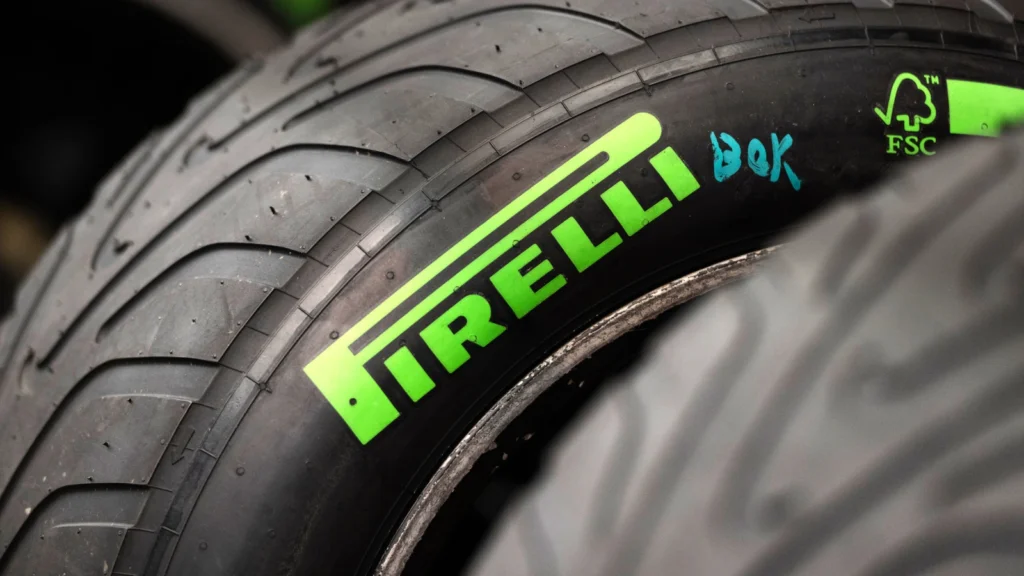
The full tyre speed rating chart (2026 Edition)
Here is every speed rating you will encounter on road tyres today, mapped against their real-world context for motorsport fans:
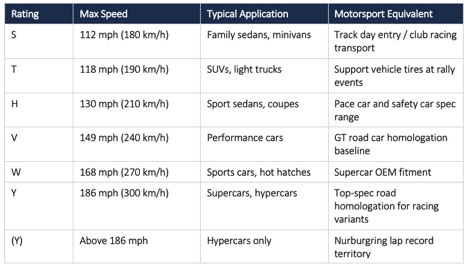
One important note: the ratings Z, W, and Y sometimes cause confusion. A Z-rated tyre is broadly rated for above 149 mph, but W and Y are more specific subsets of that. If you see (Y) in brackets, that indicates a speed capability above 186 mph that is tested but not defined by a single ceiling number. You will find this on hypercars whose road tyres are essentially race-adjacent homologation rubber.
How motorsport pushes road tyre speed ratings forward
Formula 1: Compound chemistry and the civilian tyre
Formula 1 tyres are not rated by the same system as road tyres because they operate in a completely different performance envelope. But the compound research Pirelli conducts for the F1 programme directly influences what becomes available in the consumer market.
Silica compound technology, for instance, which is now standard in high-performance road tyres, was refined in motorsport applications before it became an everyday feature. The key benefit on road tyres is wet grip without sacrificing rolling resistance, which is something that matters just as much at 70 mph on the M25 as it does in mixed conditions at Suzuka.
Le Mans and World Endurance racing: The 24-Hour durability test
The 24 Hours of Le Mans is arguably the most relevant test bed for road tyre engineers in all of motorsport. The challenge is not peak performance over a single lap. It is consistent, repeatable performance across wildly varying conditions: full daylight heat, cold night-time asphalt, heavy rain, safety car restarts, and the mechanical load of carrying maximum fuel weight.
Road tyre manufacturers pay close attention to endurance racing data because the thermal management and longevity questions asked of a Le Mans tyre share DNA with what consumers need from a W-rated grand touring tyre on a long motorway run. The difference is that your road tyre needs to survive 40,000 miles of those conditions, not 24 hours.
World Rally Championship (WRC): All-surface engineering and all-season road tyres
The FIA’s WRC is less glamorous than Formula 1 but arguably more directly relevant to everyday driving. World rally teams switch between gravel, tarmac, snow, and ice compounds across a single season.

The requirement to engineer a tyre that grips across wildly different surface temperatures and textures has directly influenced how all-season and all-weather road tyres are designed. The compound flexibility that lets a modern all-season tyre perform at 40°C in summer and near freezing in November is a product of decades of rally compound research.
Racing tyres vs. Road tyres: What actually transfers?
The R&D overlap column in that table is where the real value sits for road drivers. Tyre manufacturers invest hundreds of millions in motorsport programmes not purely for marketing.
The carcass construction refinements, the compound chemistry breakthroughs, and the heat management learnings from circuit racing genuinely find their way into the production tyres fitted to road cars two to five years later.
How to choose the right speed rating for your car
The practical answer is simpler than most drivers think. Your vehicle manufacturer has already done the hard work. Look at the sticker in the door jamb or your owner manual for the recommended tyre specification, and match or exceed the speed rating shown. Here is how to think through the decision:
- Match as the baseline. If your car specifies H-rated tyres, fitting H-rated tyres from a quality manufacturer is perfectly correct. You are meeting the engineering standard the vehicle was designed around.
- Exceed when it makes sense. Upgrading from H to V or V to W adds a thermal safety margin that costs relatively little at point of purchase. For drivers who use motorways regularly or enjoy occasional spirited driving, it is a sensible upgrade.
- Never go below. Fitting a lower speed rating than specified is a safety compromise and, in many jurisdictions, an insurance liability. A tyre generating more heat than its construction can manage is not a hypothetical risk.
- Think about the full sidewall. Speed rating is one piece of the sidewall information puzzle. Load index, DOT date code, treadwear ratings, and tyre age all combine to give you the complete safety picture for your tyres.
For a full breakdown of what every number and letter on your tyre sidewall means, including the DOT date code that tells you exactly how old your tyres are, reading the full DOT code on your sidewall is an excellent practical reference. Knowing your speed rating is step one. Understanding the full sidewall is the complete picture.
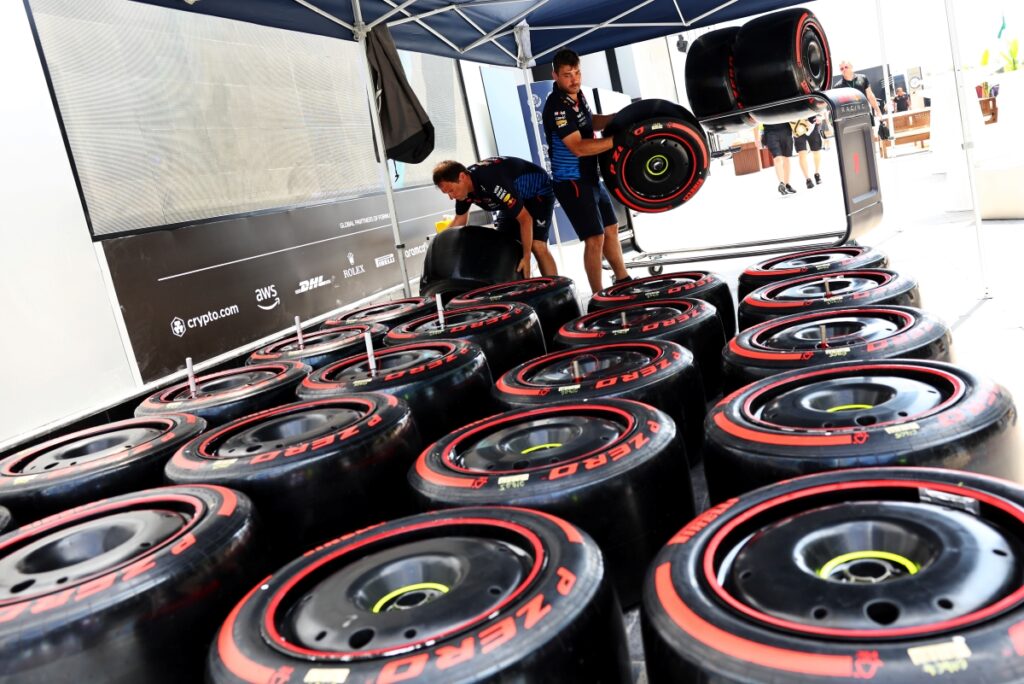
Key takeaways: What every driver should know
- Your tyre speed rating is a heat tolerance threshold, not just a maximum speed number.
- The letter appears at the end of your tyre size string on the sidewall. In 225/45R17 94W, the speed rating is W.
- Always match or exceed your vehicle manufacturer’s specified rating. Never fit a lower rating.
- Motorsport R&D, particularly from F1, Le Mans, and WRC programmes, directly influences road tyre compound and construction improvements.
- Speed rating is one of several sidewall markings that together tell you whether a tyre is safe, correctly sized, and still within its usable age.
- Upgrading your speed rating by one tier is a low-cost safety margin improvement, particularly if you regularly drive at motorway speeds.
Frequently asked questions
What happens if I use a lower speed rating than recommended?
The tyre is not rated to handle the heat generated at higher speeds. In a sustained motorway scenario, a lower-rated tyre can delaminate or blow out. It may also void your insurance.
Can I fit a higher speed rating than my car requires?
Yes, and it is often a good idea. A V-rated tyre on a car that calls for H adds a safety margin at no handling cost. You may pay slightly more, but the trade-off is worthwhile.
Do all four tyres need the same speed rating?
Yes, ideally. Mismatching speed ratings across axles creates uneven handling characteristics. If you must mix, always put the higher-rated tyres on the rear axle.
Where do I find the speed rating on my tyre?
It is the letter immediately after the load index number in the tyre size string on the sidewall. In 205/55R16 91V, the speed rating is V.

Does a higher speed rating mean better grip?
Not automatically. Speed rating is about heat tolerance, not outright grip. A W-rated touring tyre is not necessarily grippier than an H-rated performance tyre in the wet.
Do F1 tyres have a speed rating?
No. Racing tyres are purpose-engineered for specific circuit conditions and are not subject to road-use speed rating certification. They operate outside the consumer rating system entirely.
The same physics, different scales
Every time a motorsport engineer at Le Mans adjusts a compound formula to handle an extra 5 degrees of operating temperature, or a WRC technician refines a carcass structure to survive a gravel stage at full attack pace, some version of that learning eventually reaches the road.
The tyre speed rating system is the simplest expression of that transfer: a single letter that tells you exactly how much of that engineering is working in your favour.
For motorsport fans, understanding speed ratings is not just a practical exercise. It is a direct connection between the competition you watch on a Sunday and the rubber you depend on every morning.
The scale is different. The physics, and the engineering respect for it, is exactly the same.