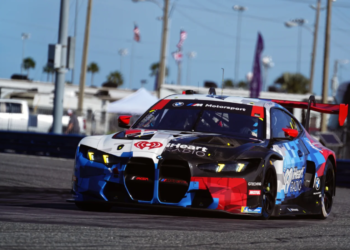
To the casual observer, spoilers may seem like flashy add-ons—design flourishes meant to make race cars and sports vehicles look more aggressive.
But in motorsport, almost every component is carefully engineered for performance, and spoilers are no exception.
Many fans and even novice racers often ask: do spoilers actually help in motorsport, or are they just there for aesthetics? The truth is far more technical and fascinating.
Spoilers play a crucial role in aerodynamics, handling, braking, and overall vehicle stability. Their design is dictated by physics, not fashion. In this article, we explore the real function of spoilers, how they affect racing performance, and why they are indispensable at high speeds.


Meanwhile, if you want to try games similar to Tongits go, check out GameZone today!
What is a spoiler?
A spoiler is an aerodynamic device usually mounted on the rear—or occasionally the front—of a car. Its primary purpose is to manipulate airflow, reducing lift and increasing traction, especially at high speeds.
Unlike decorative spoilers seen on street vehicles, racing spoilers are precision-engineered. Size, angle, and placement are carefully calculated to optimize performance while adhering to strict motorsport regulations. Even minor changes can significantly affect grip, cornering ability, and stability.
The science behind spoilers: Downforce explained
Downforce is the vertical force that pushes a vehicle down onto the track. In motorsports, higher downforce means:
- Increased tire grip
- Better cornering speed
- Enhanced braking control
Spoilers help generate downforce by altering airflow so that pressure above the car is lower than below it. This keeps the vehicle “planted” on the track, countering the natural lift that occurs at high speeds.

Why downforce matters in racing
As speed increases, cars naturally experience lift—similar to an airplane wing. Without downforce, the tires lose contact with the track, reducing control. Spoilers mitigate this by:
- Reducing rear-end lift
- Keeping the car stable at high speed
- Preventing loss of control during aggressive manoeuvres
Even a small reduction in lift can make the difference between winning and crashing, highlighting why every aerodynamic element matters in professional racing.
Spoilers vs. wings: Understanding the difference
Though often used interchangeably, spoilers and wings serve distinct purposes in motorsport:
Spoilers:
- Disrupt airflow
- Reduce lift
- Improve overall stability
- Common in touring cars and stock car racing
Wings:
- Function like inverted airplane wings
- Actively generate downforce
- Have a more aggressive aerodynamic effect
- Common in formula racing and GT cars
Both improve performance, but spoilers are often preferred where regulations limit the use of large wings.
How spoilers improve performance in motorsports
1. Enhanced cornering stability
High-speed corners are where spoilers excel. By increasing rear traction, they allow drivers to:
- Enter corners faster
- Maintain control under lateral forces
- Reduce oversteer
Without a spoiler, the rear of the car can feel light, significantly increasing the risk of spins. This is particularly critical in touring cars and GT racing, where cornering precision is essential.
2. Better braking efficiency
Downforce enhances braking performance by increasing tire contact with the road. Spoilers contribute to:
- Shorter stopping distances
- Reduced rear-end instability under heavy braking
- More controlled deceleration
This is vital in endurance racing or circuits with frequent sharp braking zones, where maintaining stability can save precious seconds per lap.
3. Increased driver confidence
Motorsport is as much mental as mechanical. When drivers trust their car’s stability:
- They push harder.
- Execute bolder overtakes
- Maintain consistent lap times
A spoiler’s aerodynamic support directly affects a driver’s confidence, which can translate to more aggressive and precise racing strategies.
Are spoilers always beneficial? The trade-offs
While spoilers provide essential benefits, they come with compromises:
Increased drag
More downforce often means higher air resistance, which can:
- Reduce top speed
- Increase fuel consumption
- Affect straight-line acceleration
For this reason, teams adjust spoiler angles depending on track layout. A high-speed track may call for smaller spoilers to minimize drag, while a technical circuit benefits from higher downforce for better grip.
Track-specific optimisation
Spoilers are rarely a “one-size-fits-all” solution:
- High-speed tracks: prioritize low drag
- Technical tracks: prioritize downforce and stability
This delicate balance is why professional racing teams invest heavily in wind tunnel testing and computational fluid dynamics to optimize every angle of their spoiler setups.
Racing regulations: Why spoilers look different across series
Motorsport governing bodies impose strict rules on aerodynamic devices to ensure fair competition:
- Stock car racing limits spoiler height
- Touring car series standardize dimensions
- Formula racing controls wing angles and shapes
These regulations prevent excessive mechanical advantages and ensure drivers rely on skill and strategy rather than purely aerodynamic superiority.
GT/Touring Car spoilers: Functional or just design?
Here’s where confusion arises. Not all spoilers are created equal:
Functional spoilers:
- Designed through wind tunnel testing
- Properly angled and mounted
- Effective at higher speeds
Decorative spoilers:
- Added mainly for visual appeal
- Minimal aerodynamic impact
- Often too small or improperly positioned to generate significant downforce
In motorsport, spoilers are always functional. On street vehicles, many serve only as style enhancements unless specifically engineered for performance.
Real motorsport examples where spoilers matter
- Touring Cars: Stabilize rear traction during tight cornering
- GT Racing: Adjustable spoilers balance speed and grip
- Stock Car Racing: Prevent dangerous lift during drafting at high speeds
In every case, spoilers are essential tools, not optional accessories.
Do spoilers actually make cars faster?
Indirectly, yes. While they may slightly reduce top speed due to drag, spoilers allow:
- Faster corner entry and exit
- Shorter braking zones
- More consistent lap times
In motorsports, lap time—not peak speed—determines success. The benefits of stability, grip, and confidence outweigh minor losses in straight-line velocity.
Conclusion: function first, design second
So, do spoilers help in motorsports, or are they just design elements? The answer is unmistakable: spoilers are functional aerodynamic tools rooted in physics, not fashion.
In professional racing, spoilers:
- Improve vehicle stability
- Enhance tire grip
- Increase safety
- Enable faster, more controlled driving
Any visual appeal is secondary. Without spoilers, modern high-speed motorsports would be far riskier and less precise.
Final takeaway
Next time you see a spoiler on a race car, remember it’s not decoration—it’s engineering in motion. Spoilers are carefully designed to manipulate airflow, generate downforce, and give drivers the confidence and control needed to push the limits of speed and precision. In the world of motorsports, they’re far more than a stylistic flourish—they’re a science-backed necessity.