
Mercedes’ 10-race unbeaten run came to a close in limp fashion in Austria as concerns over cooling limited its performance. What was behind the blip, and does it act as cause for alarm moving forwards? Motorsport Week analyses the situation.
Mercedes arrived in Austria having swept its opposition away in 2019 to ensure it held a healthy advantage in both the Drivers’ and Constructors’ Championship.
But even though the W10 was the winning car at each grand prix it was widely accepted that the strength of its package was one element, but the nous of Mercedes’ team work – and errors from rivals – had also assisted its cause. It won all eight races but it should have been beaten in Bahrain, did not cross the line first in Canada, risked being defeated in Monaco, and could have been out-muscled in Azerbaijan. At the other four events, though, it was peerless.
.jpg)
Austria loomed on the horizon. Mercedes suffered a humiliating double retirement in 2018 and in the team’s preview Toto Wolff pointed to cooling requirements as a major concern. The tight packaging of Mercedes’ W10 left it susceptible to engine overheating, with the change in philosophy for 2019 prioritising aerodynamic prowess at the expense of pure power. “We are not the quickest car anymore on the straights,” said team boss Wolff in Monaco. “But we believe that the best compromise between these two blocks of performance [downforce and engine] works well for us.” Such a thought process was taken in order to maximise potential at the majority of venues – meaning, logically, there was a minority where this would be a risk. Austria fell into such a hole, and the W10’s weakness was exposed.
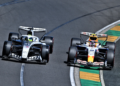

The Red Bull Ring is not as high in altitude as the Autodromo Hermanos Rodriguez – which suffocates engines and leads to more cooling – but at around 700 metres above sea level it still acts as a restriction; it is the second-highest venue of the year, similar in altitude to Interlagos. Air density is reduced. Cooling becomes tougher. Then add in the high ambient temperatures and it led to another complicating factor. Much of Europe was in the midst of a record-breaking swathe of hot weather through last week and Austria was no exception. The air temperature reached 35ËšC during Sunday’s race and it felt even hotter than that. Formula 1 cars are delicate machines. Much like people, they are susceptible to temperature changes; imagine walking around in 35ËšC heat compared to, for example, 25ËšC. You cannot do anything at the same intensity for the same duration. For Formula 1 cars this means opening up the bodywork. And in turn that means compromising the aerodynamic potential at very sensitive areas, creating a cyclical effect that means less downforce is produced, accentuated even further by the warm air being less dense, hurting the aerodynamically strongest car further. There's a reason why Formula 1 cars are designed in such a manner and engineers do not want bits of bodywork missing as it means performance will be lost. The Red Bull Ring also accentuates cooling demands due to its power-hungry nature, with the long straights, hard acceleration zones and high average speed meaning the million-pound engines receive quite a workout. Mercedes had to compromise its aerodynamic prowess to ensure its power unit would not overheat. Its drivers had to avoid following others closely – to evade the heat – while excessive lift and coast also hindered its prospects. Mercedes struck what it felt was the right balance but it simply wasn’t enough.
.jpg)
“We were running the engine way turned down, lifting and coasting for up to 400 metres [per lap] — it’s almost having no throttle rolling downwards — and still able to pull in some decent lap times,” said Wolff. “We knew that it was our Achilles heel and we were carrying the problems since the beginning of the season. We tried to work on mitigating the performance loss, but at the end it was really painful to watch [us] cruising, not being able to defend or attack. The next step would have been to remove all the bodywork. So that was not really an option because the sponsors wouldn’t have liked it! We were right on the limit. We couldn’t do anything anymore, and it was already very damaging for performance what we did. There was no step left anymore.”
Even so, third and fifth was still a strong salvage job for Mercedes given it relinquished only seven points to Red Bull and five to Ferrari. It cannot also blame its deficit fully on cooling, for it was also not assisted by Hamilton's grid penalty and front wing damage at one of his weakest venues. Nonetheless, the strength of both Ferrari and Red Bull in Austria also exacerbated the plight of the Silver Arrows. The layout of the Red Bull Ring was always likely to suit the SF90 given its straight-line speed prowess and the fundamental pace seen in Bahrain, Azerbaijan and Canada. Ferrari, having introduced updates in France in a bid to alleviate aerodynamic weaknesses, unearthed a set-up that helped produce a stronger front-end (assisting turn-in at a circuit with few-but-vital front-limited corners), while another factor working in its favour was Charles Leclerc. The youngster has historically gone well at the Red Bull Ring, regards it as one of his favourite venues, and his natural style gelled with the car and layout. “I think certainly the track characteristic is the main factor; here we had new upgrades on the car that all went in the right direction, the driver confidence [was strong], there are a few things,” said Ferrari boss Mattia Binotto. “Will we be able to fight and battle on all the tracks? I don’t think yet. There will be tracks where there are more difficult for us.” In the Red Bull camp, meanwhile, its pit strategy proved favourable, Max Verstappen was in the form of his life, while on home territory the outfit threw everything at the win. With no title fight in mind, Honda activated 'mode 11' and conceded it was “on the edge” in terms of cooling; penalties are likely to follow later in the season but in its position it was justified to push the envelope, especially with Honda’s Vice President present at the Red Bull Ring.
.jpg)
The question now is where Mercedes goes next. Austria is likely to be an aberration and it is unthinkable that it will not be celebrating a sixth straight double title come December. Most likely the champagne will be spraying earlier than that. But there are still demanding circuits to come. Hungary is typically swelteringly hot in late July/early August, the high-speed Monza will surely not favour Mercedes, while the heat, straights and altitude in Mexico may skewer Mercedes at one of its weakest venues.
“First of all I’m really hoping for the typical English weather in Silverstone so we can gain a little bit of time to sort our problems out,” said Wolff.
“But then there is no question — there is no alternative than to fix our problems for the coming hot European races, Hockenheim and Budapest. There is just no other option.”
Traditionally it has been joked that rain dances are needed to spice up the action and lead to different race results; perhaps Mercedes’ rivals would be better off doing a heat dance…

Discussion about this post